Manufacturer and sourcing integration partner · 20 years of export experience
Home / Safety, Emergency and Outdoor Products

B2B risk-based sourcing

Safety Products Manufacturer for Hazard-Controlled Outdoor Programs

A reflective vest, road channelizer, flotation vest, pet visibility garment and dry bag may share bright colours, but they do not share one safety function or one certificate. Build the range from hazard, user, environment, product claim and destination evidence before comparing bulk prices.

Explore product routes
Hazard-first routing Finished-product evidence Claim boundaries Server-routed inquiry
safety products manufacturer for emergency and outdoor programs
Safety decision chain Hazard → user → environment → product → evidence → use → inspection → replacement

Decision 01 · Risk context

Define the Hazard and Protective Objective Before Choosing Products

Procurement cannot begin with a catalogue label such as safety item. Identify what must be seen, separated, supported, warned, protected from water or carried. Then establish who uses the product and who owns the risk assessment.

1

Describe the hazard and consequence

Record moving vehicles, low visibility, traffic path, water exposure, separation need, lost-equipment risk or other defined hazard. Avoid turning general outdoor inconvenience into an unsupported life-safety claim.

2

Identify the user and observer

Define worker, visitor, event staff, boater, angler, child, pet handler or public-road user. For visibility, identify who must detect whom, from what direction and under which light and background.

3

Map the operating environment

Document day, night, headlights, rain, fog, traffic speed, water type, rescue time, temperature, contamination, duration and maintenance. The same bright material behaves differently across environments.

4

Name the competent decision owner

Worksite, traffic-control and marine safety selections require buyer-side risk assessment and applicable authority review. A supplier helps define product evidence but does not replace the responsible safety professional.

Is your product shortlist clear while the actual hazard remains vague?

Send the user, environment and intended protective outcome. We will expose which decisions must precede a quote.

Decision 02 · Category routing

Separate Safety, Emergency and Outdoor Products by Function

Each route keeps its own specification, evidence and restricted claims. Mixed programme management can coordinate quantities, branding and destinations without pretending that one report covers the whole catalogue.

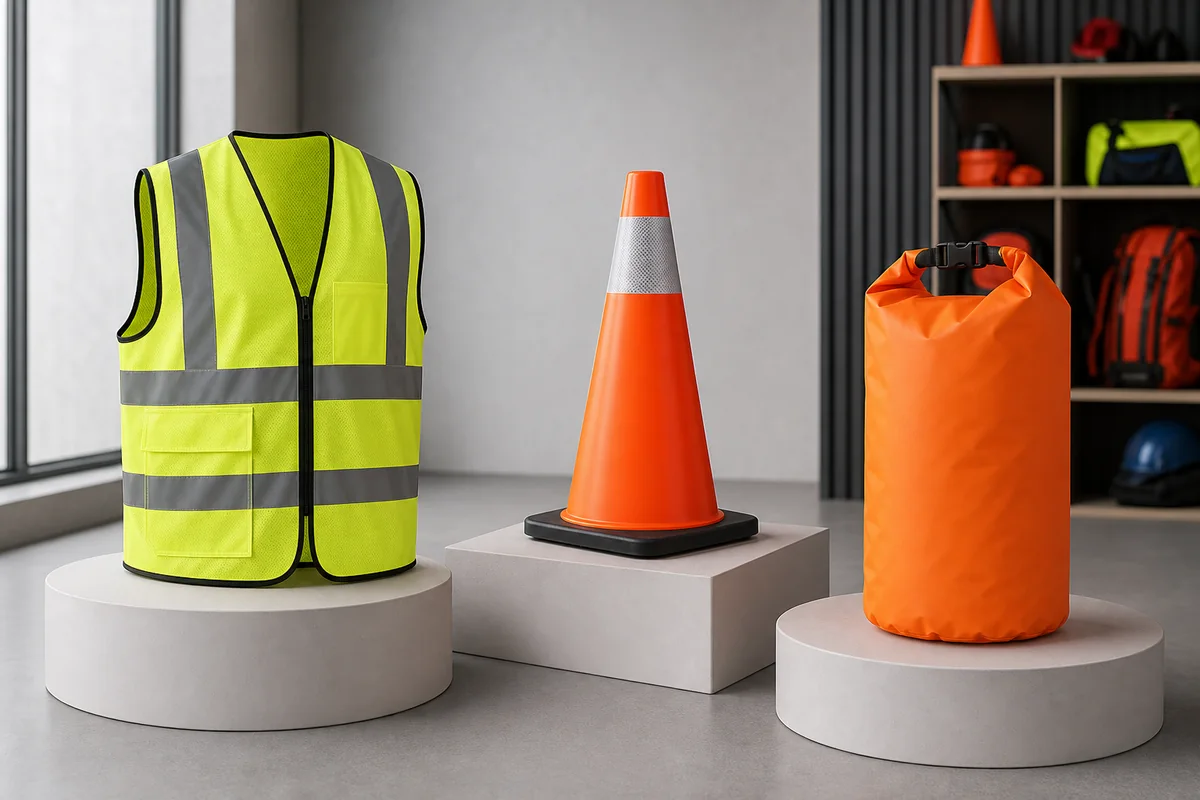
Unbranded visibility vest, traffic cone and roll-top dry bag separated as safety and outdoor product routes
Visibility, traffic guidance and dry storage are different buying jobs and each requires its own finished-product evidence.
Wearer conspicuity

High-visibility vests and reflective clothing

Define work setting, garment type/class where applicable, background material, retroreflective layout, size, closure, pockets, decoration, care, label and finished-garment evidence.

Explore high-visibility apparel →
Supplemental visibility

Reflective accessories and identifiers

Keychains, tags and small reflectors may support identification or visibility, but they are not automatically compliant garments or protective equipment. Define audience, attachment, viewing geometry and claim.

Explore reflective accessories →
Traffic guidance

Road channelizers and reflective markers

Water-filled barriers, delineator posts, drums, blocks, reflectors and speed-control items require function, geometry, placement, stability, visibility, serviceability and destination-rule review.

Explore roadway safety products →
Does your mixed catalogue invite one certification claim across six unrelated products?

We will split the range into function-specific technical and evidence tracks before commercial comparison.

Decision 03 · Conspicuity

Engineer High-Visibility Apparel Around the Viewing System

Fluorescent background and retroreflective material perform different jobs. The finished garment must create useful contrast and recognition around the body while fit, pockets, logos, dirt and care can change visible area and performance.

Match type and class to the setting

Use the buyer's current risk assessment and destination standard to determine off-road, roadway, public-safety or other category and required performance level. Do not select a class from competitor marketing alone.

Control background and reflective layout

Specify approved colours, material identity, minimum areas, orientation, continuity and placement on the finished size range. Inspect after pockets, logos, zippers and other features are added.

Qualify fit, mobility and heat burden

Define wearer layers, body measurements, movement, climate, ventilation, breakaway or closure need and pocket loads. A garment that is not worn correctly cannot deliver its intended conspicuity.

Plan care and visibility retirement

Record washing, contamination, fading, damage and inspection limits under the applicable product instructions. Preserve label readability and define replacement rather than promising a universal service life.

Will your logo quietly remove the visible area the safety specification needs?

Send garment class, size range and artwork so the final layout—not the blank vest—can be reviewed.

Decision 04 · Work-zone function

Specify Traffic Safety Devices by Guidance, Separation and Protection Role

A brightly coloured object is not automatically a barrier. Channelizers warn and guide; some devices serve pedestrian routing; positive protection has a different meaning. Site design and placement remain with the responsible traffic authority or engineer.

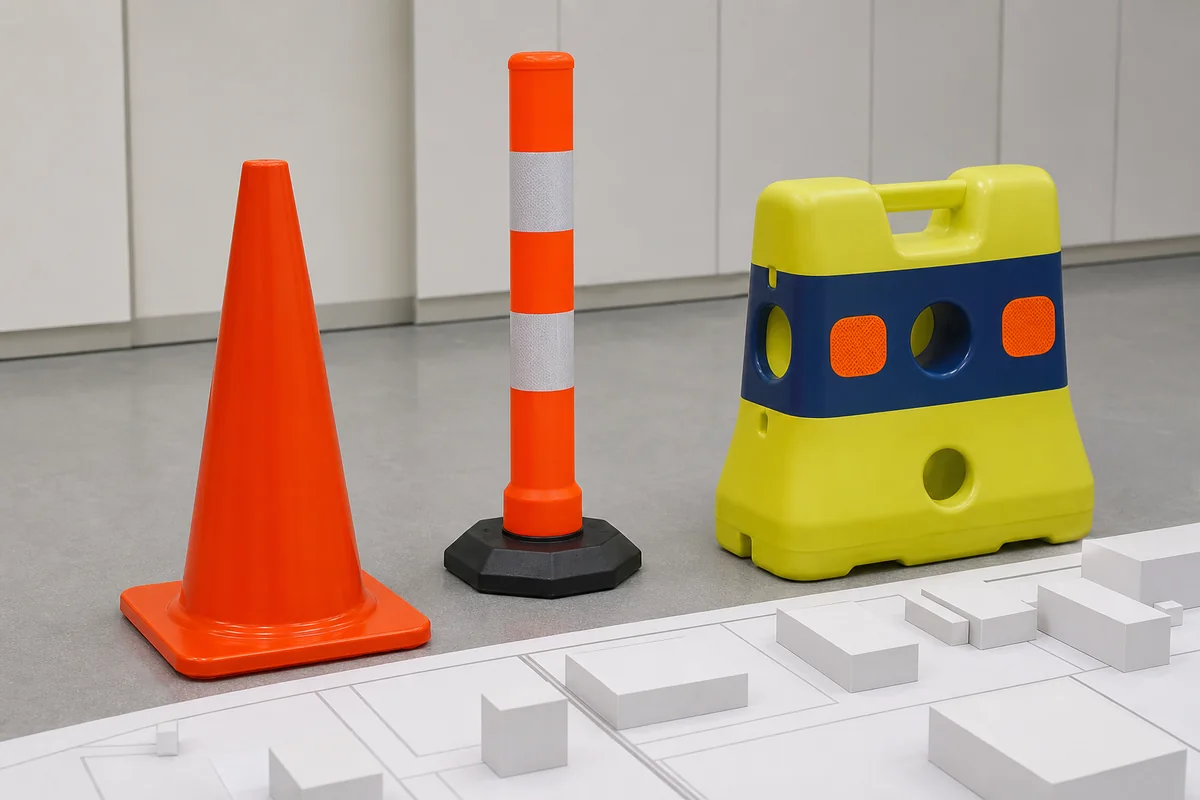
Plain cone, delineator post and barrier-style module arranged for traffic-control role review
A device should be specified by its guidance or separation role, site geometry and verified finished-product evidence—not by color alone.

Define the device's intended function

State warning, delineation, lane guidance, pedestrian path, temporary closure, reflector marking, speed management or other approved function. Prevent sales language from implying impact protection the product was not designed to provide.

Freeze geometry and visible features

Record dimensions, colour, retroreflective material, stripe pattern, mounting height, base, interlock and identification location. Requirements differ by device and destination; use the current applicable drawing and edition.

Qualify stability, ballast and handling

Define wind, traffic exposure, surface, drainage, filling, lifting, stacking and transport. A water-fillable channelizer still needs controlled setup and is not automatically a crash barrier.

Build maintenance and replacement checks

Inspect cleanliness, visibility, position, deformation, cracks, missing reflectors, ballast loss and serviceability. Link field observations to the product code and replacement stock.

Is a channelizer being sold as protection it cannot provide?

Share the site function and destination rule. We will separate warning, guidance, separation and protection claims.

Decision 05 · Water safety

Develop Flotation Vests From Wearer, Activity and Approval Scope

A foam vest, buoyancy aid and approved life jacket are not interchangeable names. Define the wearer, water, activity, rescue conditions, jurisdiction and exact approval pathway before design, decoration or bulk ordering.

Identify wearer, fit and body range

Record adult or child use, body measurements or weight ranges required by the applicable system, clothing, mobility and fastening. Fit trials do not replace approval testing, but poor fit can defeat intended performance.

Define activity and rescue environment

Separate boating, fishing, paddling, personal watercraft, organized sport or shore use. Consider near-shore versus offshore conditions, waves, water temperature, swimming ability and expected rescue time.

Lock buoyancy architecture and components

Specify foam or inflation system, shell, lining, panels, straps, buckles, crotch strap where required, whistle/light interfaces and labels. Inflation products also require component status and maintenance planning.

Protect approval marks and warnings

Confirm the exact product and use approved for the destination. Artwork, pockets or private labels must not cover required information or imply approval for an excluded activity.

Is your vest name promising more than its approval label allows?

Send wearer, activity, destination and reference product. We will identify the design and evidence questions before branding.

Decision 06 · Content protection

Define What Waterproof Means for an Outdoor Dry Bag

A waterproof fabric is only one layer. Seams, closure, attachment points, abrasion and user folding determine the finished bag. Choose a claim that matches the real exposure and test rather than using waterproof as an unlimited promise.

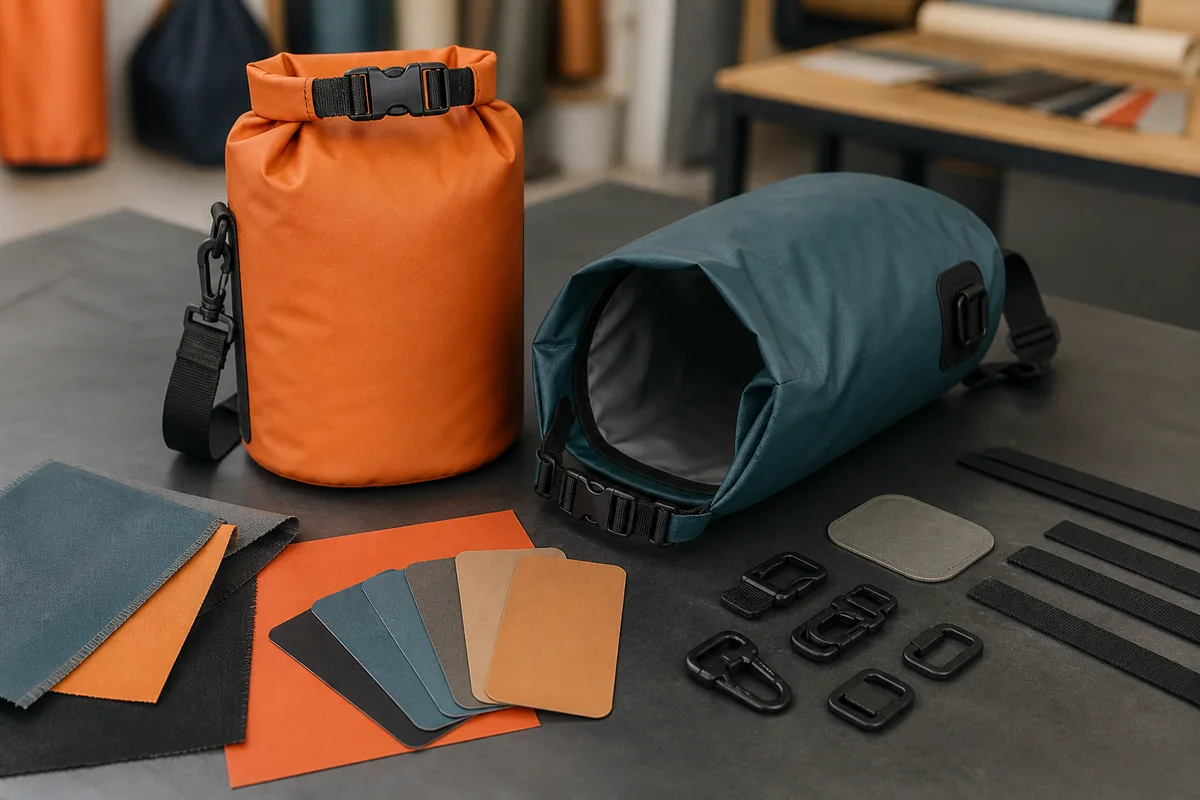
Two unbranded roll-top dry bags positioned to review closure folds, buckle, strap and joint areas
The word waterproof needs a defined closure method, exposure condition and finished-bag test before it can become a project claim.

Set the exposure level and duration

Separate rain, splash, repeated wet-deck use and defined submersion. Record depth/time only when a finished-product method supports it. A general dry bag is not automatically suitable for electronics or critical rescue equipment.

Choose shell and seam architecture

Define PVC, TPU or coated-textile route, thickness or mass, flexibility, abrasion and temperature needs. Match HF, hot-air, ultrasonic, taped or other seam construction to the material and claim.

Control closure and attachment leak paths

Specify roll count, opening geometry, buckle, waterproof zipper where applicable, valve/window and strap anchors. Reinforcements should spread carrying load without creating unverified leakage paths.

Keep flotation and life-saving claims separate

A bag that traps air may float under some conditions, but that does not make it a PFD or rescue aid. Any visibility or floating statement needs its own defined test and must not encourage unsafe reliance.

Is your waterproof claim based on fabric while the closure remains untested?

Tell us the exposure, contents, carry load and closure. We will map the finished-bag evidence required.

Decision 07 · Human and animal factors

Design Safety and Outdoor Products Around Real Users

Fit, movement, heat, snagging, communication and supervision change whether an item is used correctly. Pet products add anatomy, restraint and behaviour questions; promotional accessories must never be upgraded into PPE by wording alone.

Build size systems from use data

Define body, clothing layer or animal measurements, grading, adjustability and acceptable coverage. Verify edge binding, closures and hardware across the size range rather than approving only one middle sample.

Trial movement and task interference

Check bending, reaching, climbing, paddling, running, leash attachment and equipment interaction. Pockets, loose ends and hardware must not create avoidable snag or access problems.

Separate identification from protection

Team colour, logo, pet name, event marker and reflective tag can aid recognition, but branding must not be described as certified protection unless the finished product evidence supports that claim.

Provide use and supervision information

Define donning, adjustment, closure, inspection, cleaning, storage and restricted uses in the correct language. Child, pet and water products need especially clear responsibility and supervision boundaries.

Will the product still work when worn over real clothing—or fitted to a moving dog?

Send the user range and tasks. We will turn fit and movement into sample gates rather than assumptions.

Decision 08 · Claim evidence

Assign Every Safety Claim to the Exact Finished Product

ISO 9001, BSCI and ISO 14001 are confirmed at EverBen's company-evidence level. They do not certify a vest, channelizer, flotation product, reflector, pet garment or dry bag as a finished safety item.

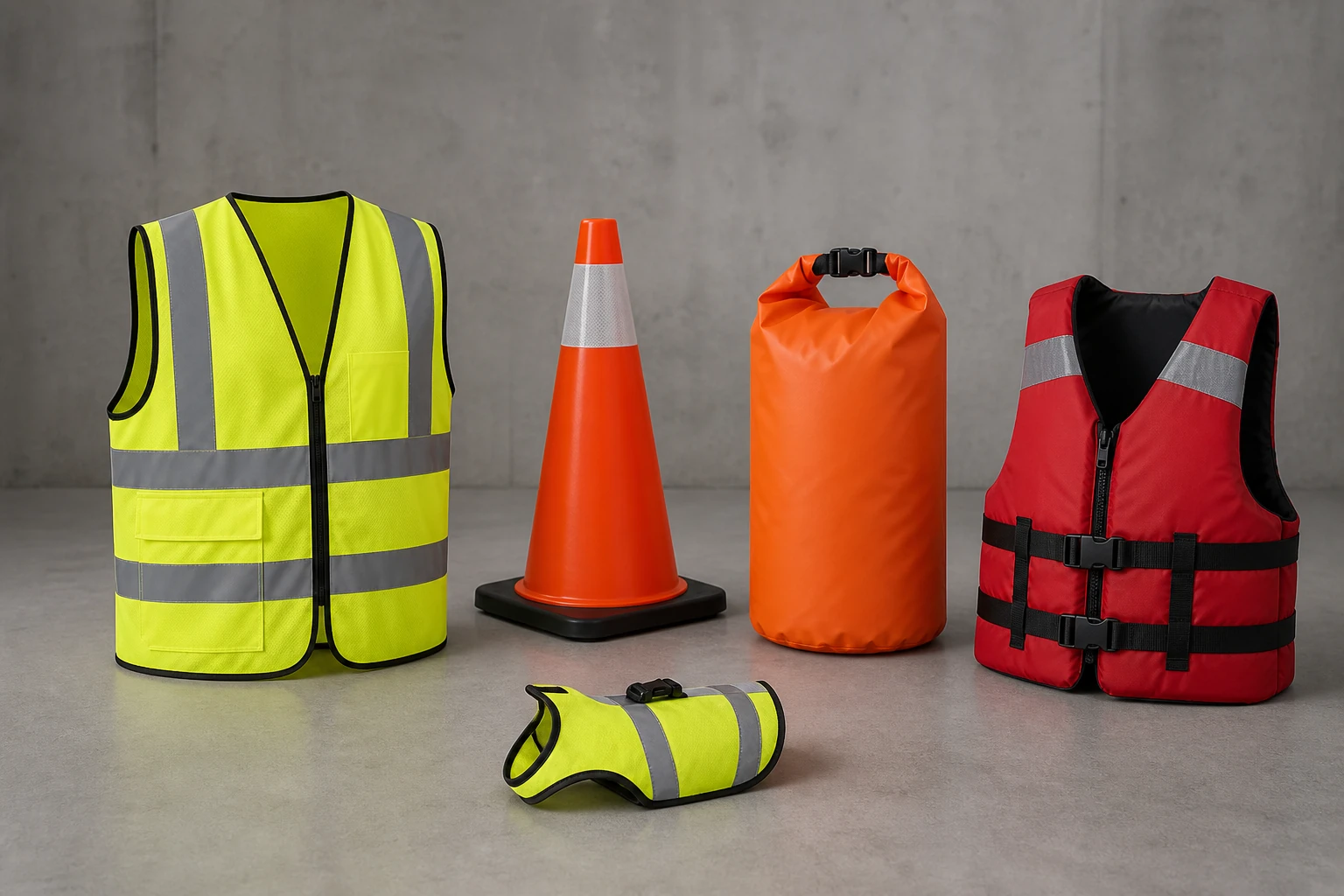
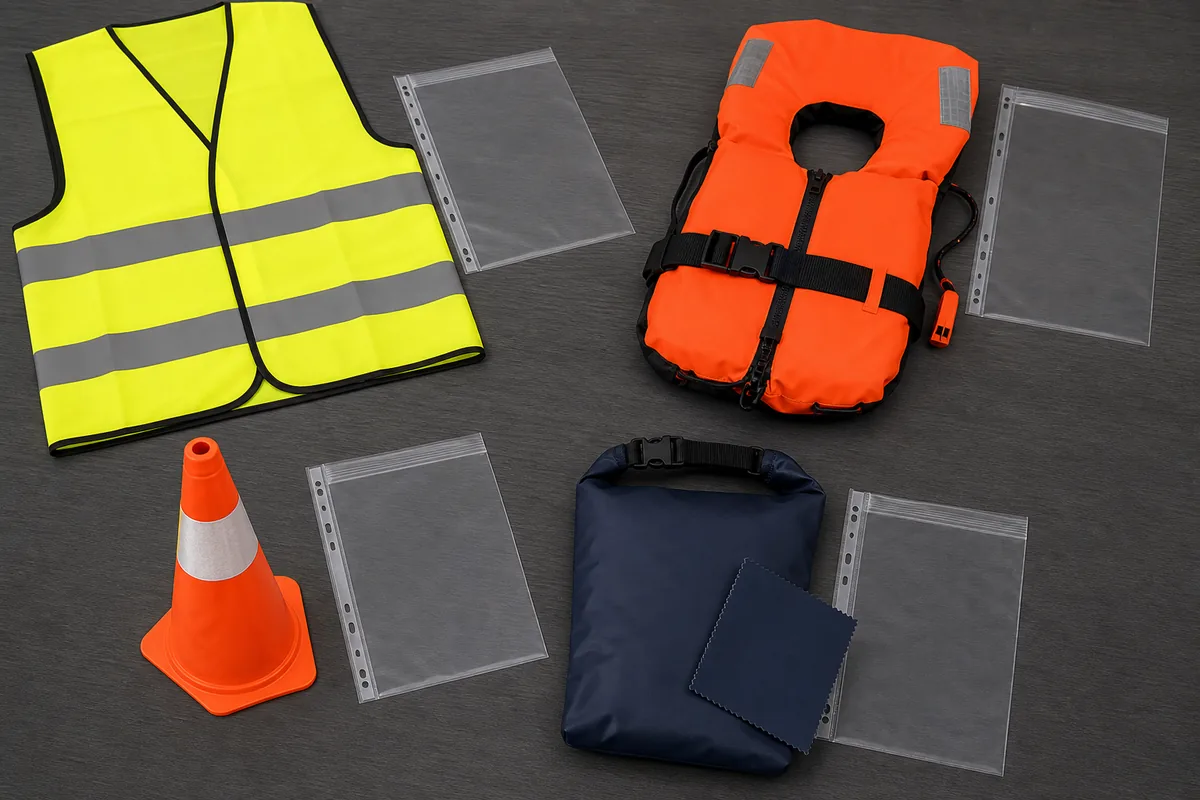
Visibility, flotation-style, traffic and dry-bag samples paired with separate empty evidence sleeves
Safety-related claims must attach to the exact finished model and current evidence rather than borrowing credibility from another product family.

Start with destination and current edition

Record country, channel, workplace/activity, authority and buyer-required standard. Do not mix ANSI/ISEA, ISO, MUTCD, Coast Guard or another market's language as though it were one global approval.

Identify the exact tested configuration

Link model, size, colour, material lot, reflective layout, foam or inflation system, device geometry, seam/closure, label, sample date, method, laboratory and result.

Control production after sample approval

Freeze bill of materials, supplier, process, artwork, labels and inspection plan. Evaluate any change for fit, visible area, function, test scope and destination compliance before release.

Write only supportable marketing claims

Avoid certified, lifesaving, crash barrier, medical, eco-friendly, waterproof or reflective-performance language unless the exact statement is supported and approved for the product and destination.

Does your report name the exact product your customer will receive?

Send models, claims and destinations. We will build an evidence map that prevents certificate borrowing.

Decision 09 · Service life

Plan Inspection, Care and Retirement Before Bulk Release

Visibility fades, reflectors become dirty, plastics crack, foam and straps are damaged, closures wear and labels disappear. The range needs product-specific checks and a replacement workflow, not one generic care sentence.

Define receiving and pre-use checks

Inspect identity, size, colour, visible material, stitching, closures, buckles, foam/inflation parts, device shape, reflectors, seams and labels as relevant. Record acceptance by SKU and batch.

Write care around the performance feature

Cleaning, washing, drying, storage, inflation maintenance or surface care can affect the feature being claimed. Use instructions supported by the material and finished product.

Create damage and retirement criteria

Define faded, contaminated, torn, punctured, cracked, deformed, leaking, missing, unreadable or non-serviceable conditions. The applicable authority and product instruction determine final withdrawal rules.

Capture field feedback and incidents

Link issue to product code, batch, user, site, environment, care, photos and failure location. Quarantine suspect stock and separate misuse, wear and manufacturing causes before correction.

Can the user recognize when visibility or water protection has expired?

We will convert performance features into receiving, care, inspection, quarantine and replacement controls.

Decision 10 · Programme release

Control Mixed Safety Kits With Product-Level Bills of Materials

An emergency or outdoor kit may contain unlike products, but the kit bill must preserve each item's identity, evidence, instructions and replacement route. One attractive package must not hide substitutions or expired components.

Freeze the SKU and evidence register

Give each product a controlled code, specification, artwork, claim, label, evidence revision, quantity and destination. Keep optional alternatives outside the released bill until approved.

Design kit layout and access sequence

Place items by urgency, user, contamination risk and handling. Verify counts, visibility, closures, instructions and whether packaging prevents inspection of dated or replaceable components.

Protect replacement compatibility

Evaluate material, reflector, buckle, foam, plastic, label, colour and closure changes against fit, evidence and training. Reorders should not silently become new products.

Build a comparable bulk RFQ

Request MOQ, OEM programme, bulk pricing, samples, tests, pack, production window and freight against the same released revision. Hide retail unit-price language and expose conditional costs.

Could one substituted kit item invalidate the evidence your buyer approved?

We will build a product-level BOM, evidence register and change gate for mixed safety programmes.

Decision 11 · Buyer FAQ

Safety Products Manufacturer Questions for B2B Buyers

MOQ, bulk pricing, sample gates, evidence and timing depend on the product, claim, quantity and destination. The first RFQ should identify risk and evidence boundaries before a commercial promise is made.

Can one certificate cover a mixed safety and outdoor product range?

No. High-visibility apparel, traffic channelizers, flotation products, pet gear and dry bags have different functions, users, standards and test methods. Evidence must identify the exact finished product, revision, claim and destination scope.

What should a buyer provide for a high-visibility apparel RFQ?

Provide the work setting, hazard and viewing conditions, destination standard and edition, garment type or class, user size range, background and retroreflective material requirements, decoration, care, labels, quantity and required finished-garment evidence.

Is a waterproof dry bag a flotation or life-saving product?

No. A dry bag protects contents only to its validated construction and test scope. It must not be sold as a life jacket, personal flotation device, rescue aid or guaranteed floating product unless the exact separate claim is designed, tested and documented.

Where are mixed safety and outdoor inquiries sent?

The selected safety CTA posts hazard, user and product details to the website handler. Its approved mixed-products route assigns the request to marketing@rainwear-manufacturers.com without launching a desktop mail application.

Ready to make every product claim traceable before the order is placed?

Send hazards, users, destinations, product families and quantities. We will identify the missing specifications and evidence.

Mixed safety and outdoor inquiries use marketing@rainwear-manufacturers.com.
Safety programme details are posted to the site handler and assigned to the mixed-products inbox.
Call WhatsApp