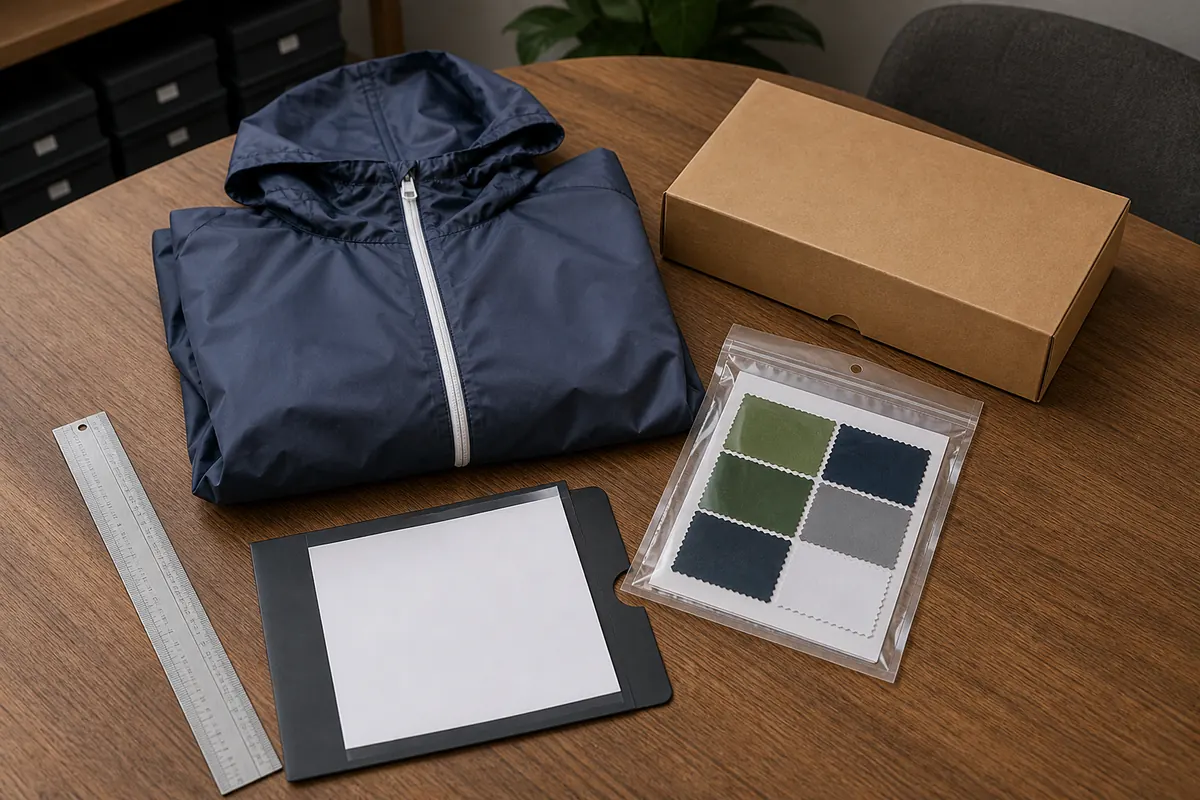
| Barrier material |
Film, coated woven or composite sheet |
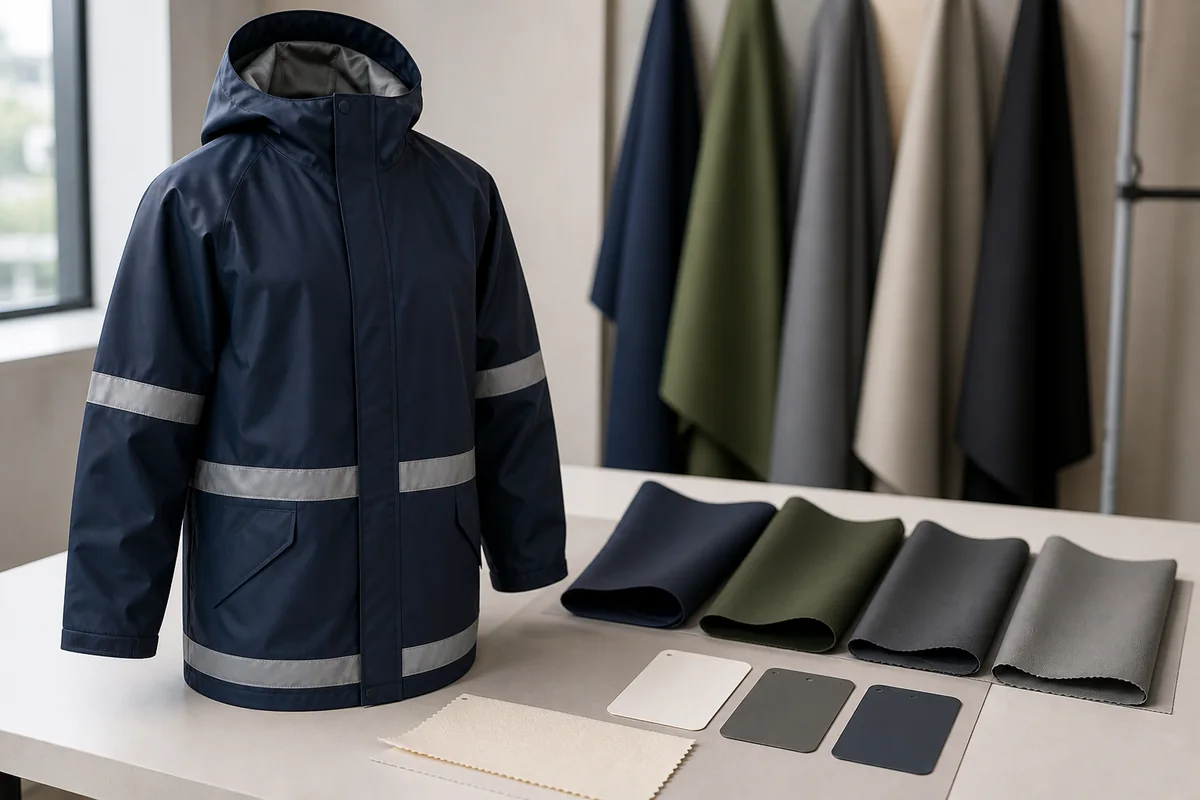
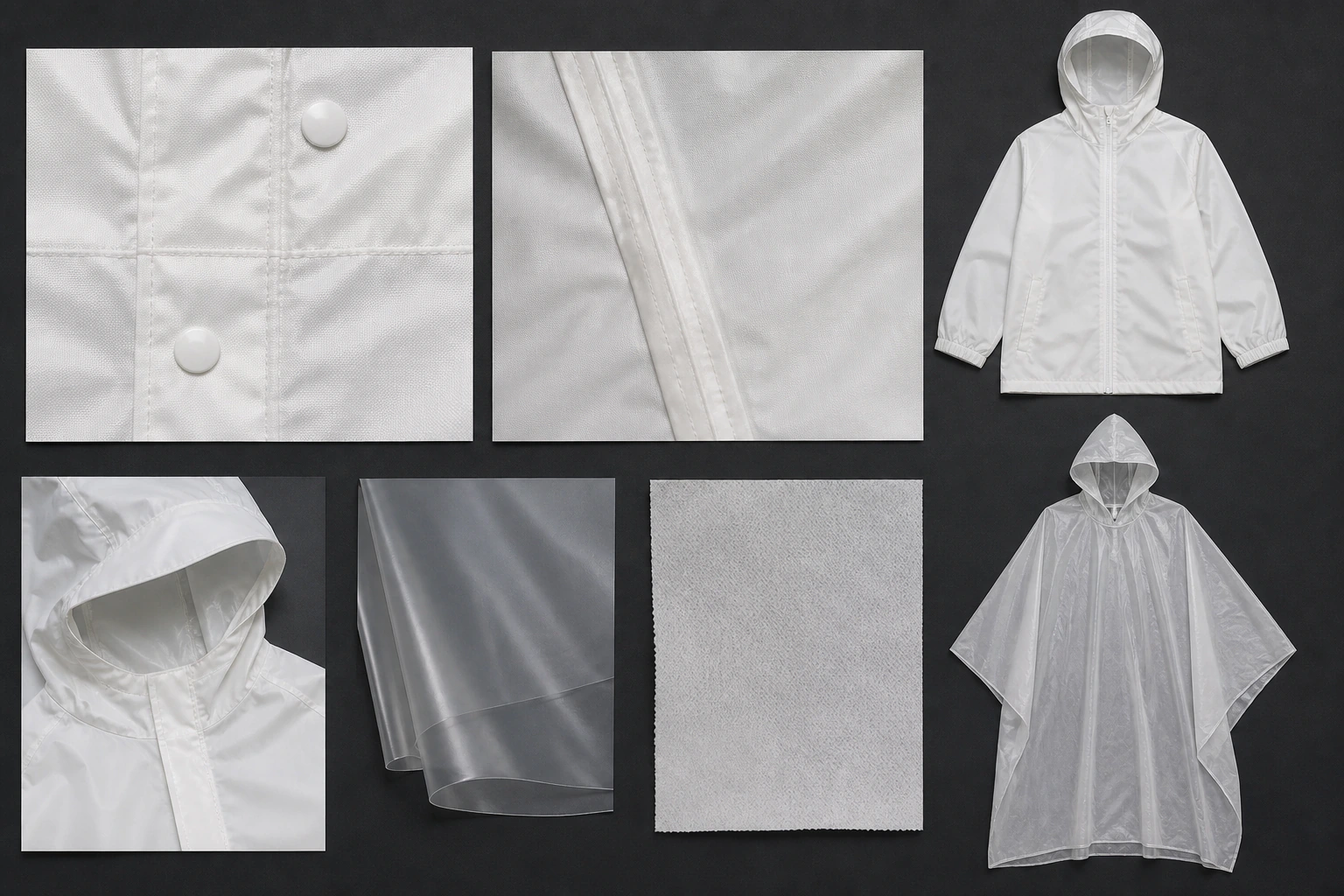
PU-coated polyester, PVC film/coating, EVA/PEVA film, PE film, coated nylon, nonwoven composite |
Changes hand, weight, construction options, evidence requests and end-of-use planning. |
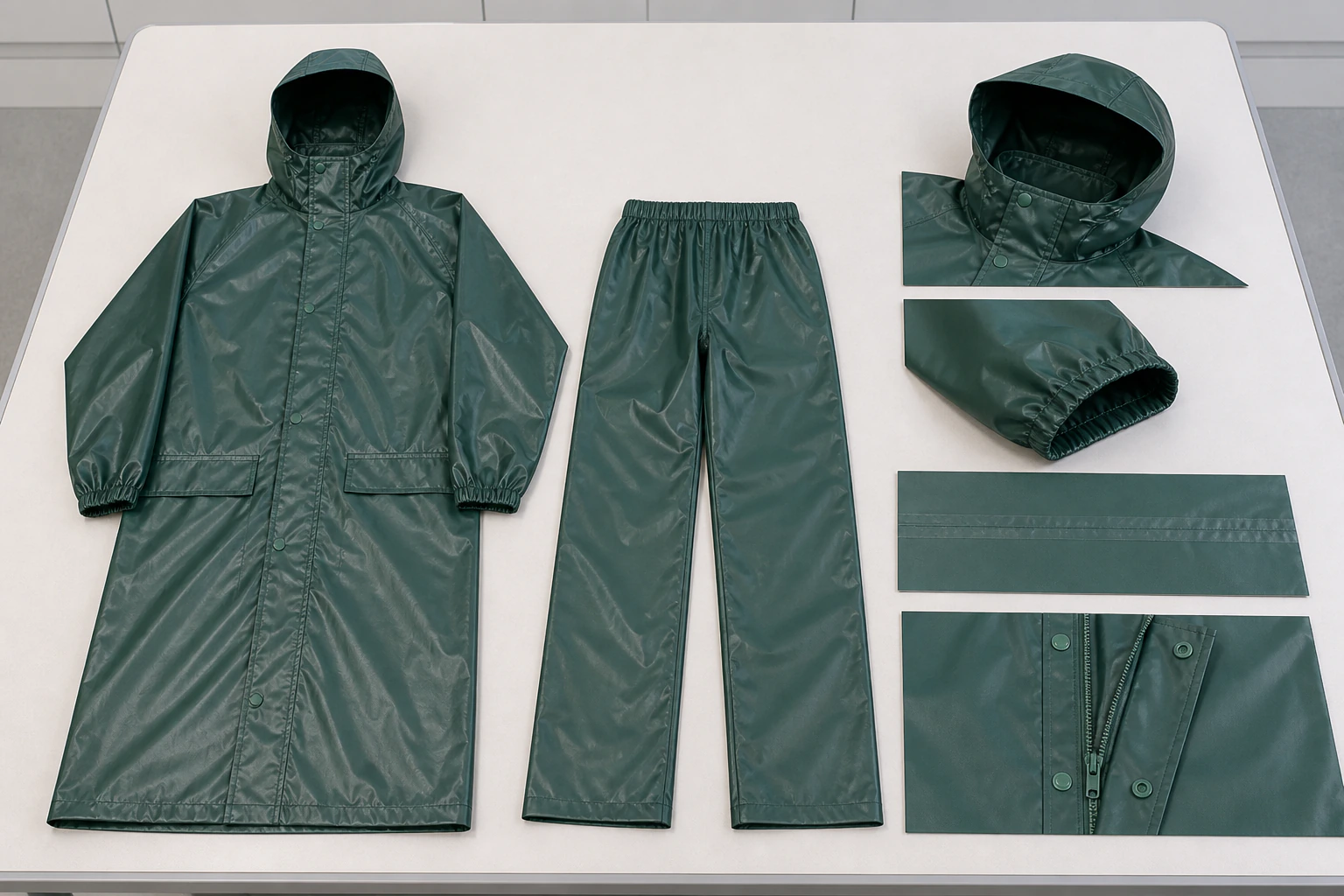
| Garment construction |
Joining and edge method |
Welded, heat sealed, stitched and taped, bound, reinforced at stress points |
Water can enter through joins and openings even when the base material resists water. |
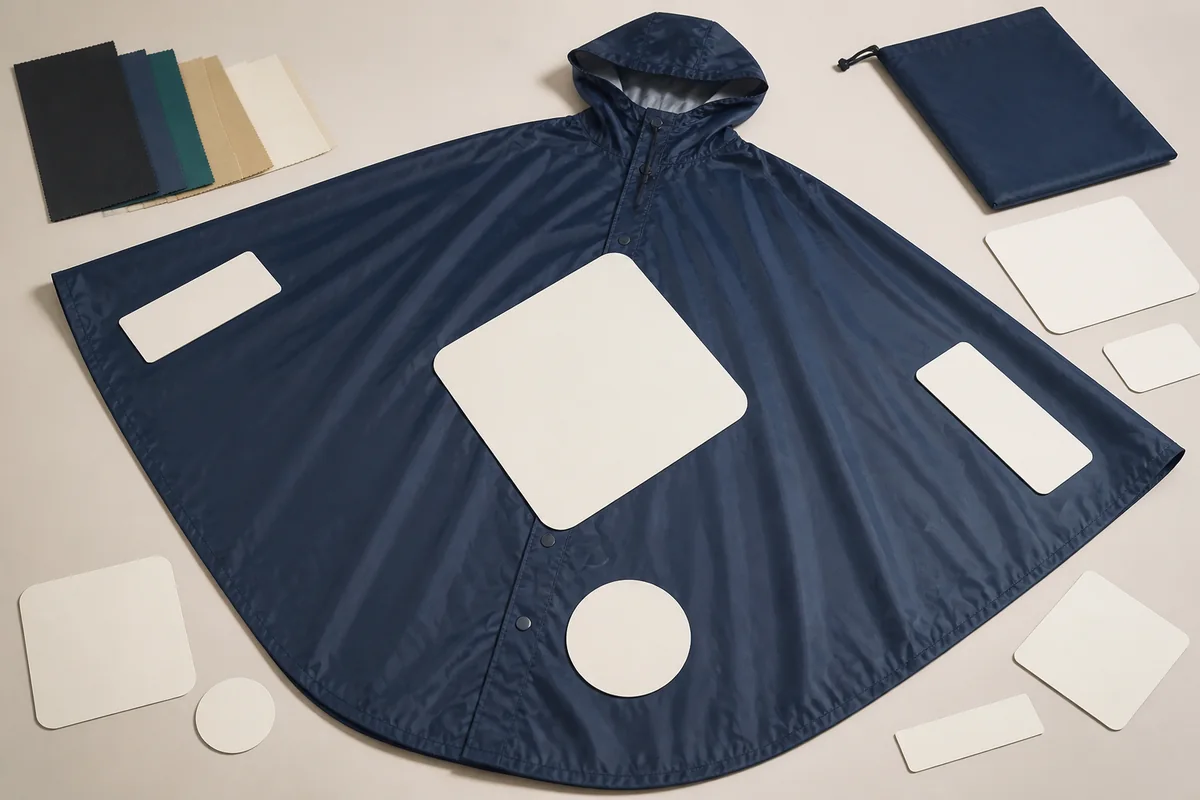
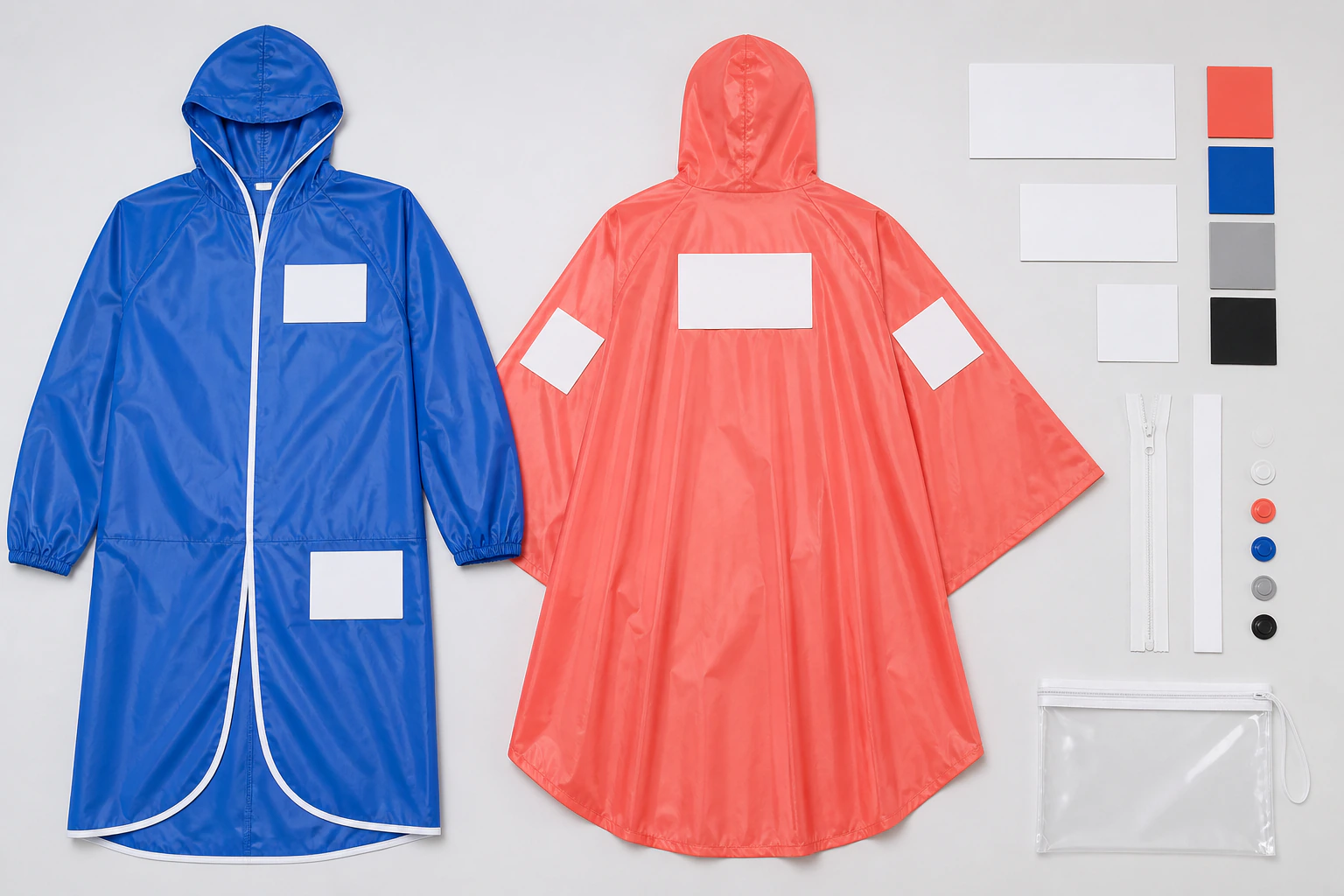
| Coverage geometry |
Body length, hood, sleeve, overlap and opening |
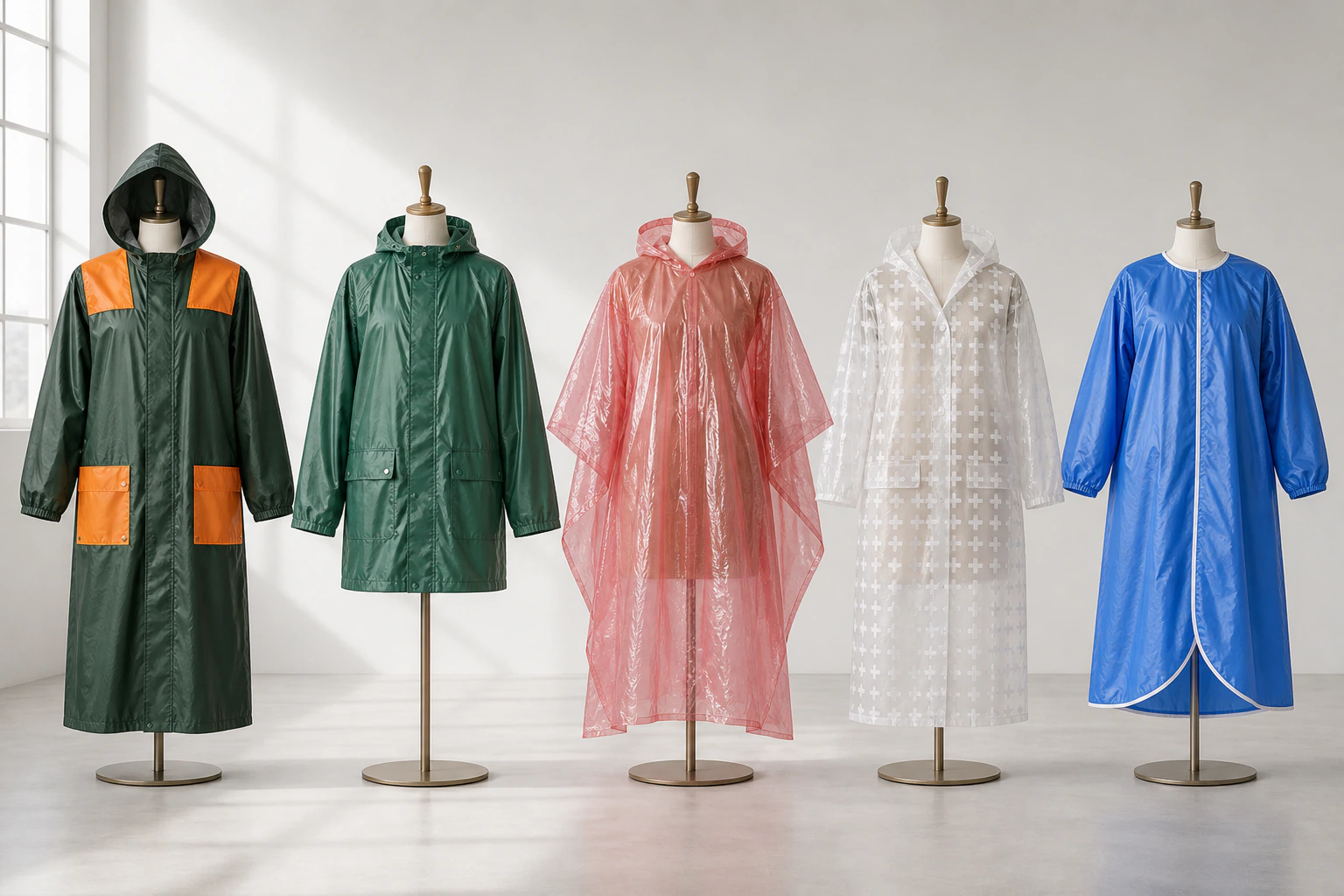
Jacket, coat, suit, poncho, cape, apron; with or without backpack allowance |
Coverage must match motion, clothing layers and wind direction. |
| Comfort system |
Venting, lining, weight and mobility |
Back vent, underarm vent, mesh lining, adjustable cuff, articulated sleeve |
A barrier that causes heat stress or restricts work may be rejected by users. |
| Closure system |
Front, hood, cuff and waist control |
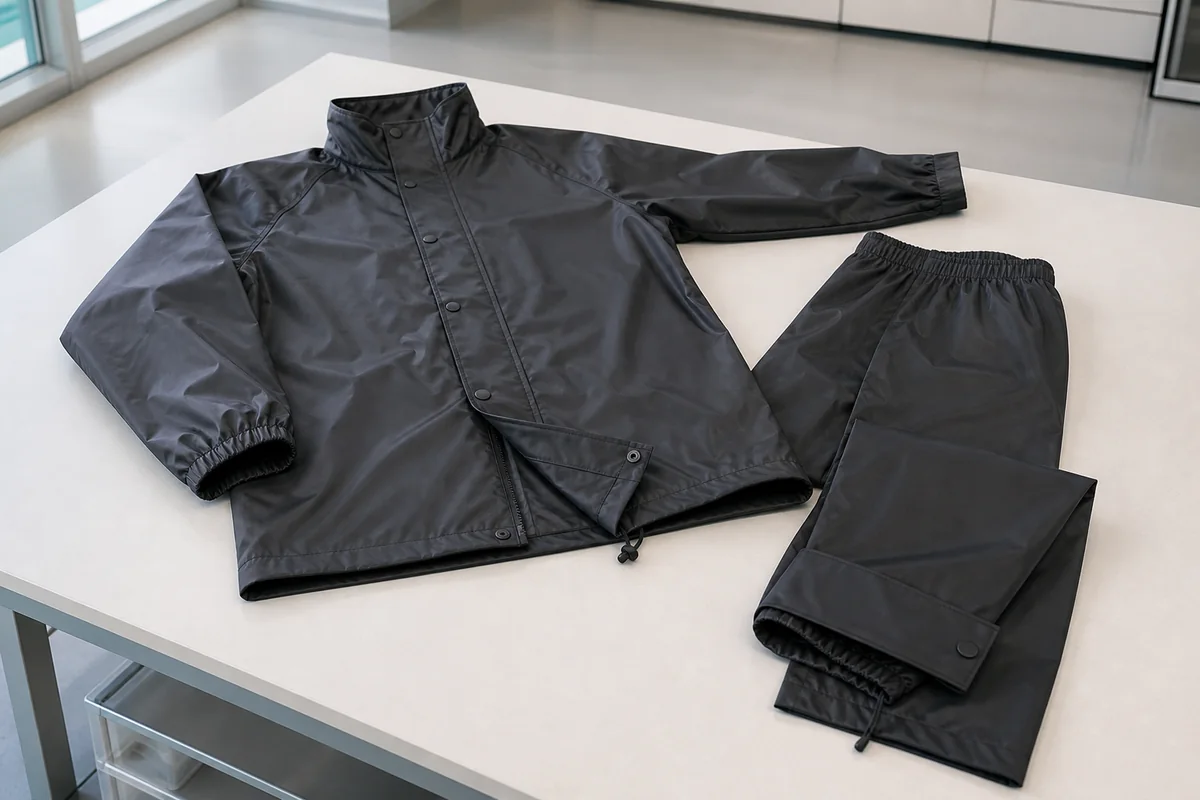
Zipper, snap, storm flap, drawcord, hook-and-loop or tie |
Closures are frequent leakage, snag and durability points. |
| Brand system |
Decoration and identity controls |
Screen print, transfer, label, carton mark, color reference and artwork position |
Method compatibility and approval order affect appearance and production risk. |
| Release evidence |
What is checked and recorded |
Material identity, dimensions, seam or weld, closure, appearance, pack-out and requested tests |
Evidence must match the claim and the buyer’s acceptance decision. |