1
Liquid, soil and pickup target
Separate water, sweat, oils, wax, cleaning solution, dust, makeup or other target. Define whether the towel absorbs, lifts, spreads, dries, polishes or cools. One cloth rarely maximizes every function.

B2B textile performance program
A towel should be specified by what it contacts, what it must move, how it is washed and how the channel measures success. Only then should a buyer choose microfiber, cotton, bamboo blend, cooling construction, weight, edge, artwork and packaging.
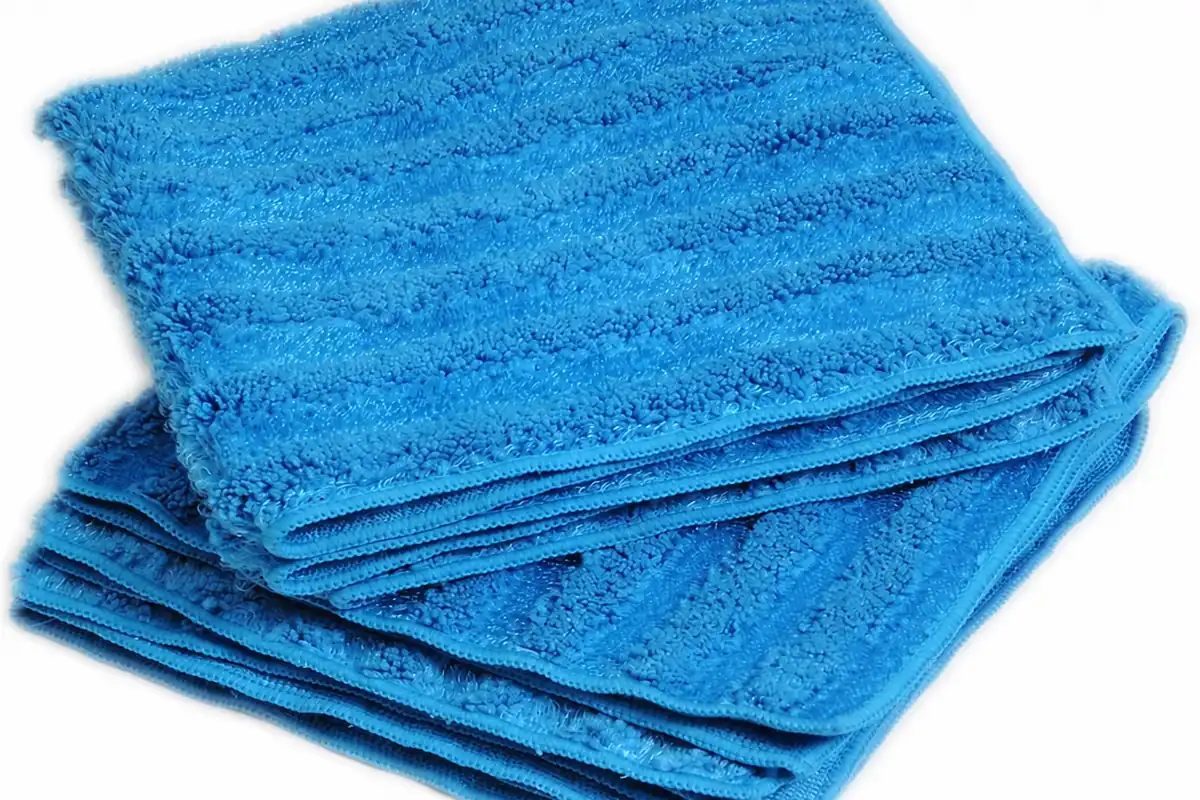
Decision 01 · Use definition
“Soft, absorbent and quick dry” sounds attractive but does not identify a usable product. Procurement must name the liquid or soil, contact surface or skin, motion, reuse cycle, laundering and channel. Those objects decide which construction and evidence matter.
Separate water, sweat, oils, wax, cleaning solution, dust, makeup or other target. Define whether the towel absorbs, lifts, spreads, dries, polishes or cools. One cloth rarely maximizes every function.
Name paint, glass, metal, household surface, equipment, hair, face, body or another contact. Surface sensitivity, skin feel and hygiene expectations change pile, edge, chemical finish and evidence decisions.
Wiping, buffing, wrapping, drying, wearing and cooling create different shear, pressure and coverage. Record real handling so sample trials reproduce the buyer’s operation rather than a showroom touch test.
State single event, home wash, commercial laundry or professional cleaning cycle, plus expected replacement economics. Initial softness cannot predict post-wash hand, size, edge, lint or color.
Send the use case. We will turn vague performance words into a testable product and wash-cycle brief.
| Buyer job | Fiber and construction | GSM and size method | Edge, lint or surface risk | Wash and dry evidence | Branding and pack input |
|---|---|---|---|---|---|
| Cleaning or wiping | Declared fiber, yarn, knit or weave and pile/face | Conditioned mass and finished dimensions by named method | Edge, lint release, snagging and target-surface interaction | Buyer-representative soil, wash and dry cycle | Color/SKU, decoration boundary, unit fold and replenishment pack |
| Body, bath or guest drying | Construction selected for touch, coverage and laundering route | Finished size, mass method and tolerance | Hem comfort, pile integrity, lint and shared-use controls | Actual hospitality or consumer laundering sequence | Size/color assortment, label, fold and carton ratio |
| Cooling use | Exact textile system and conditioning route | Finished geometry and conditioned measurement | Skin-contact edge, dye transfer and misuse boundary | Named activation, use, wash and dry observations | Instructions, pouch or pack identity and distribution moment |
| Promotional textile | Construction remains tied to the intended functional task | Method and dimensions retained after decoration | Decoration face, edge change and surface suitability | Decorated complete sample through the represented care cycle | Artwork, placement, approval proof, count and kit allocation |
Decision 02 · Product branch
The category combines three distinct procurement branches. They can share commercial coordination, branding and cartons, but microfiber cleaning cloth, terry bath towel and cooling textile should never inherit one another’s specifications or claims.
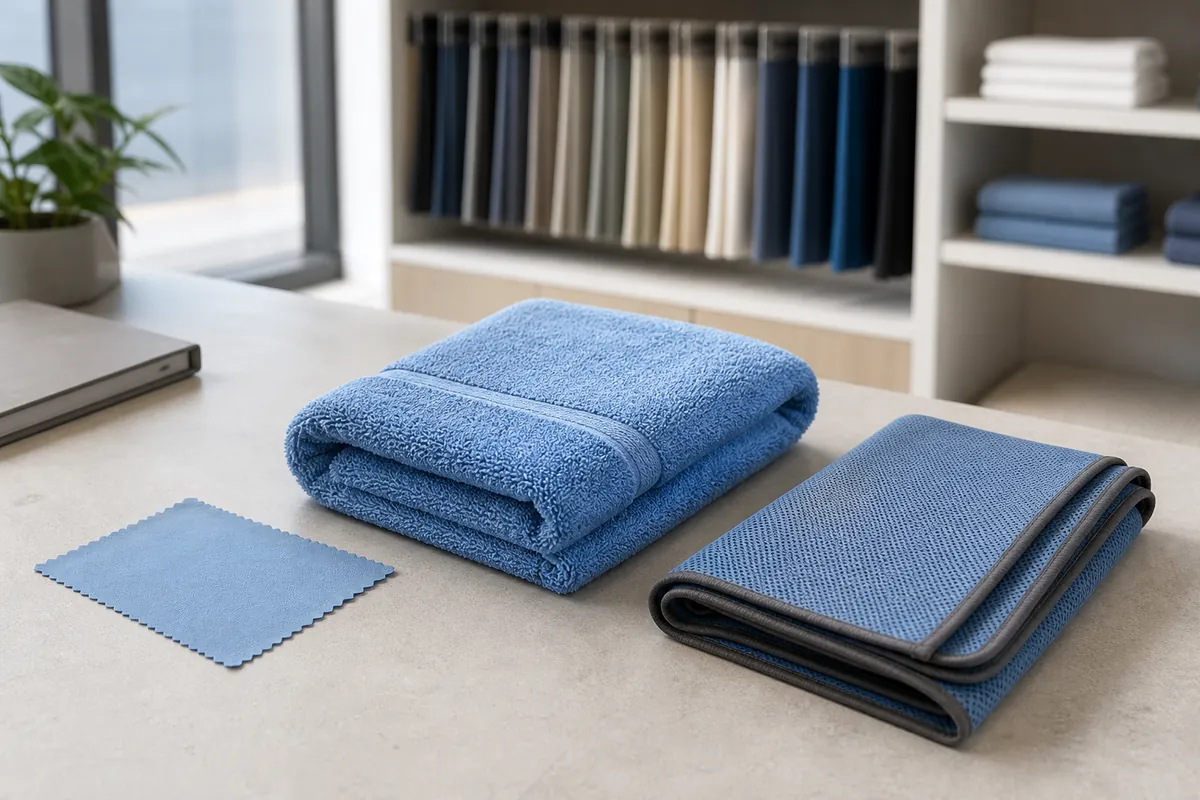
Define surface, soil, fiber/construction reference, pile or weave, edge, lint expectation, wash protocol, color coding and surface-safety evidence. A “microfiber” label does not prove split, pickup, lint or scratch behavior.
Explore microfiber cleaning towels → Buying guide: Microfiber blend, GSM and weave →Balance skin hand, water pickup, coverage, drying, loop security, laundry survival, branding and pack. Hotel replacement economics, resort retail presentation and personal-care contact require different constructions.
Product page: Bath, beach and personal-care towels → Buying guide: Compare towel construction and care →Define actual fiber content, yarn and fabric construction, finish, hand target, laundering and claim evidence. “Bamboo” or “premium cotton” wording must not replace a measurable textile specification.
Product page: Bamboo-blend, cotton and cooling towels → Buying guide: Compare material routes and claims →Define activation, wet-state handling, coverage, evaporation conditions, reuse, package and any cooling claim method. A damp fabric can feel cool without supporting a quantified performance promise.
Explore promotional cooling towels →Give us the product list. We will separate the performance objects while preserving one coordinated commercial program.
Decision 03 · Material architecture
Fiber percentage and GSM are only two attributes. Yarn, filament, split, weave or knit, pile, ground, finish, edge and dimensions determine how the towel behaves. The approved sample must remain linked to those construction objects.
Record composition and the supplier reference that applies to the finished textile. For microfiber, clarify relevant filament/blend and construction information. For cellulosic towels, define fiber claim and yarn route.
Short/long pile, loop, waffle, suede, terry, twist and ground structure influence pickup, drag, hand, lint and durability. Use construction names with physical references, not as unverified marketing labels.
State whether GSM and size are measured before or after conditioning or washing, plus tolerance and method. A heavy towel can still perform poorly if pile, finish or liquid interaction is wrong.
Softener, brushing, shearing, coating or other finishes can alter first touch, absorption, print and laundering. Identify intended finish and verify the product after the use or wash cycles that matter.
Send weight and use. We will add fiber, construction, pile, finish, conditioned size and tolerance so samples become comparable.
Decision 04 · Contact integrity
Complaints often begin at the perimeter or contact face, not the headline fiber. Edge bulk can scratch or drag; weak loops can pull; cut debris can become lint; labels can contact skin or paint. These details require application-specific acceptance.
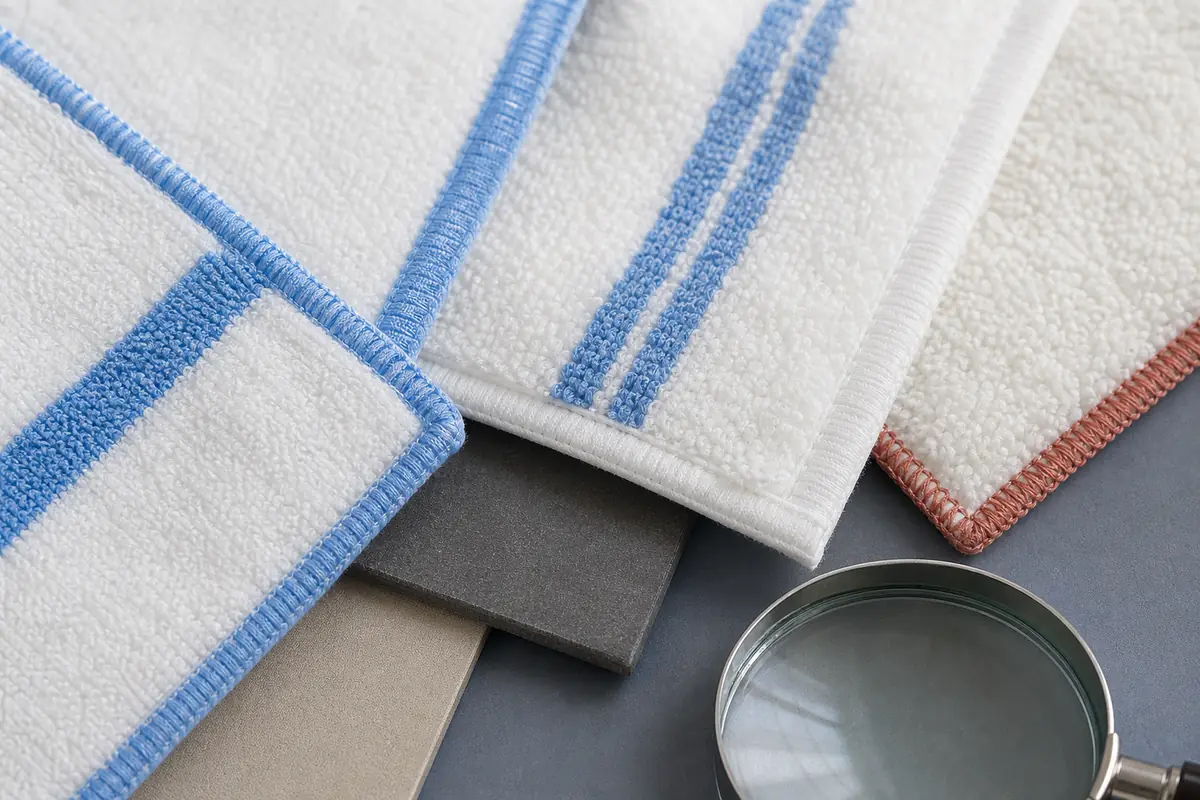
Define overlock, hem, edgeless or other route, thread, seam bulk, corner finish and tolerance. Trial the edge on the actual surface or wearer movement; visual neatness alone does not prove suitability.
State what “low lint” means for the intended use and how it is observed or measured after prewash and repeated laundering. Dark glass, paint, optics and personal care may require different acceptance.
Review terry loops, pile, embroidery, hooks and labels against real handling. Define unacceptable pulls or exposed threads and inspect high-risk zones before packing.
Never infer scratch safety or skin suitability from softness by hand. Define the surface, soil, pressure, chemical and test or trial. Buyers control downstream claims and care instructions.
Share the surface and motion. We will qualify edge, lint, snag and label contact before bulk release.
Decision 05 · Branding
Print, sublimation, reactive routes, jacquard, embroidery, labels and wraps influence hand, absorbency, pile, reversibility and cost. Choose the branding process only after defining the use face and required performance.
Review detail, gradients, repeat, color count, pile, texture, absorbent face and reverse appearance. Approve production-scale artwork on the actual construction rather than a smooth digital mockup.
Define process, target colors, penetration or face expectation, wash method and color-change/transfer acceptance. Dark and high-coverage designs require special attention to contact surfaces and laundering.
Embroidery adds local stiffness, reverse threads and weight; jacquard integrates design but changes structure and scale. Locate branding so it serves the channel without compromising drying or skin contact.
Freeze fiber/care text, brand label, barcode, insert, wrap or bag, destination language and carton marks. Confirm claim responsibility and make identifiers easy for receiving and replenishment.
Send artwork and use. We will match process, placement and pack to the function buyers are paying for.
Decision 06 · Use-cycle durability
Initial samples can be assisted by temporary finish and have never faced chemistry, heat, tumbling or repeated use. Approval should define the laundering protocol and post-cycle acceptance that represents the channel.
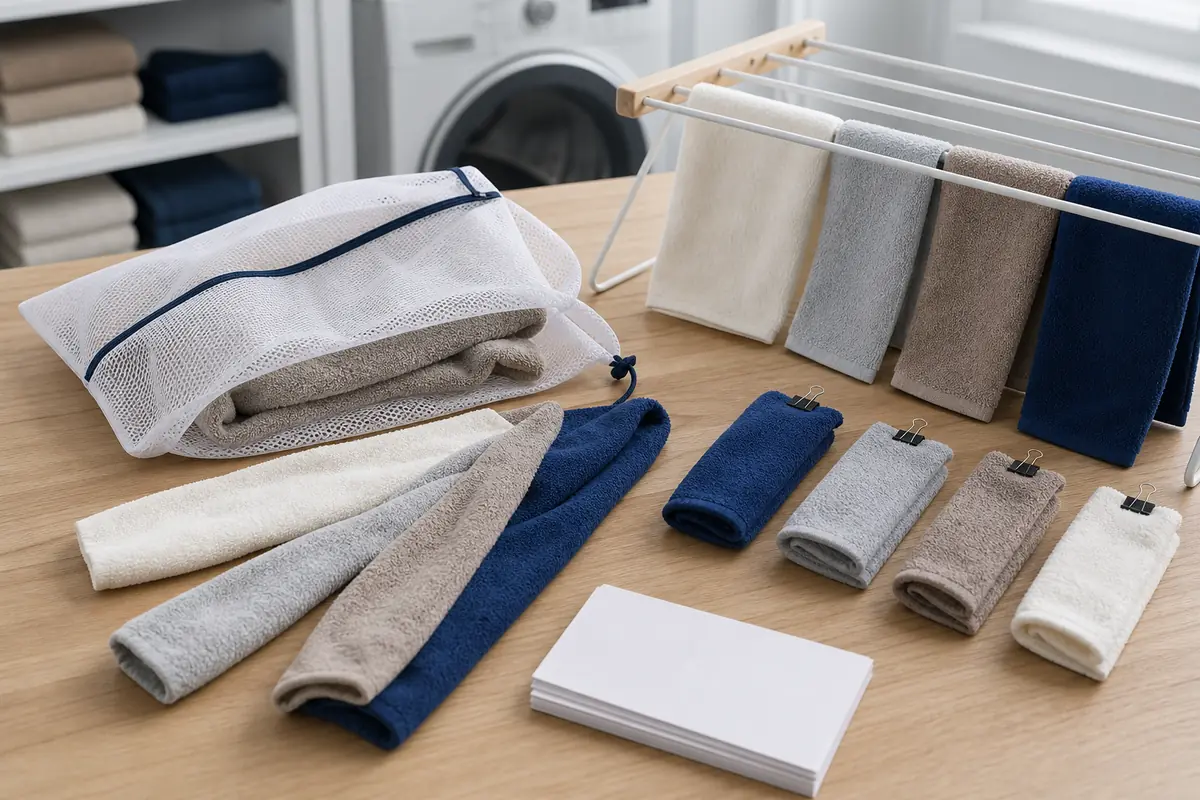
Measure dimensions, weight, appearance, color, hand, edge and relevant performance before cycles. State conditioning method so baseline comparisons are meaningful.
Record water, detergent or chemical, temperature, load, rinse, extraction and drying route. Hospitality, detailing, home and sport programs can expose textiles differently.
Review shrinkage, distortion, hardening, loop pull, seam, print, embroidery, color, transfer, lint and performance at agreed checkpoints, not only after one wash.
Translate acceptable life and failure mode into replacement planning. A higher unit cost may or may not create lower cost per use; the evidence should drive the decision.
Share the real laundry cycle. We will create before/after checkpoints that reveal temporary softness and hidden shrinkage.
Decision 07 · Claim evidence
For company assessment, EverBen provides ISO 14001, ISO 9001 and BSCI documentation. Towel absorbency, drying, cooling, lint, surface-contact, fiber and chemical statements need their own method and SKU scope.
Name liquid, sample conditioning, method, time and result object. Absorbency by weight, pickup rate and wiping result answer different buyer questions.
Define wet load, airflow, temperature, humidity, time and comparison for drying. Cooling claims need activation, environment, measurement location and duration. Avoid universal numbers.
Define the surface, prewash, pressure, motion, contamination and observation method. “Lint-free” and “scratch-free” should not be absolute labels without a scoped protocol.
Match composition, restricted-substance, recycled or other documents to the exact material/SKU and current scope. A supplier or company certificate does not automatically cover every towel.
Send the buyer statements and reports. We will map each claim to the correct material, finished textile and use-cycle evidence.
Decision 08 · Sample and inspection
A hand-approved sample is not reproducible unless the construction, conditioned dimensions, weight, edge, artwork, color, laundry state and packaging are recorded. Build checkpoints where a process can still be corrected.
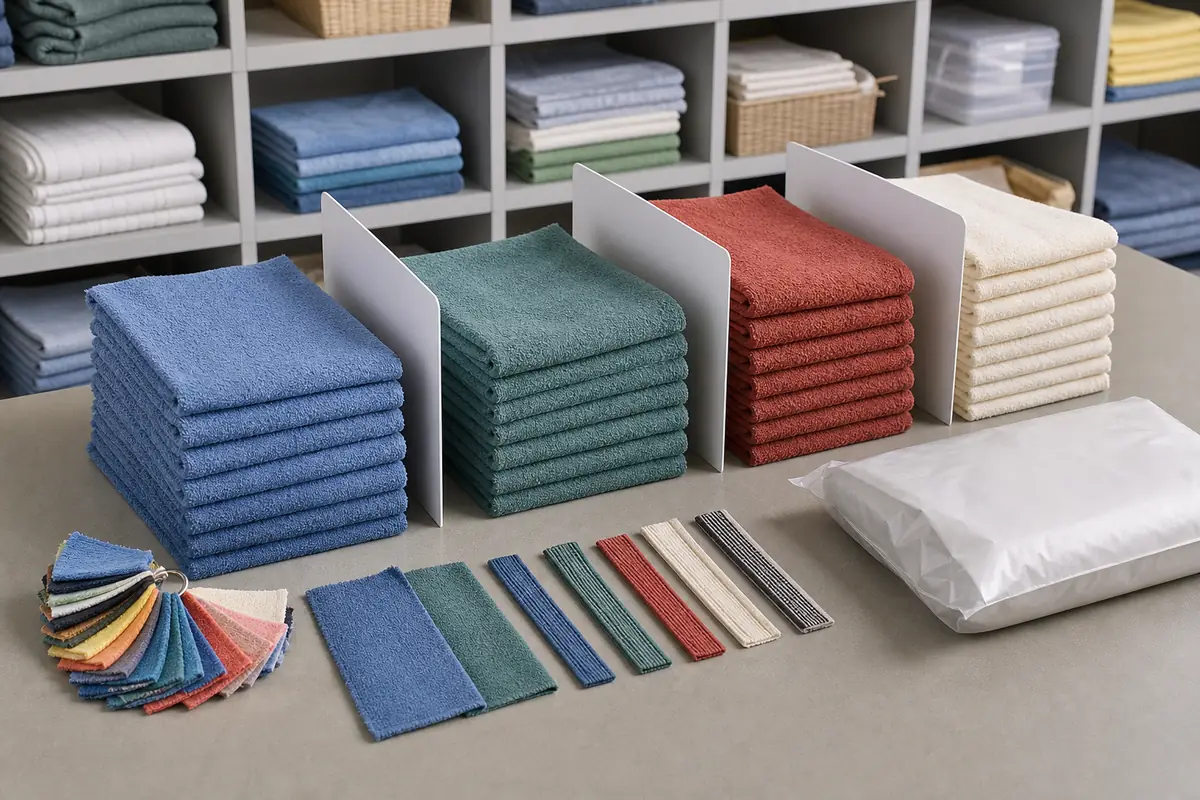
Label raw, prewashed, conditioned or cycle-tested status. Record size, weight/GSM method, material/construction, finish, edge, color and artwork. Keep samples protected from mix-up.
Verify yarn/fabric references, color, construction, width, print or weave, cutting and edge before final packing. Identify the stage where defects become irreversible.
Use buyer-approved sampling to check dimensions, weight, appearance, edge, artwork, labels, count, pack and relevant functional evidence. “Good quality” is not an inspection list.
Any fiber, yarn, weave, finish, dye/print, edge or packaging change must be reviewed against approved function and evidence. Record buyer disposition before bulk release.
We will create a state-labeled sample and inspection record that removes room for guesswork.
Decision 09 · Commercial release
Too many near-identical colors, sizes and constructions can bury margin in slow stock. Packaging choices also change moisture, compression, barcodes and warehouse labor. Treat assortment and pack as part of product engineering.
Keep a SKU only when size, construction, use, color or channel creates a meaningful decision. Avoid cosmetic variants that fragment production and inventory without serving a real buyer task.
Solid cartons simplify supply; mixed cartons support allocation; kits sell a routine but add assembly and count risk. Model receiving, barcode and replenishment before choosing the cheapest unit pack.
Define fold, compression, moisture protection, odor risk, inserts, individual wrap and carton limits. Confirm the towel recovers and arrives in the state expected by retail, hospitality or professional users.
Retain construction, supplier/material references, conditioned specs, color/artwork, edge, labels, pack and evidence revision. Compare new lots to the current standard before production.
Share the range and channels. We will build a SKU, carton, kit and reorder plan around actual use and replenishment.
Decision 10 · Buyer FAQ
MOQ, price, sample timing and production timing depend on the construction, artwork, quantity, pack, evidence and destination. The questions below create a useful RFQ without pretending all towels share one commercial rule.
No. GSM describes mass per area, not fiber identity, yarn, pile or weave, split, finish, edge, dimensions after conditioning or washing, lint, absorbency, drying or surface suitability.
Define the surface and soil, fiber blend or construction reference, weave or pile, size, weight, edge, color coding, lint and surface-safety evidence, wash protocol, pack and inspection method.
No. Buyers should define laundering chemistry, temperature, drying, cycle count and post-cycle acceptance for size, weight, hand, color, edge, absorbency, lint and appearance as relevant.
Your project details will be reviewed by EverBen's towel-program team.
Send the products and use cases. We will identify the construction, claim, wash and pack decisions still open.