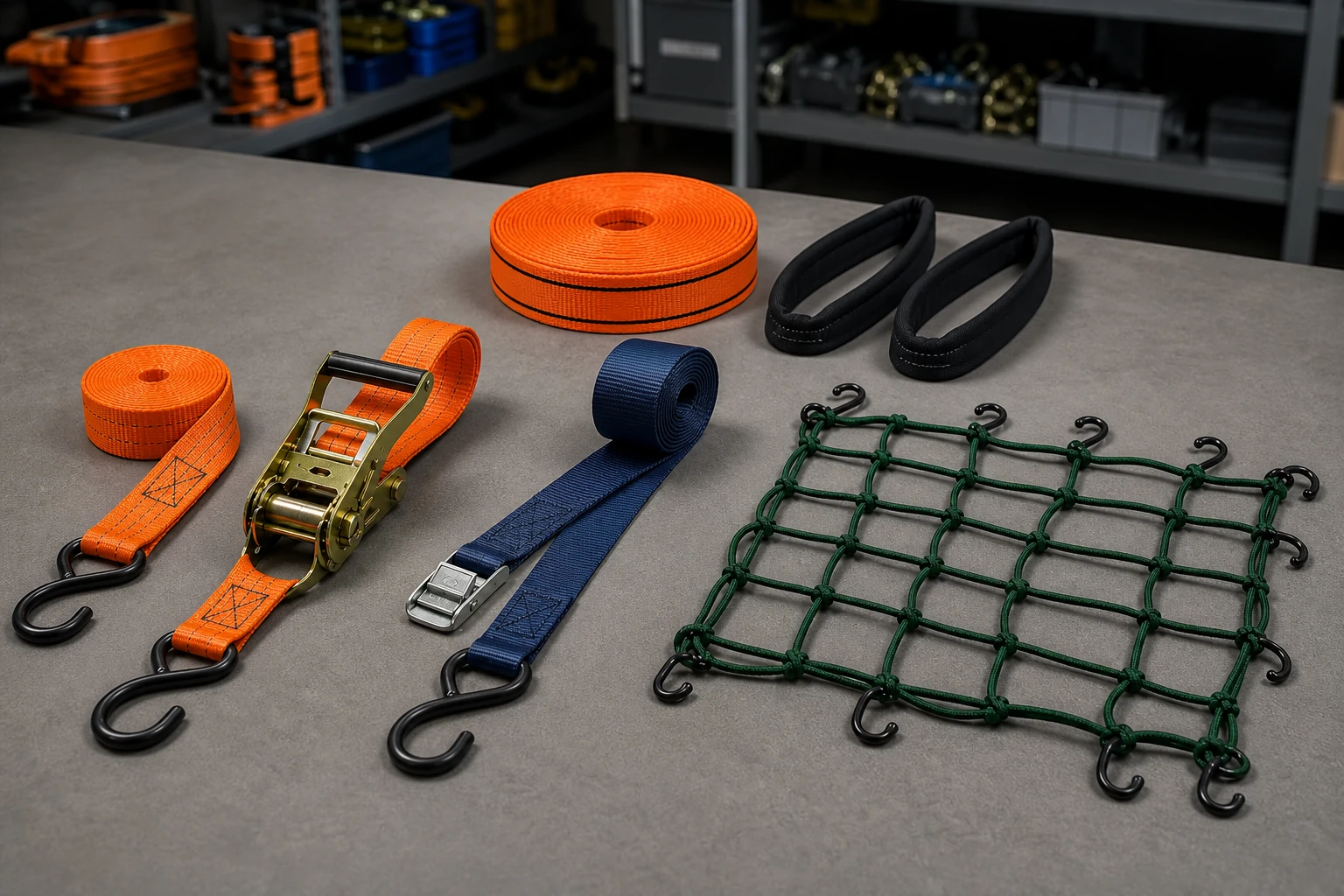
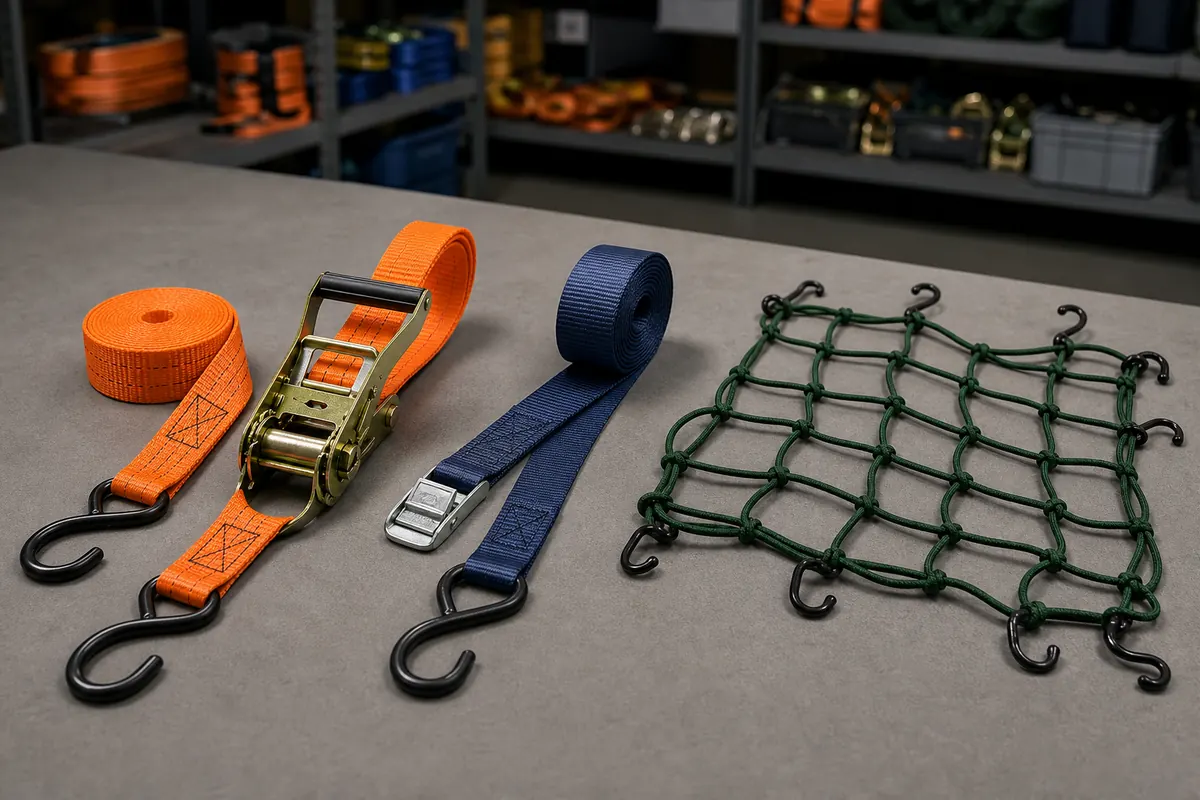
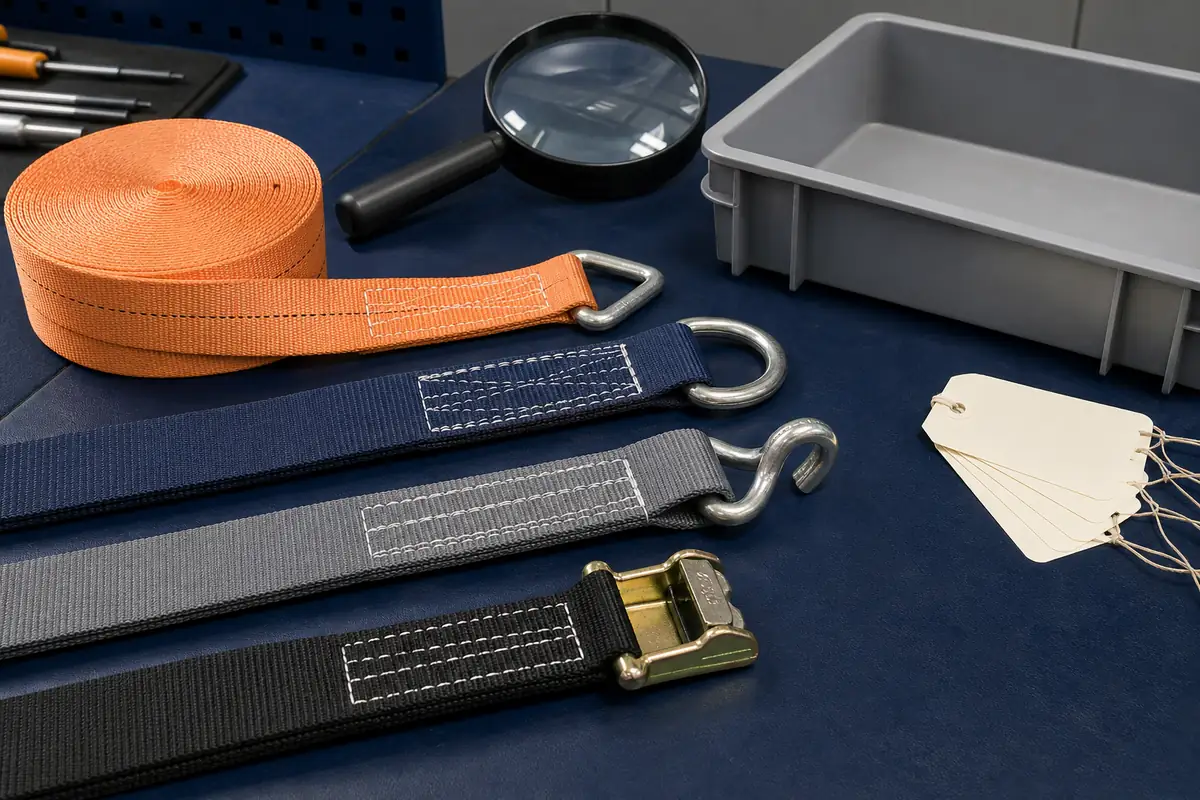
| Ratchet tie-down | Indexed ratchet take-up | Controlled lashing route with defined anchor geometry | Using an unverified assembly, anchor or damaged webbing | Cargo, route, anchor points and complete assembly brief | Approved BOM, complete sample and represented route review |
| Cam buckle strap | Manual pull-through buckle | Light-duty positioning where the buyer has bounded the task | Treating manual tension as a ratchet or lifting device | Object geometry, buckle route, webbing and end fittings | Buckle/webbing compatibility and complete assembly inspection |
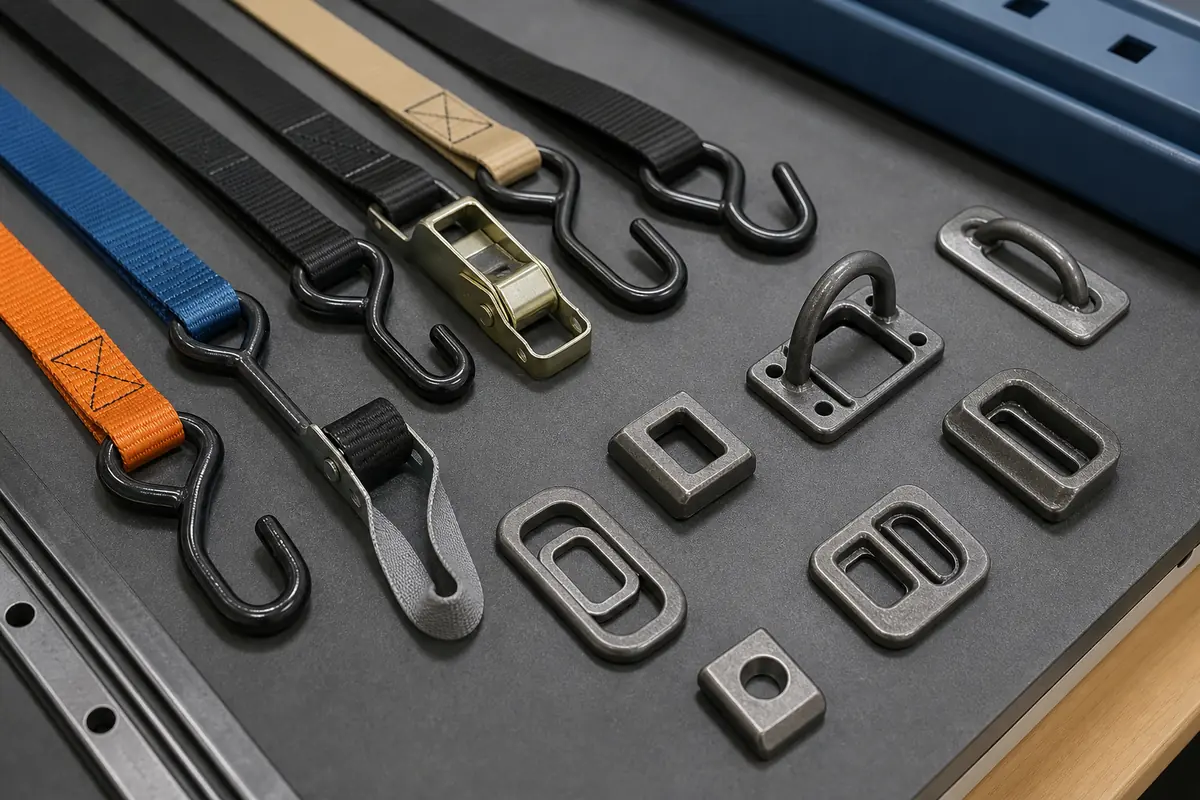
| Winch or E-track system | Vehicle-mounted winch or track fitting | Vehicle-specific route after mounting and track survey | Assuming hardware compatibility from appearance | Vehicle, track, anchor, strap path and operating owner | Installed-interface review and controlled component file |
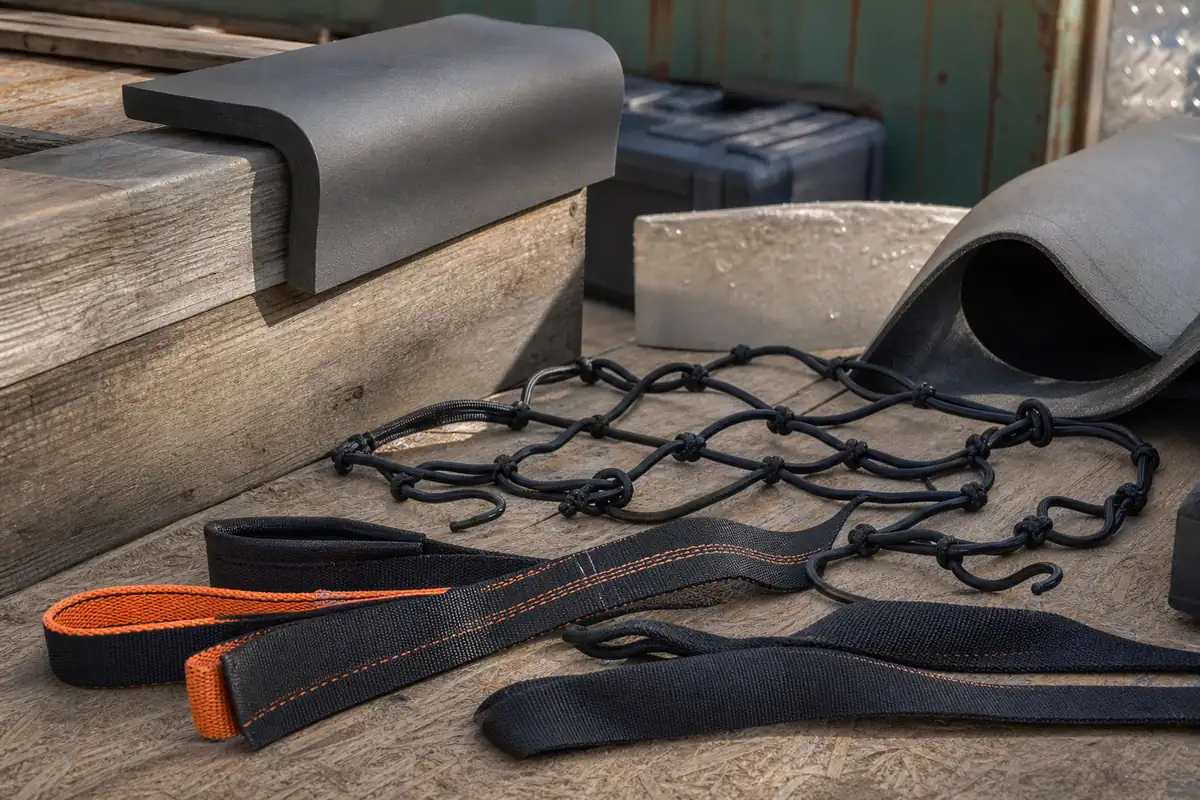
| Webbing, soft loop or cargo net | Component or distributed restraint architecture | Buyer-defined assembly or net geometry | Publishing a capacity from webbing alone | Material, geometry, interfaces, load path and packing | Complete represented assembly and revision-controlled evidence |