
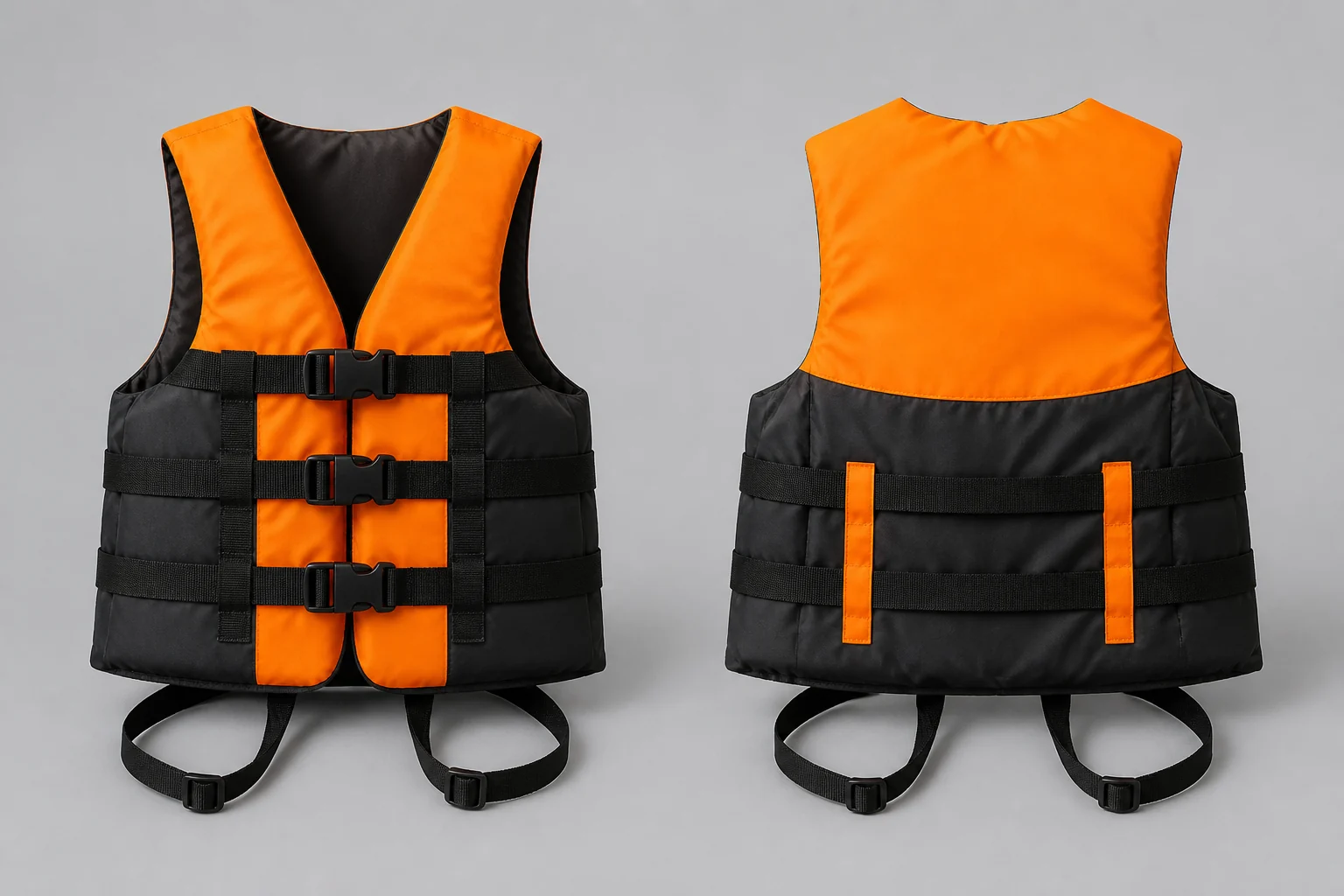
BUYING GUIDE / LIFE JACKETS, FLOTATION VESTS & WATERSPORT VESTS
How to Define Buoyancy, Size and Activity for Life Jacket Sourcing
A bright vest is not automatically an approved life jacket, and one buoyancy figure does not make a device suitable for every wearer or activity. Buyers must define the jurisdiction, vessel or activity, rescue conditions, user group, performance label and complete product evidence before comparing offers.
This guide separates inherently buoyant foam vests, paddling designs, child configurations and fishing-oriented garments. It organizes selection fields without claiming that any pictured EverBen sample is approved, certified or suitable for a regulated use.
01 / use and jurisdiction
Define the regulated use, activity and rescue context before selecting a vest
The responsible authority and buyer define what must be carried or worn. Procurement should record the vessel, activity, wearer, water conditions and rescue assumptions before asking a supplier to nominate a construction.
- 01Define vessel and activity
- 02Name jurisdiction and owner
- 03Map wearer and rescue context
- 04Freeze the claim boundary
01
Name the exact use
Record recreational boating, occupational use, paddling, angling, sailing, passenger carriage, towing, personal watercraft, whitewater or another buyer-defined activity. Separate mandatory carriage from voluntary wear and marketing use.
02
Identify the rule owner
Name the destination, authority, vessel operator, brand compliance owner and applicable standard or approval scheme. Capture edition, label route and restricted uses supplied by the buyer instead of inferring them from color.
03
Map rescue and exposure
Describe sheltered or open water, distance to help, expected rescue time, waves, current, water and air temperature, foul-weather clothing, swimming ability and continuous-wear needs. Keep assumptions explicit and reviewable.
02 / performance route
Select a performance category from the required label system, not from appearance
Performance Type, performance Level, buoyancy-aid wording and activity restrictions belong to defined systems. The sourcing record must preserve the exact category, label and evidence expected for the destination.
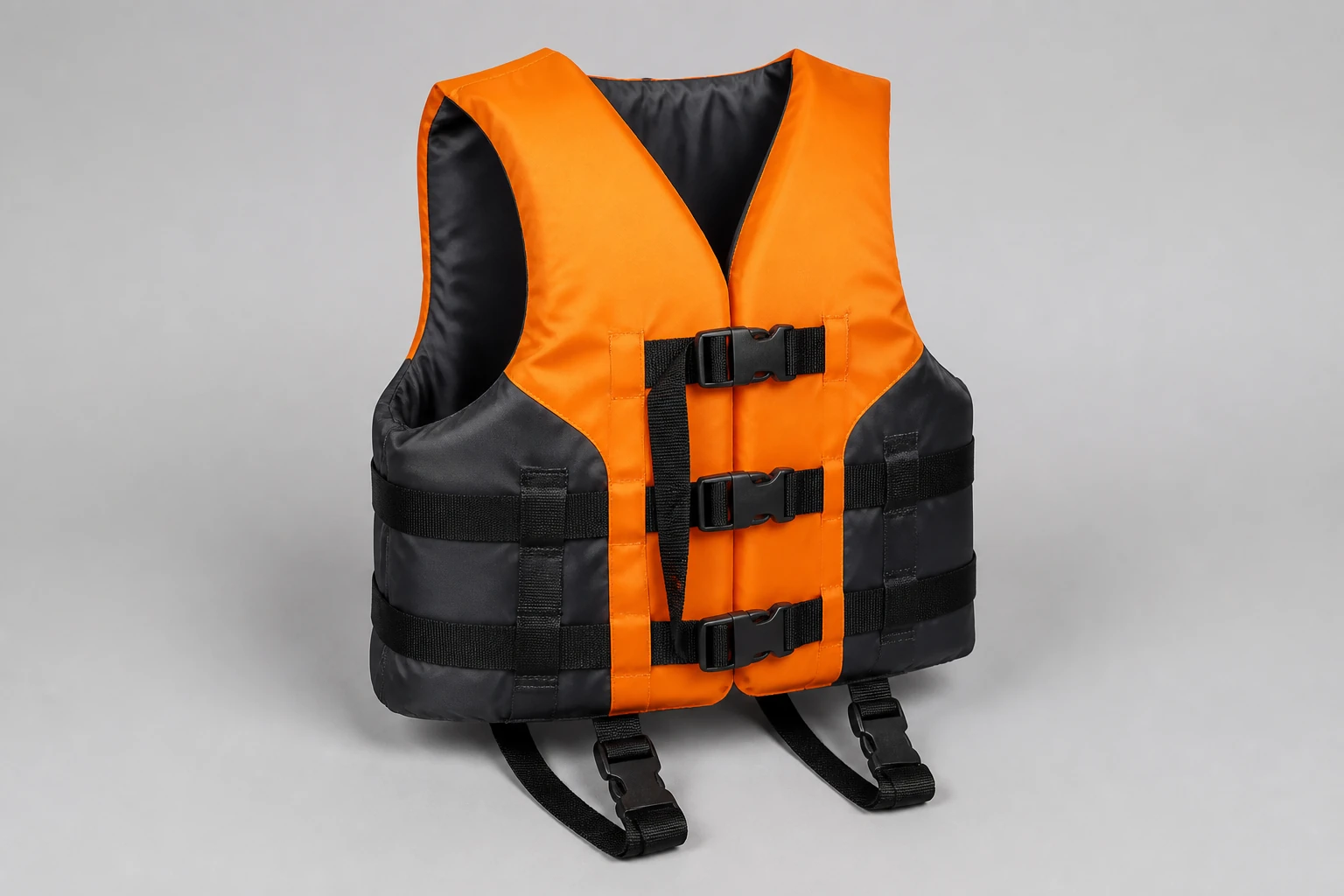
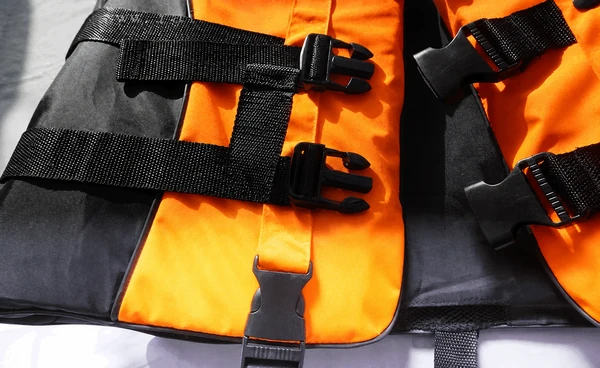
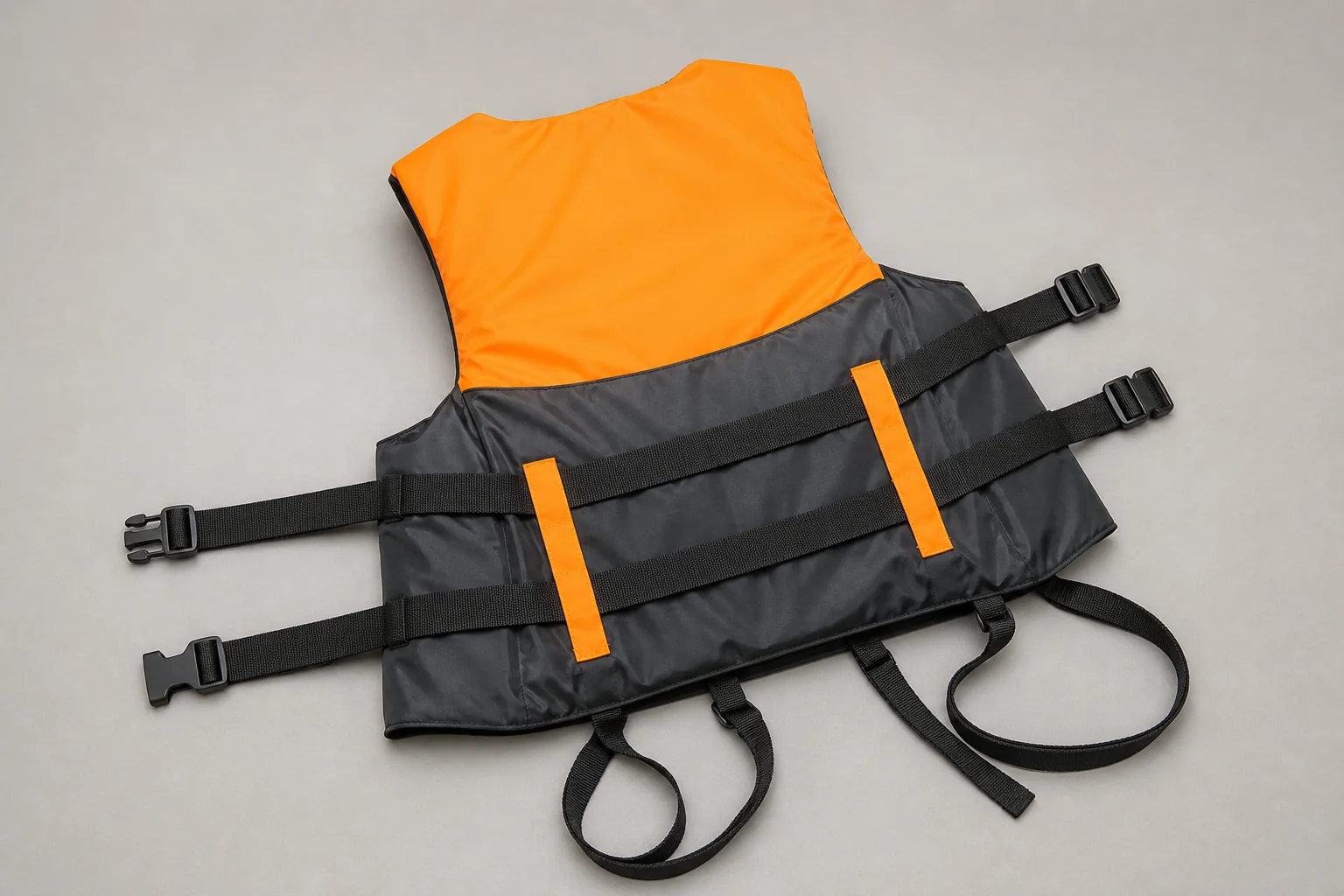
Work backward from the intended activity, wearer and complete labeled vest
Resolve activity, water conditions, intended wearer, governing size criteria, model, closure and adjustment route, label scope, requested evidence, fit observation and packed unit before approving color or styling.
Keep components, assembled vest, labeled model, wearer-fit observation and packed unit separate
A shell photograph cannot prove the flotation construction; a loose buckle cannot prove closure retention; and a mannequin cannot prove the intended wearer range, ride-up behavior, approval status or buoyancy performance.
01
Read the complete label route
Record category or level, intended environment, turning information, warnings, wearer range, donning instructions, maintenance and activity restrictions. Do not detach a newton or pound value from its label context.
02
Separate flotation constructions
Identify inherently buoyant foam, inflatable or hybrid routes and any destination restrictions. This page’s product visuals show foam constructions only and do not represent approval of inflatable or hybrid systems.
03
Control intended activity
Bind the selected configuration to the approved activities and exclusions. Paddling freedom, fishing pockets, high-visibility color or a child cut cannot substitute for the required label and finished-device evidence.
03 / flotation construction
Control foam identity, panel distribution, shell and drainage as one assembly
Finished behavior depends on more than total foam volume. Material identity, panel thickness, location, compression, shell restraint, water drainage and size grading must remain connected to the released complete vest.
- 01Freeze material identity
- 02Map size-specific panels
- 03Assemble the complete vest
- 04Bind evidence to revision
01
Identify every flotation panel
Record supplier-declared foam type, density basis where controlled, thickness, layer count, panel code, orientation and size-specific geometry. Preserve complete and internal reference views without inventing performance from appearance.
02
Map the textile envelope
Control shell, lining, mesh, coating if any, binding, thread, drainage openings and pocket constructions. Check how seams and folds hold panels without creating unapproved voids or rigid pressure points.
03
Bind evidence to the assembly
Component observations and reports must identify the exact material lot and method, while finished-device evidence must identify size, construction revision, closures, labels and conditioning. Never use one to replace the other.
04 / size and fit
Build size ranges around the governing wearer criteria and a repeatable fitting route
A generic S–XL table is not enough. The buyer must define whether size is governed by weight, chest, age category, torso geometry or a combination, then confirm retention and movement on the intended wearer population.
| Decision object | Required relationship | Typical evidence gap |
|---|---|---|
| Intended wearer | Chest or weight range, any governing age category, exact model and released size are linked | Generic S–XL label without wearer criteria |
| Adjustment range | Shoulder, chest, waist and leg or crotch adjustments are measured in the secured configuration | Strap length shown without usable adjustment travel |
| Closure retention | Buckles, zipper, webbing locks and retention features are checked together on the complete vest | Loose closure component without engagement observation |
| Activity fit | Torso position, arm movement, seated posture and intended activity are recorded for the selected wearer | Static mannequin image treated as fit approval |
| Ride-up observation | Donning order, snugness, controlled upward movement and chin or ear clearance are documented | No wearer/sample relationship or observation method |
01
Define each wearer group
Separate adult, youth, child and infant categories only according to the required destination system. Record the controlling wearer range, garment dimensions, overlap rules and prohibited gaps for every SKU.
02
Map adjustment capacity
Dimension body length, chest envelope, armholes, neckline, waist closure, shoulder adjustment, webbing tail, crotch or leg retention and grab handle where used. Check usable range after all closures are secured.
03
Document the fitting sequence
Specify donning, closure order, strap adjustment, snugness, ride-up check, chin and ear clearance, arm movement and removal. Record the wearer/sample relationship and do not convert a mannequin photograph into fit approval.
05 / activity ergonomics
Balance flotation coverage, retention and activity movement without weakening the required system
Arm opening, panel articulation, collar, pockets and seat compatibility affect wearability, but comfort changes cannot override the required performance route or approved construction.
- 01Define activity posture
- 02Dress the intended layers
- 03Adjust the released system
- 04Record bounded fit observations
01
Map movement and posture
Describe paddling reach, fishing posture, standing and seated positions, clothing layers, harness or seat interfaces and continuous-wear duration. Review chafe points and access without promising unrestricted motion.
02
Control closures and retention
Specify zipper, buckle count, webbing path, side adjustment, crotch or leg retention, shoulder route and grab handle. Check closure access, tail management and visible damage after agreed handling sequences.
03
Separate features from approval
Pockets, whistle attachment, reflective trim, hydration interfaces and color can support use tasks, but each must remain compatible with the exact approved configuration and must not create unsupported rescue claims.
06 / label and service
Treat approval labels, warnings, care and inspection wording as controlled product components
A missing, copied or outdated label can invalidate the buyer’s release record. Artwork must match the destination route and exact construction, while service instructions must remain legible through the intended product life.
01
Build the label hierarchy
Separate mandatory approval label, wearer/size information, activity restrictions, donning instructions, warnings, care, traceability and buyer branding. Route certification artwork only through authorized evidence owners.
02
Control placement and legibility
Define material, print method, location, orientation, edge finish and inspection method. Check that labels remain accessible and are not covered by pockets, straps, foam folds or packaging.
03
Define serviceability wording
List inspection before use, drying, cleaning, storage, damage indicators, replacement route and any authorized servicing steps. Do not promise a lifetime or maintenance interval without controlled support.
07 / inspection and packing
Release each size, accessory set and carton against a complete approved comparator
The delivered SKU includes shell, flotation panels, webbing, closures, labels, accessories, bag and carton. Inspection must preserve the relationship between these objects instead of checking isolated color and count.
| Release object | Controlled fields | Buyer decision | Status |
|---|---|---|---|
| Exact model and size | Model code, wearer criteria, garment dimensions, adjustment range and revision | Confirms the released size route | Resolved / open |
| Complete components | Shell, flotation panels, webbing, closures, retention features and accessories | Identifies the supplied construction | Matched / unmatched |
| Label and evidence scope | Destination, label wording, warnings, evidence owner, report identity and model coverage | Prevents unsupported approval or performance claims | Current / gap |
| Wearer-fit observation | Wearer measurements, donning, adjustment, movement, ride-up observation and reviewer | Bounds fit to the observed sample | Accepted / conditional |
| Packed unit | Size mark, instructions, accessories, bag, carton, count and released comparator | Connects the approved model to delivery | Released / hold |
01
Separate approval objects
Track raw materials, cut panels, assembled vest, size/fit sample, labeled unit, activity review sample and packed shipment as separate records connected to one revision.
02
Inspect critical characteristics
At finished-unit review, compare the size mark and panel build first. Then verify closure engagement, lower straps, optional visibility parts, mandatory labels, packed accessories and carton quantity against the released sample.
03
Retain the released comparator
Archive complete front, back, side, interior, closure, label and packed views plus controlled records. Preserve custody and revision so reorders use the correct size and construction reference.
08 / RFQ and continuity
Carry performance route, size and activity controls into quotations and reorders
Two offers are comparable only when they represent the same jurisdiction, category, construction, wearer ranges, fit route, labels, evidence, accessories and packing. Make every alternative and reapproval consequence visible.
- 01Release one controlled RFQ
- 02Compare complete labeled samples
- 03Lock approved size records
- 04Reopen affected lanes on change
01
Issue one controlled matrix
List destination, activity, category or level, flotation construction, size ranges, shell and foam, closures, retention, labels, evidence, accessories, packing and quantity for each SKU.
02
Price alternatives separately
Separate material, foam, size, closure, pocket, reflective, label, accessory and pack options. Show sampling, approval, inspection and timing consequences beside any cost difference.
03
Require change notice
No foam, textile, panel, grading, hardware, label, process, supplier, site or packing change should enter production before affected compliance and buyer owners review it.
Visibility and safety-claim boundary
Bright shell colors, reflective trim and visible foam thickness can support inspection only within a defined product route. A component report, photograph or staged fitting view does not establish life-jacket approval, finished-device buoyancy, turning ability, activity suitability or rescue performance for an EverBen SKU.
Route-specific FAQ
Checks before life jacket fit and activity approval
Does a newton value alone define the right life jacket?
No. A performance level must be read with its applicable standard, label, intended environment, turning information, restrictions, wearer category and complete approved construction. Do not compare an isolated number across unlike systems.
Can adult, youth and child sizes share one grading rule?
Not safely by assumption. Define the destination system, wearer weight and/or chest range, torso length, garment geometry, adjustment range and fitting checks for each group. Child designs can require additional retention features.
Can a paddling vest be used for towing or personal watercraft?
Only when the exact approved label and destination rules permit that activity. Arm freedom or sporty appearance is not evidence of suitability for towing, whitewater, personal watercraft or other restricted uses.
What is the difference between a life jacket and a buoyancy aid?
Terminology and performance duties depend on the applicable jurisdiction and standard. The buyer must specify the required category and exact label rather than relying on a supplier’s generic catalogue name.
How should fit be checked?
Follow the applicable label and buyer-approved fitting procedure. Check the intended wearer range, closure sequence, adjustment, ride-up, chin and ear clearance, arm movement, crotch or leg retention where specified, and comfort without loosening the device.
Can component foam evidence certify the finished vest?
No. Foam identity or buoyancy data does not establish finished-device displacement, distribution, turning behavior, retention, hardware strength, label compliance or approval of the assembled vest.
What should pre-shipment inspection include?
Inspect SKU and size, shell, foam panel placement, seams, binding, closures, webbing, buckles, zipper, retention features, grab handle, reflective elements, labels, accessories, folding, bag and carton count against the released comparator.
What changes require reapproval?
Foam, shell, lining, panel geometry, size grading, webbing, buckle, zipper, crotch strap, reflective component, label, supplier, process, factory or packing changes can reopen affected evidence and approval decisions.
Application decision
Convert a mixed flotation-vest request into a controlled sourcing brief
Send the destination jurisdiction, governing requirement, vessel or activity, water and rescue conditions, wearer groups, label/performance route, construction, size matrix, fitting method, hardware, inspection, packing, quantities and permitted claims. EverBen can organize these fields into comparable development records.