Manufacturer and sourcing integration partner · 20 years of export experience
Home / Custom Hats and Headwear

B2B custom headwear program

Custom Hats Manufacturer for Shape-Controlled Brand Programs

A logo on a cap is not a finished specification. Reliable bulk headwear connects wearer and channel to silhouette, panel geometry, fabric behavior, fit, visor, closure, decoration, color, packaging and a repeat-order file.

Choose a headwear route
Sports and promotional caps Fashion and felt hats Artwork-to-substrate trials Reorder identity
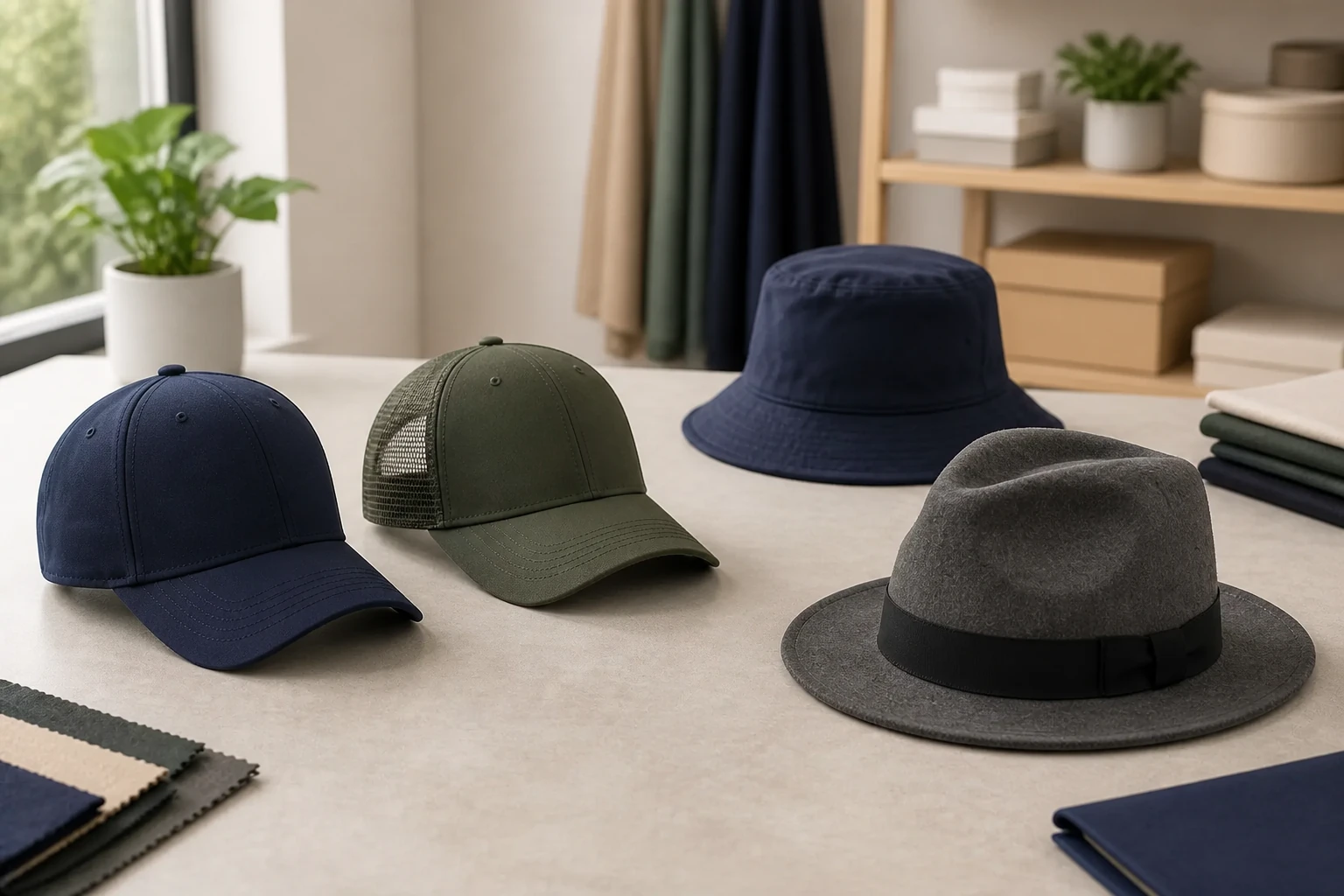
custom baseball cap, felt fedora and soft-brim fashion hat for bulk headwear programs
Approval order Channel → silhouette → material → fit → decoration → color → pack → release

Decision 01 · Commercial brief

Route the Custom-Hat Program by Buyer Outcome

A sports cap, event giveaway, outdoor uniform, retail fashion collection and decorator blank may share a head shape but not a success measure. Start with the reason the buyer needs headwear, then freeze the visual, wearer and operational constraints that the sample must solve.

1

Retail and private-label collections

Define brand position, silhouette family, target wearer, color story, trim language, size strategy, packaging and margin level. A retail program needs repeatable form and shelf recovery, not only a striking first sample.

2

Promotion, events and corporate issue

Record campaign audience, distribution method, deadline, artwork hierarchy, universal-fit expectation, individual pack needs and destination split. The cap must arrive ready to issue, not as a factory assortment that staff must reorganize.

3

Sports, outdoor and workwear programs

Describe heat, sun, sweat, wind, movement, wash or cleaning practice and logo visibility. Separate design intentions such as ventilation or sun coverage from any performance claim that requires a defined method and product-specific evidence.

4

Blank and decorator supply chains

State downstream embroidery, print or patch equipment, hooping zone, heat exposure, backing, stock colors and replenishment needs. A blank cap succeeds when it enters the buyer’s decoration process consistently, not merely when it is undecorated.

Your request says “custom cap,” but which business job must it perform?

Send the audience, channel and deadline. We will expose the silhouette, fit, decoration and packing decisions hidden behind the product name.

Decision 02 · Product family

Choose the Headwear Construction That Carries the Brand Correctly

Style names are useful search labels, not complete technical definitions. A structured baseball cap, soft outdoor hat, promotional visor and formed felt hat create shape in different ways. The product route determines which measurements, materials, tooling and inspection records matter.

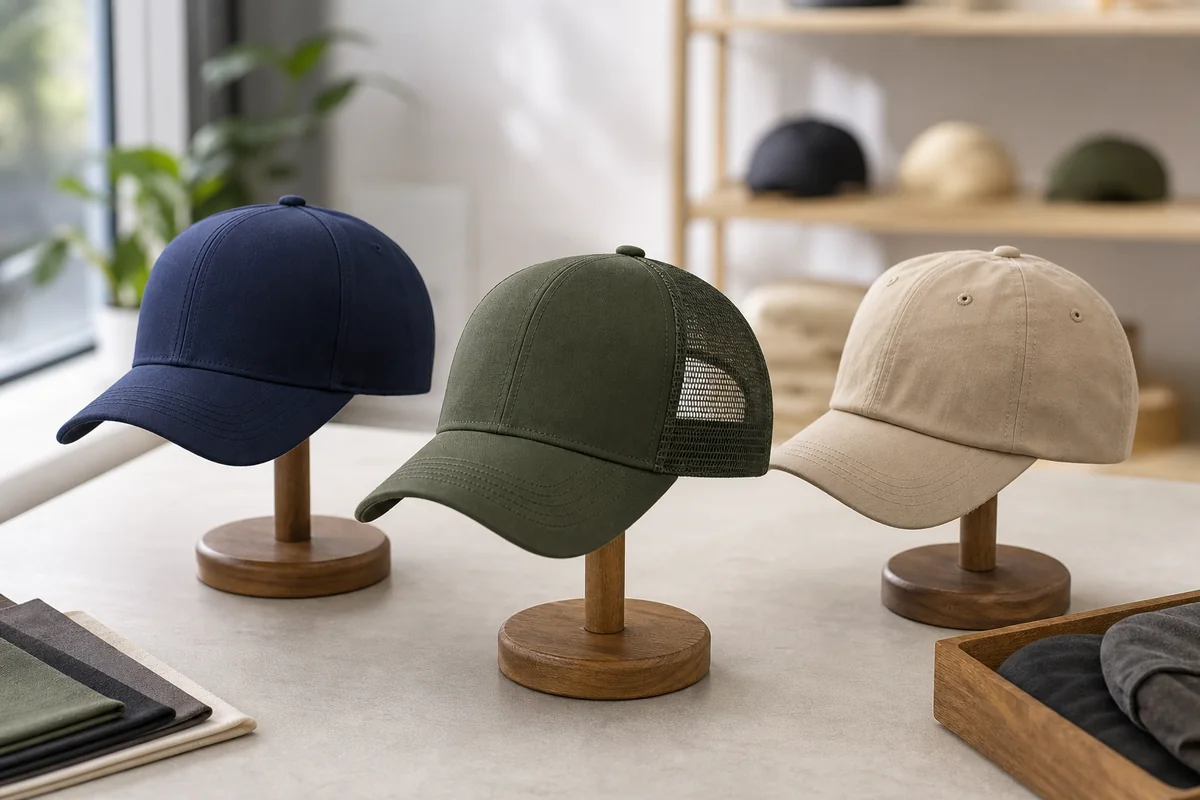
Three unbranded caps with different crown, back-panel and closure constructions displayed for route review
Crown structure, back construction, visor and closure should be approved as one headwear route before decoration begins.
Route A · Sewn soft headwear

Baseball, promotional, sports and outdoor hats

This route covers panel caps, trucker constructions, visors, bucket hats and related soft sewn headwear. Define panel count and shape, crown structure, visor, sweatband, closure, eyelets, seam tape, material and decoration. Each component changes the visible silhouette and wearer experience.

Explore baseball, promotional and outdoor hats →
Route B · Fashion and formed headwear

Ladies fashion, Fedora and felt hat programs

Fashion and formed hats depend on brim profile, crown blocking, stiffness, edge treatment, trim, lining and shape recovery. Translate reference photography into measurable geometry and handling controls. Material name alone cannot preserve a fedora or fashion silhouette through packing.

Explore ladies fashion, Fedora and felt hats →
Route checkpoint

Existing block, pattern or fully new development

Existing patterns and blocks may reduce development risk but constrain crown, brim, sizes and differentiation. New development creates ownership and revision decisions. Record the starting object, permitted changes and who controls the production file.

Assortment checkpoint

One coherent program or unrelated styles

A collection can share color, labels and commercial coordination, yet each silhouette needs its own pattern/block, measurements, material, decoration and pack record. Do not turn a multi-style range into one vague “same quality” approval.

Are you asking one factory quote to cover caps and formed hats as if they were the same process?

Share the range. We will separate style families, production objects and approval responsibilities before prices become misleading.

Decision 03 · Shape engineering

Translate a Hat Silhouette Into Measurable Production Geometry

Buyers notice shape before stitch count. Crown height, panel curvature, visor set, brim width, seam position and structure create the identity seen across a room. Reference images must become controlled dimensions and physical references before bulk production.

Crown profile and volume

Define low, mid or high profile using measurable crown points and wearer reference. Record front stability, side fullness, top shape and how the cap sits after handling rather than relying on a marketing profile name.

Panel, seam and grain direction

Panel geometry, seam allowance, fabric direction and top assembly influence twist and symmetry. Freeze pattern revision and critical seam intersections. Inspect the completed crown, not only flat cut parts.

Visor or brim architecture

Record length, width, curve or set, thickness, insert and edge construction. For formed hats, include brim angle and recovery. The approved reference must show how the shape is packed and restored.

Structure, support and memory

Front support, interfacing, foam, felt stiffness, wire or internal construction must match the target hand and recovery. Too much structure can distort fit; too little can collapse the intended brand silhouette.

Can your supplier measure the silhouette, or only point at the approved photo?

Send the reference and sample comments. We will build a geometry sheet for crown, panels, visor or brim and structure.

Decision 04 · Fabric-to-form

Match Headwear Material and Finish to the Required Shape

Cotton twill, polyester, nylon, mesh, denim, corduroy and felt do not create identical results. Weight, weave, stretch, shrinkage, pile, wash and surface finish change cutting, sewing, decoration, color and recovery. Approve the material as part of the construction.

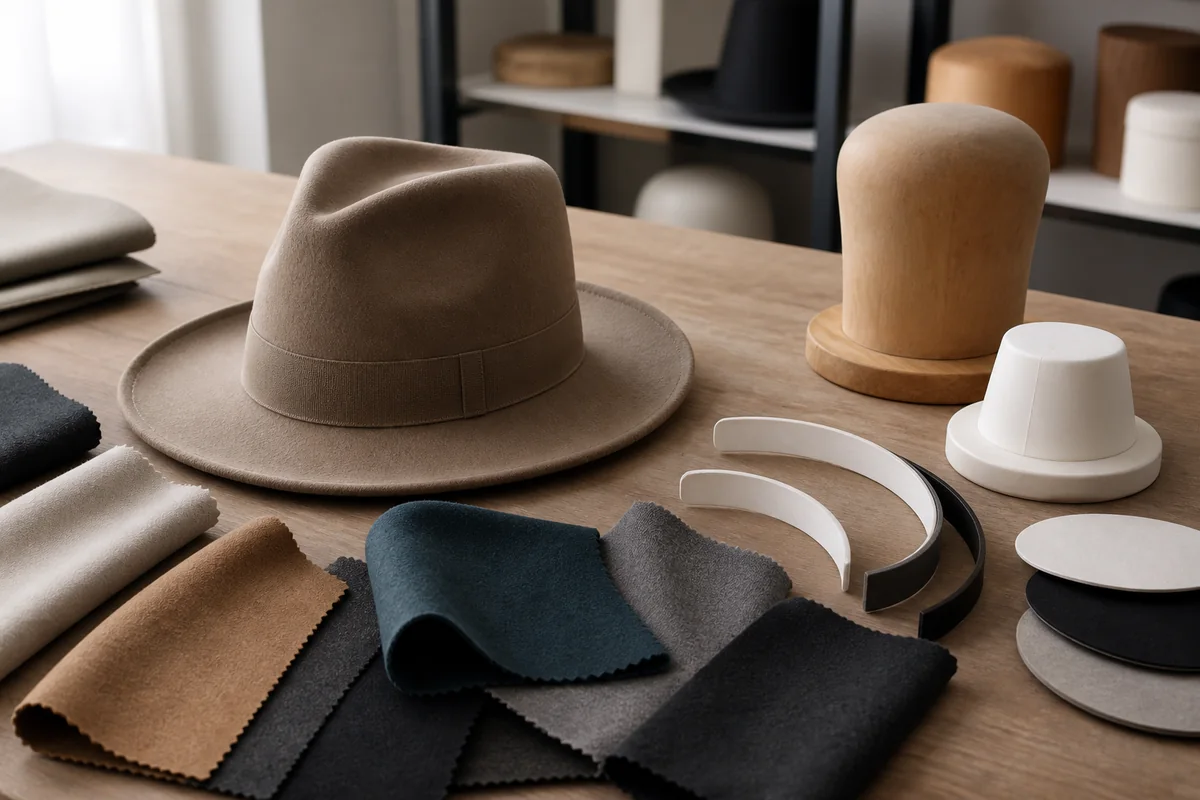
Unbranded fedora-style hat with neutral swatches and support forms for material-and-shape review
Material choice matters only in relation to the crown, brim and finish the buyer expects the approved sample to retain.

Base fabric identity and hand

Define composition, construction, weight or other useful reference, surface, stiffness and color. Link the approved swatch to the hat revision. Similar-looking fabric can sew, relax and accept decoration differently.

Wash, dye and finish behavior

Washed, pigment-dyed or distressed programs intentionally create variation. Specify the target range, placement limits and approval samples. Do not promise machine-perfect uniformity where the chosen process creates controlled differences.

Mesh, sweatband and interior system

Define mesh opening and recovery, sweatband material and width, seam tape, lining, labels, eyelets and contact comfort. Interior components influence fit, heat and perceived quality even when buyers focus on the exterior.

Material relaxation and bulk shape

Observe fabric before cutting, after decoration, after sewing and after packing. Shrink, stretch or compression can move seams and artwork. Build review points around the actual sequence rather than treating fabric as static.

Did the sample hold its shape only because it used a different fabric lot?

Share the approved hand, finish and structure. We will connect material identity to silhouette, decoration and bulk inspection.

Decision 05 · Wearer fit

Approve Headwear Fit With the Closure and Wearing Context Included

A nominal one-size cap can still create pressure, poor depth, excessive crown volume or unstable positioning. Fit depends on the block, sweatband, closure, hairstyle, wearer population and how the hat is used. Define the evaluation instead of accepting “adult size.”

Target wearer population

Separate adult, youth, children, uniform teams or other intended groups. Consider hair, protective equipment, ponytail openings, weather layers and cultural wearing practice where relevant. Avoid claiming universal fit without a defined range.

Closure and adjustment mechanics

Fabric strap, buckle, hook-and-loop, snapback, elastic or fitted routes change adjustment, tail management and visual balance. Approve closure hardware, range, position, durability expectation and contact comfort.

Depth, stability and sightline

Check how the crown and visor sit during movement. Too shallow can lift; too deep can contact ears or affect sightline. Fit review should include the real structure and decoration because both change stiffness.

Graded or multi-size approval

For fitted or sized programs, review critical sizes and grading transitions. Confirm crown, brim, logo scale and label accuracy across the range. One middle size cannot prove the smallest and largest products.

Does “one size fits most” hide the audience most likely to complain?

Tell us who receives the hats and how they are worn. We will create a fit, closure and size-review plan.

Decision 06 · Artwork-to-substrate

Engineer Custom Hat Decoration Before Approving the Logo

Embroidery, patches, print, transfer and labels interact with fabric, seam, curvature and structure. A digital mockup proves visual intent only. Production approval requires the actual artwork, method, substrate, backing, scale, placement and finished effect.

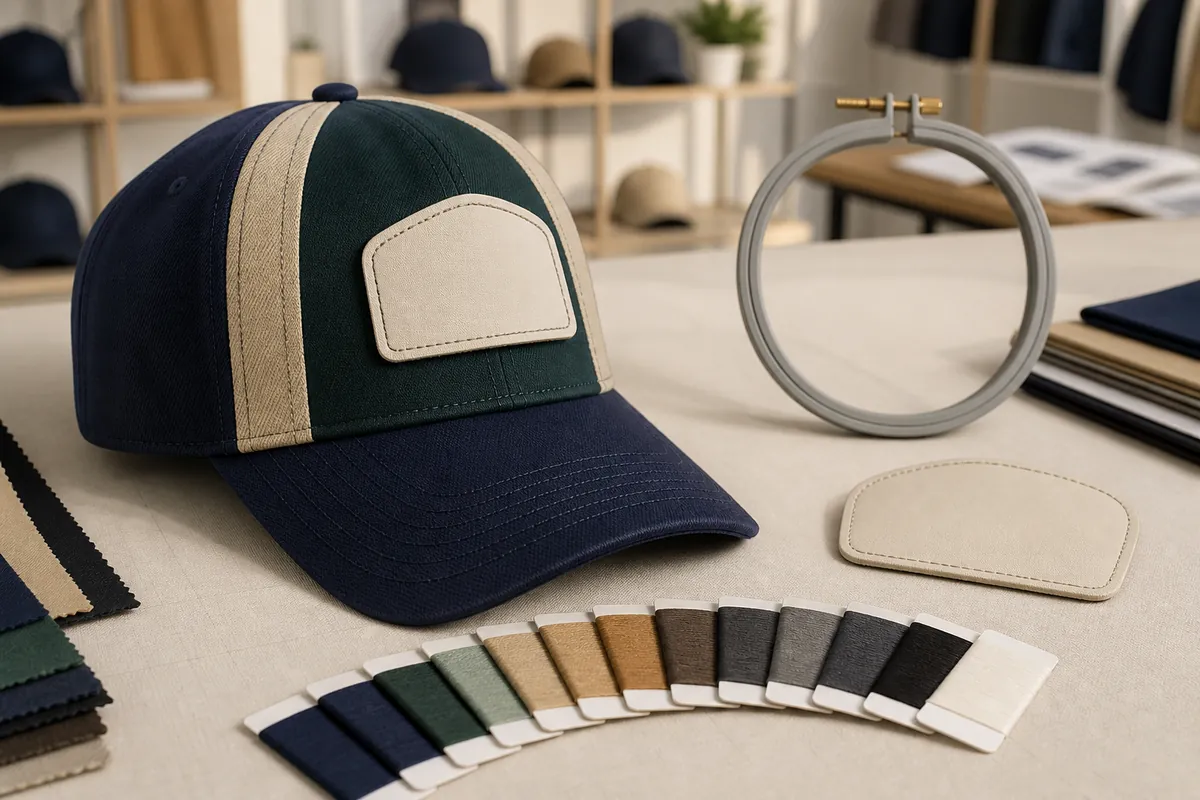
Plain multi-panel baseball cap with blank patch shapes, empty hoop and unmarked thread swatches
Decoration should be released against the real panel, seam and visor geometry rather than approved as a floating artwork file.

Artwork simplification and digitizing

Review minimum lines, gaps, lettering, borders, color changes and stitch direction at production scale. Keep the approved digitizing or production file with revision ownership; a JPG cannot reproduce stitch behavior.

Embroidery density, backing and puckering

Stitch count and density must suit the panel, support and seam location. Trial backing, hooping and sequence. Inspect the crown after decoration and assembly because a flat embroidered panel can distort later.

Patch, print and transfer compatibility

Define patch material, thickness, edge, attachment and flex; or print/transfer ink, heat and adhesion expectations. Test on the actual finished or pre-decoration substrate, especially washed, pile, mesh or coated materials.

Measurable placement and scale

Locate artwork from seams, center lines or other repeatable references. Approve width, height, angle and relationship to the wearer-facing silhouette. Check small sizes and curved surfaces rather than scaling blindly.

Does your decoration file prove only how the logo looks on a flat screen?

Send the artwork and target hat. We will identify detail, seam, density, backing, placement and trial risks before sampling.

Decision 07 · Color and visual proof

Control Headwear Color Across Fabric, Thread, Mesh, Trim and Finish

A single color name cannot align components with different fibers, textures and gloss. Define each color object, reference, viewing condition and acceptable relationship. Washed and natural materials may require a controlled range rather than an impossible exact match.

Physical standards for every component

Assign references to shell, mesh, sweatband, closure, thread, patch, label, brim underside and packaging where needed. State whether components should match, coordinate or contrast; “same navy” is not a measurable instruction.

Lighting and surface interpretation

Review color under agreed lighting and on the actual texture. Pile, mesh, wash and gloss change perception. Photographing under uncontrolled light should not be the sole color approval method.

Finish variation and placement limits

For washed, faded, distressed or hand-finished products, approve a range and define unacceptable marks or high-visibility zones. Preserve examples that show both target and boundary conditions.

Lot and reorder color governance

Record material lot references and retain approved standards. For reorders, review new lots against the current physical reference and decide whether mixed-lot goods can enter the same channel or destination.

Are five “matching” navy components creating five different hats?

Send the component list and brand color. We will build a color relationship and viewing plan instead of forcing one vague name.

Decision 08 · Evidence boundary

Match Every Headwear Claim to the Correct Evidence Object

Company review may use EverBen's ISO 9001 and BSCI records together with ISO 14001. Headwear fibre, recycled-content, colourfastness, UV, chemical and authorization claims remain tied to the finished SKU.

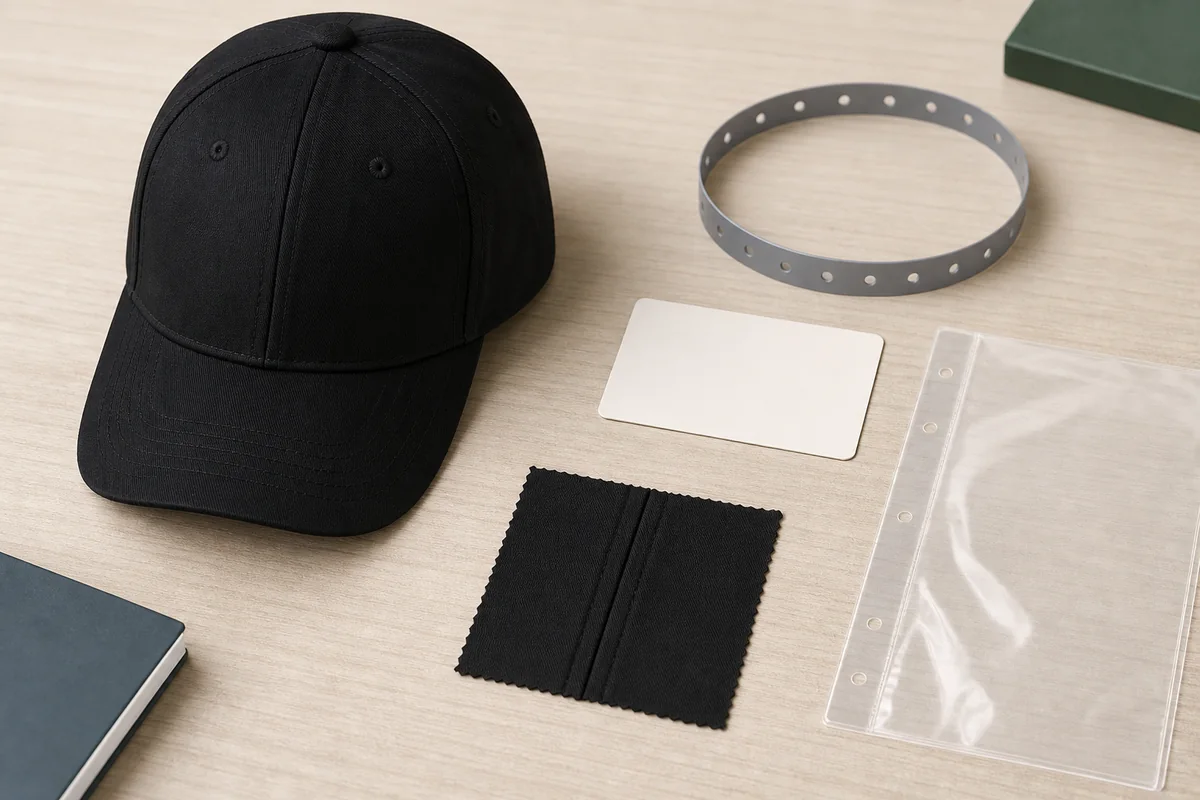
Plain cap with size ring, blank color card, seam sample and empty evidence sleeves
Fit, color, construction and decoration claims require different evidence objects even when they belong to the same finished hat.

Company and management evidence

Check the current scope, issuer and status of company credentials. Keep them separate from finished-product performance and destination requirements.

Material, trim and decoration evidence

Identify which fabric, thread, patch, ink, hardware or label a document covers. Link material records to the approved SKU and revision rather than a generic supplier catalogue.

Finished-hat and claim evidence

If a buyer needs colorfastness, dimensional, restricted-substance, UV or other results, define the exact style, method, sample, date and claim. Construction or material changes may alter applicability.

Brand, artwork and authorization records

Buyer-provided logos and protected designs require authorization and approved files. Record artwork ownership, confidentiality expectations and release version; do not infer rights from a reference image.

Do your sustainability or performance claims outrun the records behind them?

Share the claim list and files. We will map each statement to company, material, process or finished-hat evidence.

Decision 09 · Bulk and replenishment

Release Custom Hats With Assortment, Packing and Reorder Identity

Bulk quality is the ability to reproduce the approved commercial product across colors, sizes, cartons and later orders. The release file must connect the hat itself to channel allocation and logistics, not end at the sample-room door.

Freeze one SKU specification pack

Link pattern/block, measurements, materials, structure, visor or brim, closure, decoration file, colors, labels and approved sample under one revision. Mark any buyer-approved range or handmade variation.

Build in-process decision checkpoints

Check cut parts, pre-decoration panels, embroidery or patches, crown assembly, visor/brim, fit, trims and finishing at the stage where correction is still possible. Final inspection alone cannot repair distorted bulk.

Control assortment and carton presentation

Define color/size/style ratios, individual packaging, shape support, barcode, carton quantity and destination marks. Test whether the hat recovers after the chosen compression, nesting or transport method.

Archive the repeat-order production identity

Retain approved physical references and digital files with revision, material/color objects and change history. Review substitutions and new lots before production so a reorder remains the same market product.

Could your next order reproduce the cap if the original salesperson left?

We will structure a pattern, material, artwork, inspection and pack archive that survives staff and supplier changes.

Decision 10 · Buyer FAQ

Custom Hats Manufacturer Questions for B2B Buyers

Useful pricing begins after the product route, materials, decoration, quantity, destination and approval scope are known. EverBen does not publish one fixed MOQ or timeline across unrelated headwear constructions.

What should a buyer send before requesting a custom-hat quotation?

Send the wearer and channel, silhouette reference, measurable dimensions, fabric and finish, closure or size system, decoration artwork, colors, labels, packaging, quantity, destination, evidence needs and required date.

Why is a digital hat mockup not enough for bulk approval?

A mockup cannot prove crown shape, visor set, fabric behavior, fit, stitch density, backing, puckering, patch thickness, color appearance or packaging recovery. Approve a physical, measurable sample and its production files.

Can one decoration method work on every hat fabric and position?

No. Artwork detail, stitch or print process, backing, surface texture, panel seam, curvature, flex and placement interact. The exact artwork-to-substrate combination should be trialed and approved.

How should repeat custom-headwear orders be controlled?

Keep the approved pattern or block, measurements, fabric and finish references, color standard, decoration program, trims, labels, packaging and inspection record under one revision-controlled SKU file.

Ready to replace “same as picture” with a quote-ready headwear brief?

Send the references and commercial facts. We will identify the silhouette, decoration and release decisions still missing.

Headwear inquiries use marketing@rainwear-manufacturers.com.
This page keeps the enquiry in the browser and hands it to the server for delivery.
Call WhatsApp