
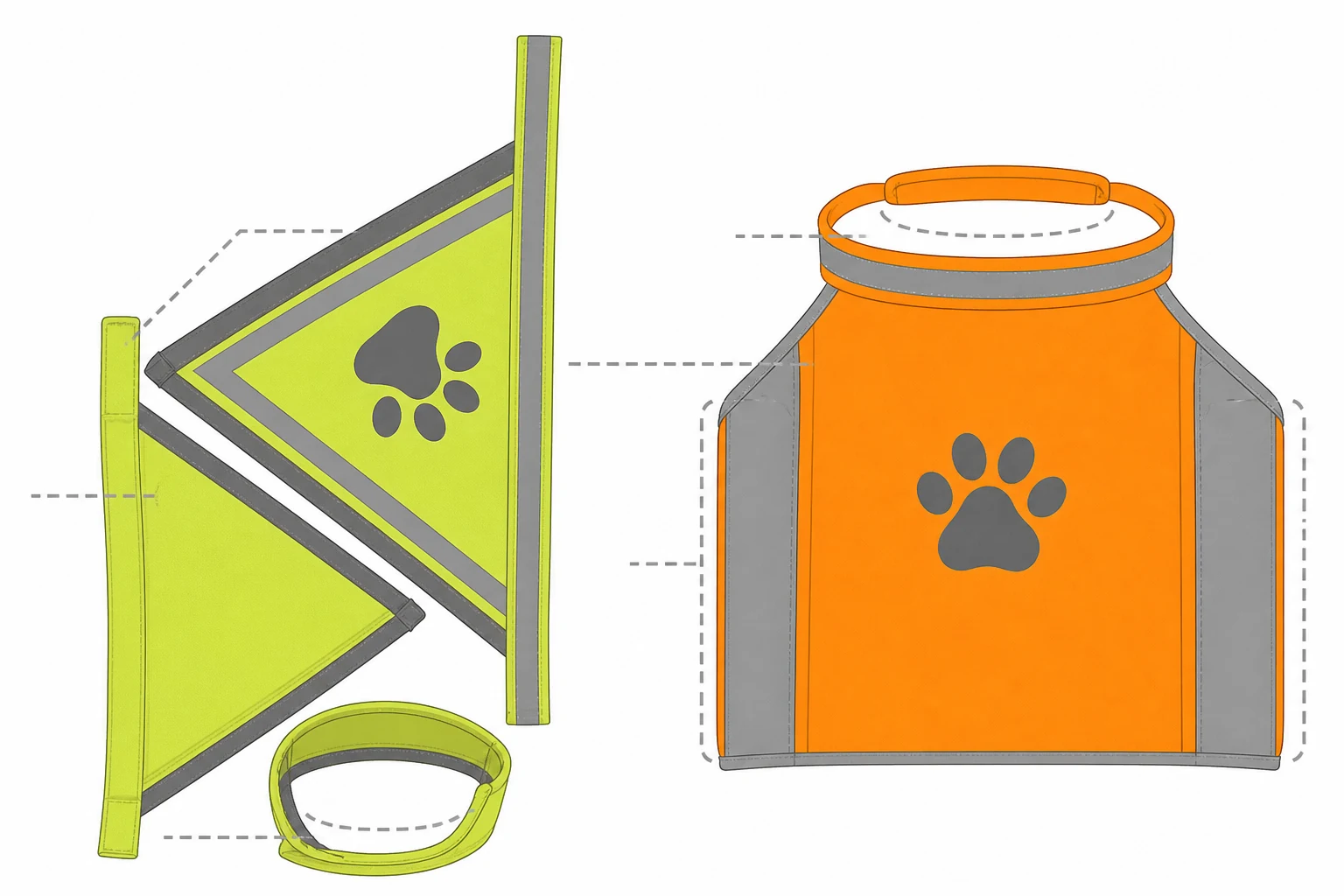
BUYING GUIDE / REFLECTIVE DOG VESTS & PET VISIBILITY WEAR
How to Measure and Grade Reflective Safety Vests for Dogs
Dog weight or breed name alone cannot define a reliable vest size. Buyers need neck-base, chest-girth and back-length measurements, body-shape distribution, adjustment overlap, movement clearance and a controlled grading rule for every intended population.
This guide connects measurements to pattern geometry, closures, reflective placement, wear trials and packing. A reflective pet garment can support conspicuity, but it is not traffic PPE, impact protection, a restraint harness or a flotation device unless an exact separate system is designed and validated for that claim.
01 / use and population
Define the wearing context and target dog population before collecting measurements
A walking vest, field-visibility garment and promotional event vest can need different coverage and adjustment. Procurement should describe use, climate, coat, movement and supervision without turning a pet garment into unsupported protective equipment.
- 01Define wearing task
- 02Map animal population
- 03Record layers and equipment
- 04Freeze allowed claims
01
Name the use context
Record daylight or low-light walking, field identification, rain layering, event use or another buyer-defined task. Describe season, duration, coat conditions, lead/harness arrangement and cleaning frequency.
02
Define the population
Identify markets, breed/body-shape groups, age ranges, coat volume and weight distribution. Avoid using breed names as guaranteed sizes; treat them only as sampling descriptors.
03
Freeze the claim boundary
State that the garment supports visibility and identification within defined conditions. Exclude impact protection, escape prevention, traffic safety, load restraint, flotation and rescue claims unless separately evidenced.
02 / measurement protocol
Measure neck base, deepest chest and back length with repeatable landmarks
Measurement data are only useful when posture, landmarks, tape tension and recorder rules are consistent. The protocol should capture both the value and the conditions under which it was taken.
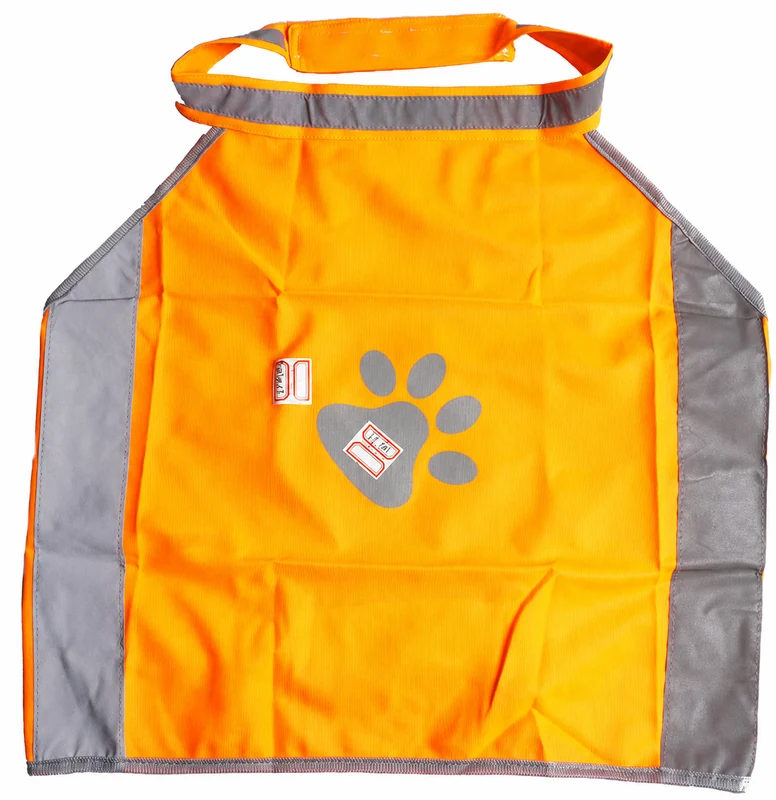
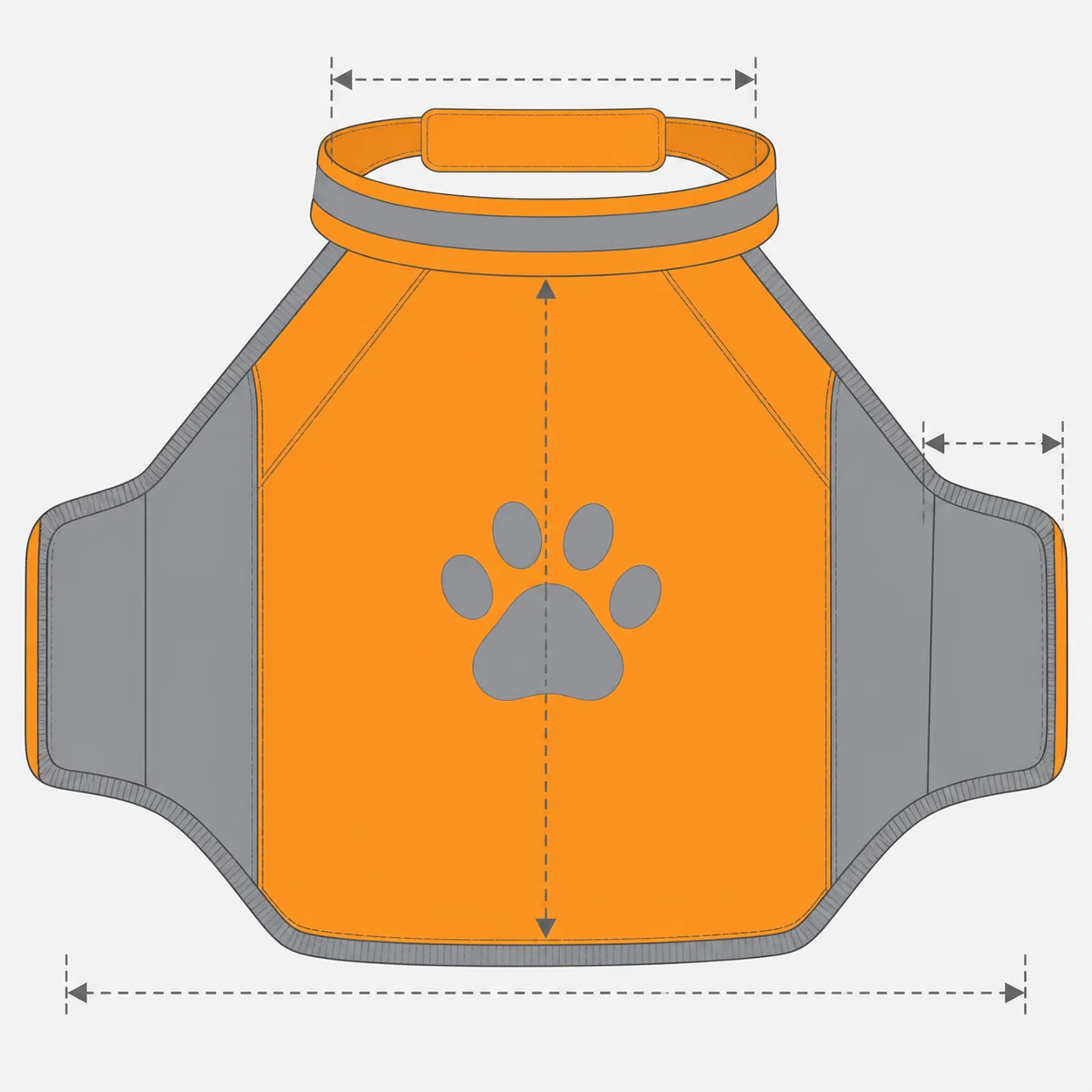
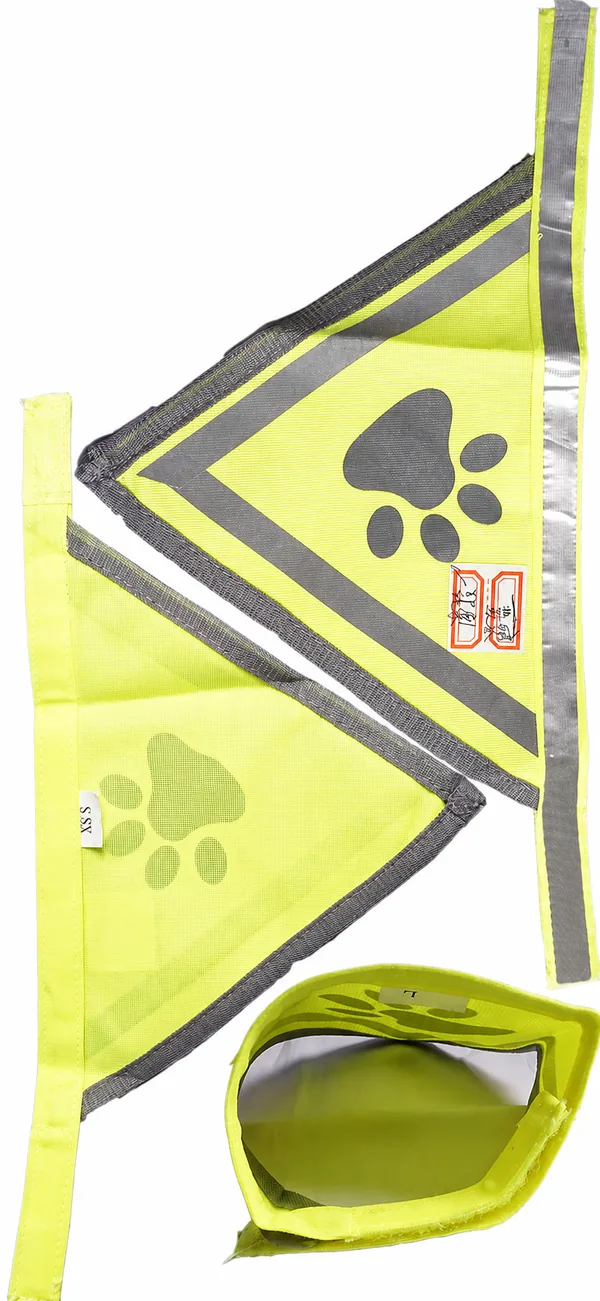
Work backward from the measured animal and complete fitted pet vest
Resolve use, pet type, body shape, neck, chest and back measurements, size route, closure overlap, reflective layout, movement observation, label and packed SKU before approving styling.
Keep material components, assembled vest, fitted observation and packed SKU separate
A reflective swatch cannot prove finished-vest visibility; a loose buckle cannot prove closure engagement; and a flat garment cannot prove neck clearance, leg movement, rotation or the intended size range.
01
Control neck-base measurement
Locate the intended neckline around the lower neck rather than copying collar size. Record posture, coat compression and required ease so the opening does not ride into the throat or shoulders.
02
Control chest-girth measurement
Measure the deepest chest at the defined position behind the forelegs, keep the tape level and record coat condition. Capture body depth and width where unusual shapes affect belly-panel geometry.
03
Control back and belly limits
Measure from the approved shoulder landmark toward the tail-base endpoint. Also record belly length, foreleg clearance and male-dog sanitation clearance where relevant to the intended population.
03 / size architecture
Build size ranges from measurement distributions, ease and adjustment capacity
A size table should show which body measurements control selection, how boundary values are handled and how much adjustment remains usable after the vest is secured.
- 01Clean measurement data
- 02Set fit and ease model
- 03Assign size boundaries
- 04Validate edge cases
01
Analyze the measurement distribution
Retain raw neck, chest, back and weight data with body-shape notes. Use representative percentiles and outlier review rather than averaging unlike populations into one false standard.
02
Define garment-to-body ease
Set finished neck, chest, back, belly and opening dimensions for the intended layers and movement. Keep structural ease separate from closure adjustment and production tolerance.
03
Publish selection rules
Define the primary selection measurement, tie-break rules, boundary ownership and fitting escalation. Avoid overlapping ranges that allow the same dog to receive several contradictory size recommendations.
04 / pattern grading
Grade controlled landmarks instead of enlarging every pattern dimension uniformly
Neck depth, shoulder slope, chest depth, foreleg opening, belly panel and back coverage change at different rates. The grading plan must keep closures and reflective elements functional in every size.
| Pattern decision | Required relationship | Typical evidence gap |
|---|---|---|
| Neck and chest route | Pet measurements, neckline, chest circumference, closure overlap and usable adjustment are linked | Weight-only size label without body measurements |
| Back and belly coverage | Back length, belly-panel length, leg clearance and toilet clearance are dimensioned together | Flat garment length without fitted landmarks |
| Closure placement | Buckle or hook-and-loop position, webbing travel, edge pressure and leash opening are reviewed on the intended body shape | Loose closure component without fitted observation |
| Reflective layout | Reflective panel position, seam interruption and visibility around the complete fitted vest are recorded | Reflective swatch treated as finished-vest evidence |
| Grade boundary | Smallest, largest and transition sizes retain clearance, closure engagement and marking scale | Only the middle size is sampled |
01
Create a landmark chart
Dimension neckline, shoulder span, chest width/depth, armhole, belly length, back length, closure position, leash opening and reflective landmarks from one controlled origin.
02
Assign grade increments deliberately
Use measurement evidence to set increments by size zone and body-shape route. Record rounding, seam allowance, tolerance and any split into standard, broad-chest or long-body patterns.
03
Review every boundary size
Inspect smallest, largest and transition sizes as complete garments. Confirm closure engagement, webbing tails, reflective continuity, artwork scale and packing rather than approving only the middle size.
05 / fit and movement
Control neck, girth, leg clearance and closure behavior during representative movement
A vest can look correct while standing yet rotate, bunch, restrict forelegs or expose closures during movement. Buyer-approved trials should document the exact size, adjustment and observation route.
- 01Fit the boundary size
- 02Secure every closure
- 03Run agreed movement route
- 04Record bounded observations
01
Set closure engagement
Define hook-and-loop overlap, buckle position, webbing tail, elastic extension and keeper use at both ends of the size range. Check access and secure engagement without over-tightening.
02
Observe movement clearance
Review walking, sitting, turning, lying and stair or field movement appropriate to the use. Inspect foreleg rubbing, throat pressure, belly interference, rotation, back lift and tail-base contact.
03
Separate leash access from restraint
Dimension and reinforce openings for access to a separate collar or harness. Check alignment through movement but do not treat the vest, opening or decorative D-ring as load-bearing unless separately validated.
06 / material and visibility
Control fluorescent fabric, reflective placement, mesh and edge construction together
Conspicuity depends on the complete visual system and its condition. Material identity, viewing geometry, obstruction and fit rotation all affect whether reflective areas remain visible.
01
Identify textile layers
Record shell, mesh, coating if any, binding, thread, webbing and closure codes. Check hand, airflow, drainage, snag exposure and cleaning route without inventing durability from appearance.
02
Map reflective geometry
Control tape supplier code, width, color, placement, joining, curvature and size-specific length. Review the garment from multiple viewing directions and after adjustment rather than relying on a flash photograph.
03
Protect edges and openings
Inspect binding, armholes, neckline, belly edge, leash opening, buckle anchors and reflective ends for puckering, sharp points, lifted edges and trapped bulk.
07 / inspection and packing
Release every size, color and pack against a complete approved comparator
The delivered range includes size-specific patterns, closures, labels, artwork, bags and cartons. Inspection must preserve these relationships and prevent mixed sizes or unapproved material substitutions.
| Release object | Controlled fields | Buyer decision | Status |
|---|---|---|---|
| Size and pattern | SKU, neck, chest, back length, belly coverage, grade rule and revision | Confirms each released fit route | Resolved / open |
| Complete vest | Body material, seams, binding, closures, reflective layout, leash opening and labels | Identifies the supplied construction | Matched / unmatched |
| Fitted observation | Pet measurements, body-shape route, clearance, movement, closure engagement and reviewer | Bounds fit to the observed animal/sample pair | Accepted / conditional |
| Visibility and marking | Reflective position, garment color, logo or print position, label content and SKU identity | Connects visible features to the correct size | Current / gap |
| Packed SKU | Fold, size mark, bag, carton, assortment, count and released comparator | Prevents mixed sizes and unapproved substitutions | Released / hold |
01
Separate approval objects
Track raw materials, cut components, assembled vest, fitting sample, labeled unit and packed shipment as linked but distinct records.
02
Inspect critical characteristics
Check SKU, size, dimensions, material, seams, binding, closures, reflective position, leash opening, labels, artwork, adjustment, cleanliness, folding, bag and count.
03
Retain the released comparator
Archive flat, fitted, front, back, closure, label and packed views plus pattern and measurement records so reorders use the correct revision.
08 / RFQ and continuity
Carry measurements, grading and fit controls into quotations and reorders
Two offers are comparable only when they use the same population, measurement protocol, size architecture, pattern, materials, visibility layout, closures, labels and packing.
- 01Release one controlled RFQ
- 02Compare fitted range samples
- 03Lock size and pattern records
- 04Reopen affected lanes on change
01
Issue one controlled matrix
List use, population, measurements, finished dimensions, size boundaries, materials, reflective layout, closures, leash access, artwork, inspection, packing and quantity.
02
Price alternatives separately
Separate fabric, mesh, reflective tape, closure, size count, body-shape pattern, artwork and pack options. Show sampling and reapproval consequences beside any cost change.
03
Require change notice
No material, reflective component, pattern, grading, closure, supplier, process, label or pack change should enter production before affected fit and buyer owners review it.
Visibility and safety-claim boundary
Fluorescent fabrics and reflective bands can support pet conspicuity only within defined viewing and maintenance conditions. A photograph, component report or staged fitting view does not establish traffic protection, escape prevention, load restraint, flotation or rescue performance for an EverBen pet vest.
Route-specific FAQ
Checks before reflective pet vest sizing approval
Can dog weight determine vest size?
Weight is a useful population field but cannot replace neck, chest, back and body-shape measurements. Two dogs of the same weight can require different pattern proportions and adjustment ranges.
Where should chest girth be measured?
Use the buyer’s documented anatomical landmark, normally around the deepest chest behind the forelegs, with posture and tape tension controlled. Record the exact method with the data.
How much adjustment overlap is enough?
There is no universal percentage. Define closure type, usable engagement, webbing tail, bulk, movement and escape-risk checks for each size, then approve the range on representative fitting forms or animals under a controlled protocol.
Can one pattern be scaled uniformly?
Uniform enlargement often changes neck depth, armhole clearance, belly length, back coverage and reflective placement incorrectly. Grade controlled landmarks and test every boundary size.
Does reflective tape make a dog safe near traffic?
No. Visibility depends on illumination, viewing angle, obstruction, movement, placement, dirt and condition. A vest does not replace leads, supervision, barriers or traffic controls.
Is leash access the same as a harness attachment?
No. An opening that allows access to a separate collar or harness is not a load-bearing attachment. Do not add restraint claims without a separately designed and validated system.
What should pre-shipment inspection cover?
Check SKU, size, garment dimensions, fabric, mesh, binding, seams, closures, webbing, reflective position, leash opening, labels, artwork, adjustment function, folding, bag and carton count against the release record.
What changes require reapproval?
Fabric, mesh, reflective tape, binding, pattern, grading, closure, webbing, buckle, leash opening, artwork, label, process, supplier or packing changes can reopen affected fit and quality decisions.
Application decision
Convert pet size labels into a measurable vest development brief
Send intended use, animal population, measurement protocol, raw measurement distribution, fit model, size count and adjustment range. Add fabric choices, visibility-panel geometry, fastening details, lead opening, decoration files, inspection points, pack format and quantities. EverBen can organize the inputs into comparable samples and grading records.