Manufacturer and sourcing integration partner · 20 years of export experience
Home / Rain Boots and Waterproof Footwear

B2B waterproof footwear program

Rain Boots Manufacturer for Fit-Controlled Bulk Footwear Programs

A waterproof shell is only the beginning. Profitable rain-boot programs align wearer, last, size grading, shaft geometry, PVC or rubber construction, outsole, evidence, branding and destination allocation before a buyer approves bulk production.

Compare PVC and rubber routes
PVC and rubber routes OEM and bulk sourcing Fit and size-ratio control Scoped evidence
bulk waterproof rain boots manufacturing and sourcing program
Buyer decision order Use → wearer → fit → construction → outsole → evidence → allocation

Decision 01 · Program classification

Classify the Rain-Boot Job Before You Compare Factories or Prices

Factories often sort boots by material or photograph. Buyers should begin with the work the boot must perform, the wearer population and the commercial channel. Those decisions determine whether an existing mold is useful, which dimensions matter and what evidence belongs in the approval file.

1

Map the wearer and wearing duration

Separate adults, children and occupational users. Record socks, trousers, insoles, hours worn, walking versus standing and how easily the wearer must enter or remove the boot. These details influence toe room, instep, calf opening, lining and boot weight.

2

Describe water, ground and contamination

Rainy pavements, mud, farms, gardens, wet decks and industrial floors create different priorities. Define expected water depth, surface texture, temperature, cleaning practice and any oil or chemical contact before discussing a tread or compound.

3

Identify the sales or issue channel

A fashion retail range, children’s seasonal program, agricultural distributor and staff-issue project use different size ratios, colors, cartons, labels and replenishment logic. The channel controls what must remain consistent beyond the first sample.

4

Choose existing-style or new-development risk

An existing last, outsole and mold can shorten development and expose known constraints. New tooling may create differentiation but adds approval, ownership, maintenance and volume decisions. Treat the route as a commercial choice, not only a design preference.

Your brief says “waterproof boots,” but does it describe the wearer or the ground?

Send the current request. We will turn vague use language into the decisions a factory can actually quote and sample.

Decision 02 · Material and construction route

Compare PVC and Rubber Rain Boots by Program Consequence

PVC and rubber are not interchangeable words for waterproof footwear. Compound, molding or assembly route, thickness distribution, lining, color, flexibility and outsole construction affect fit feel, visual consistency, sample development and repeat orders. Confirm the finished construction, not only the polymer name.

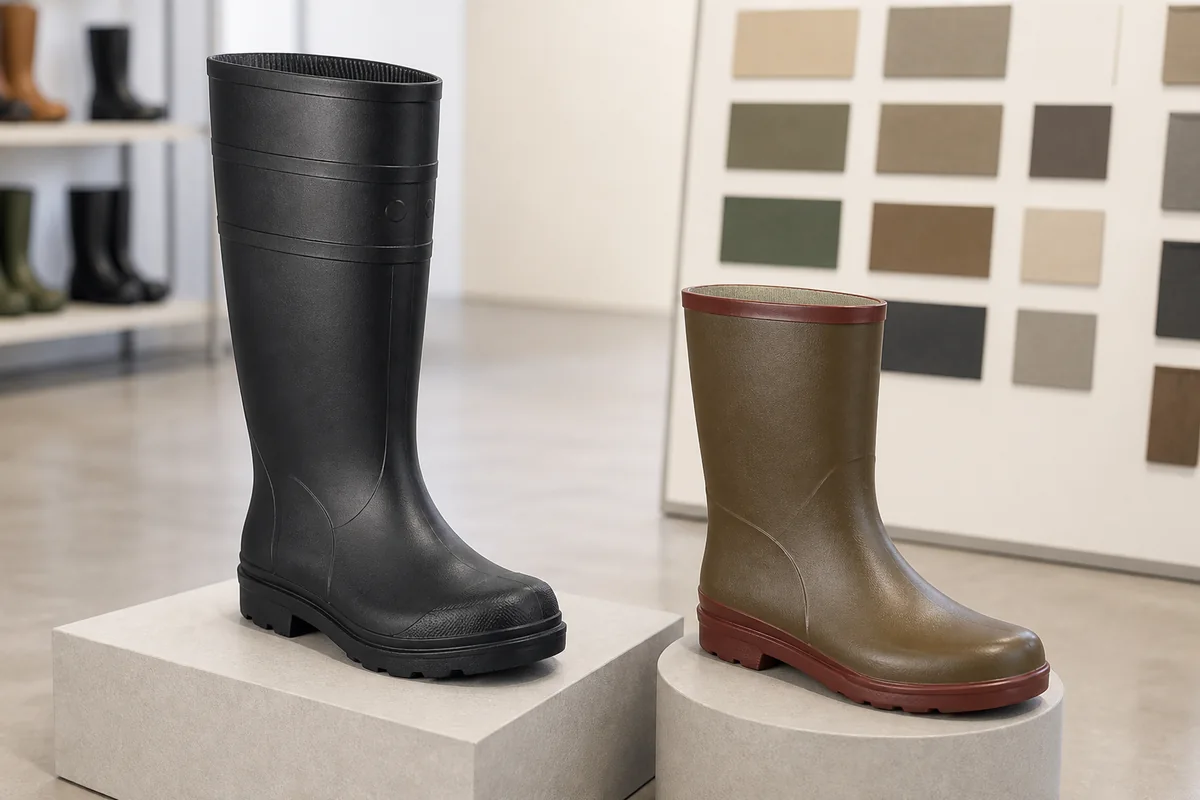
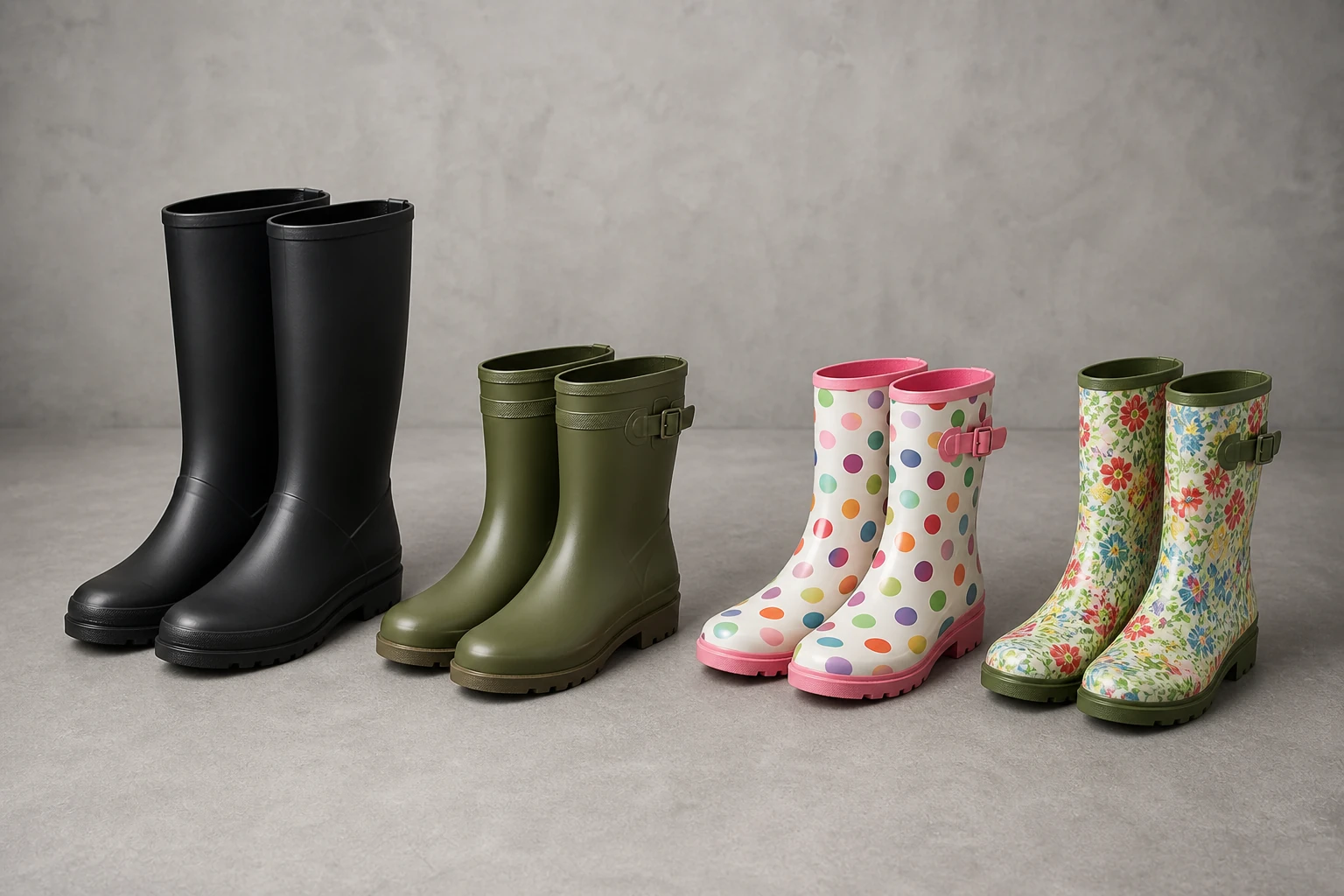
Tall dark and mid-height earth-tone molded rain boots displayed as separate sourcing routes
A boot silhouette identifies a route, but fit, compound, outsole and finished-product evidence must still be specified for the project.
Route A · Molded PVC

PVC rain boots for scalable molded programs

PVC routes can serve children’s, adult, promotional, general-use and selected work applications. Buyers should define compound expectations, shaft height, wall distribution, entry, lining, outsole/tread, color, odor/finish expectations, flex points and destination evidence. Never assume every PVC style shares one formulation or performance level.

Explore the PVC rain boots product landing page →
Route B · Rubber construction

Rubber rain boots for flexible and application-led programs

Rubber constructions can support lifestyle, outdoor and workwear briefs where flexibility, surface finish, bonding and material behavior are important. Define rubber/component build, lining, reinforcement, sole connection, cure/bonding appearance, flex zones and acceptable variation. The chosen design and evidence scope remain style specific.

Explore the rubber rain boots product landing page →
Decision factor

Do not compare unaligned sample constructions

Two boots can look alike in a photograph while using different molds, wall distribution, linings, toe/heel reinforcement, sole profiles or assembly routes. A fair quotation comparison names the same construction objects, sizes, packaging and evidence duties. Otherwise the lower price may simply omit risk.

Commercial factor

Link tooling choices to volume and ownership

Existing tooling may constrain geometry, size availability, branding zones and exclusivity. New molds introduce design sign-off, size-set work, cost, storage, maintenance and ownership questions. Record who owns each tool, what revision it represents and what happens after the program ends.

EAV entity Attribute to define PVC route question Rubber route question Buyer output
Use Environment and duty Which compound/construction suits the stated temperature and contact? Which rubber/component build suits flex, surface and use? Application matrix
Geometry Last, shaft and opening Which existing/new mold and size range? Which last, patterns/components and sole route? Controlled drawings
Interface Lining, insole, outsole How are components integrated and inspected? How are components bonded/assembled and checked? Construction record
Evidence Claim object and method Which exact style/size/report supports the requested claim? Which exact construction/size/report supports it? Evidence matrix
Comparing PVC and rubber quotes that describe different products?

Give us the two specifications. We will normalize the construction, tooling, size and evidence responsibilities before you compare cost.

Decision 03 · Last, fit and grading

Control Rain-Boot Fit Across the Size Range, Not Only the Sample Pair

Rain boots have fewer adjustment points than lace footwear. Toe shape, instep, heel hold, shaft angle, calf opening, lining and entry interact. A middle-size sample cannot prove edge sizes or the real destination size mix.

Last and internal-volume definition

Confirm toe profile, forefoot width, instep volume, heel pocket and allowance for socks or insoles. State whether the project uses an existing last or needs modification. Appearance alone cannot confirm internal fit.

Shaft height, angle and calf opening

Measure from a defined reference, not from a marketing label such as ankle, mid or knee high. Record top opening, key circumferences and whether trousers must tuck inside. Calf complaints are often geometry problems, not material defects.

Graded-size review and tolerances

Select a size-set strategy that covers low, middle and high sizes, plus critical transitions between molds. Define which measurements are checked, tolerances, pair matching and how deviations are recorded before bulk release.

Entry, heel lift and walking trial

Observe donning, removal, heel movement, ankle flex and toe contact under the intended sock/garment condition. A boot can meet external dimensions yet frustrate the wearer because entry or internal volume is wrong.

Approved one sample but never checked the edge sizes?

Send the size range and market. We will build a graded fit-review plan before the order turns into returns and dead stock.

Decision 04 · Ground contact

Specify the Outsole Around the Actual Surface and Claim

Tread depth and an aggressive pattern may look reassuring, but real grip depends on compound, geometry, contact, surface, contaminant, wear and test method. The buyer must separate design intention from a supported slip-performance claim.

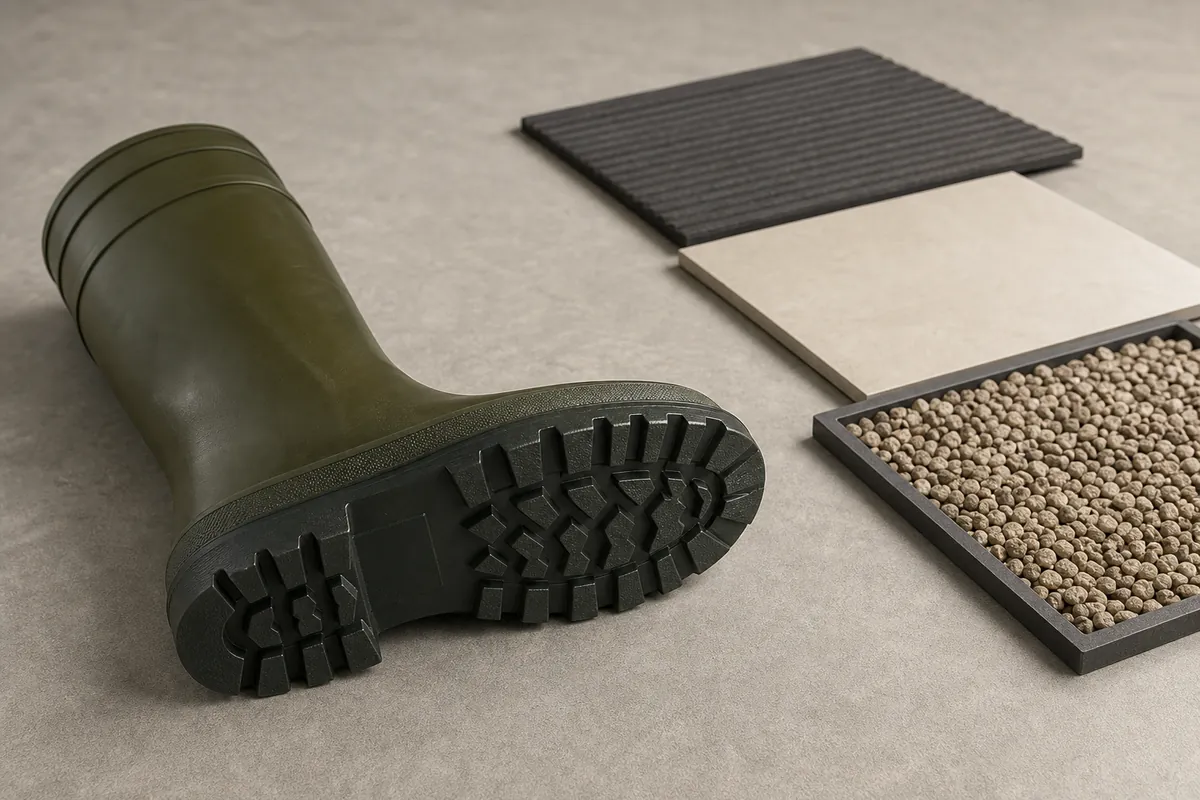
Unbranded molded rain-boot outsole positioned beside ribbed, smooth and compact-gravel surface references
Tread appearance alone cannot prove grip; the intended surface, contamination and agreed finished-boot test must define the claim.

Surface and contaminant definition

Name smooth tile, concrete, soil, mud, deck or another surface, plus water, oil or other expected contamination. “Wet ground” is too broad to select a tread or evaluate evidence.

Tread geometry and clean-out behavior

Define lug arrangement, channels, edge zones and how mud or debris can release. Photograph and measure the approved outsole revision so a later mold or size cannot quietly change the functional geometry.

Compound and wear relationship

Grip, abrasion, hardness and flexibility interact. Ask what compound reference and control record apply to the exact outsole, and avoid selecting one attractive property without considering wear or temperature.

Claim and test boundary

If the market requires a slip statement, define the destination, method, condition, style, sizes and report. A generic “non-slip” icon or supplier declaration should not replace scoped evidence.

Is “anti-slip” printed on your specification with no surface or method?

Tell us where the boot is used. We will separate tread design intent from the evidence needed to support buyer-facing language.

Decision 05 · Waterproof construction

Trace Water Protection Through Every Boot Interface

A molded or rubber shell is intended to keep water out, but the finished product also includes top openings, seams or bonds, sole interfaces, decorative parts, linings and possible punctures. Define water exposure and inspection around the actual construction.

Shell and wall consistency

Review thin zones, bubbles, pinholes, surface contamination, material distribution and critical flex areas. Acceptance must reference an approved style and inspection method rather than a vague “no leakage” promise.

Sole, heel and component interfaces

Map every bond, molded junction, reinforcement or inserted part. Identify where movement and water exposure meet, then decide what visual or functional check belongs in sampling and production.

Top opening and use-limit communication

A boot opening above the water line can still admit rain, spray or debris during movement. Shaft height and wearer behavior determine protection. Avoid presenting the product as waterproof beyond its designed exposure.

Lining, insole and drying behavior

Lining changes entry, comfort, internal volume and drying. Specify attachment, color-transfer expectations, removable components, odor/cleaning considerations and how trapped moisture is managed in the target channel.

Your leakage check says pass, but nobody listed the interfaces?

Share the construction. We will identify where shell, sole, components and openings need separate approval or inspection points.

Decision 06 · Brand and channel execution

Build Private-Label Rain Boots That Survive Production and Retail Handling

A logo rendering does not prove a brand program. Color, print, molded marks, labels, packaging and merchandising must fit the construction and remain identifiable through size allocation, carton packing and replenishment.

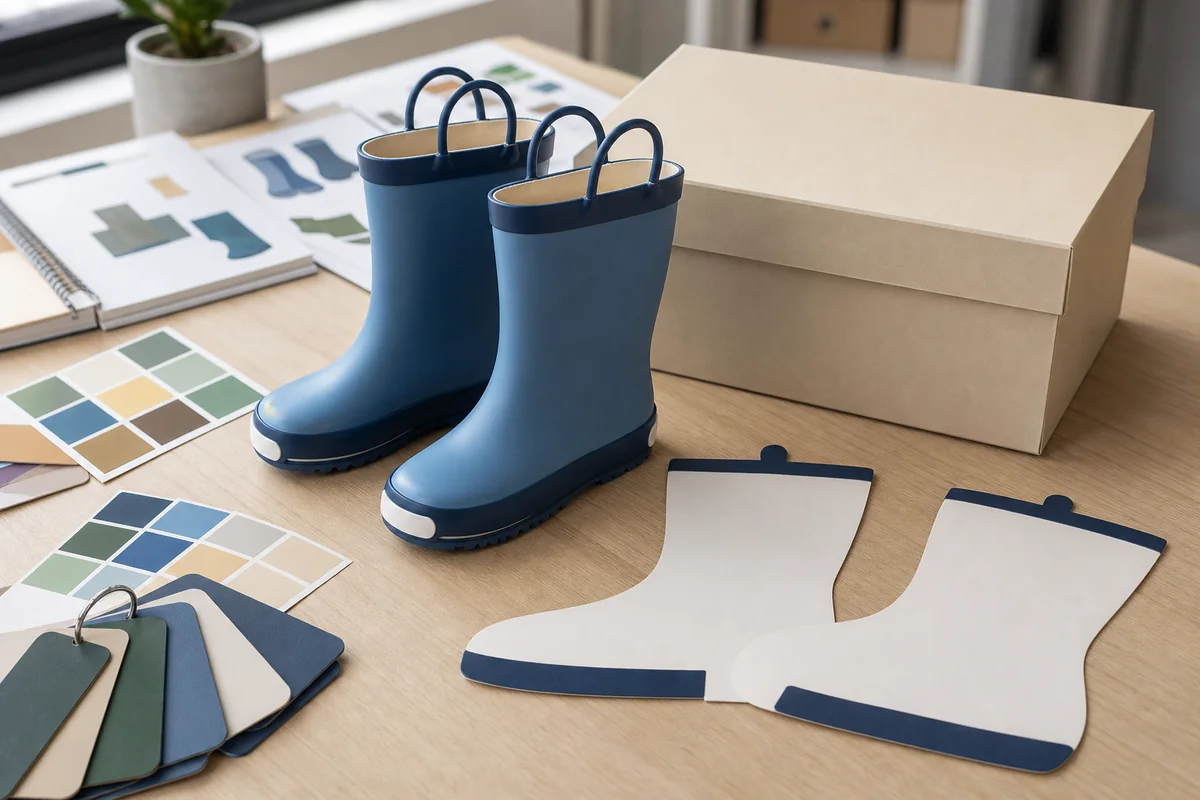
Plain child-size rain boots with blank artwork templates, color chips and an unmarked shoe box
Private-label release should connect artwork, molded geometry, size identity and pack-out before the decorated sample is treated as final.

Color standard and material appearance

Define the physical color reference, gloss/matte target, viewing condition and acceptable variation. PVC and rubber surfaces can present color differently; linings, outsoles and decorations need their own approval references.

Logo process and geometry limits

Choose print, molded mark, patch, label or another process only after reviewing curvature, flex, abrasion and minimum detail. Record location from measurable references and approve artwork at production scale.

Retail information and destination labels

Freeze size, country, care, material, warning, barcode and buyer text based on the destination and channel. The buyer owns regulatory and claim decisions; the supplier executes the approved version.

Packaging built around paired footwear

Define pair protection, stuffing, bags or boxes, hangtags, barcode placement, carton quantity and shipping marks. Check whether tall shafts deform and whether mixed size ratios remain easy to receive and allocate.

Does your artwork look right on screen but fail on a curved, flexing shaft?

Send the logo, boot reference and channel. We will connect decoration method, placement, color and packaging to a production-size approval.

Decision 07 · Evidence architecture

Keep Company Credentials, Material Records and Boot Claims Separate

EverBen's ISO 14001, BSCI and ISO 9001 documents belong to company-level review. A rain boot's slip, chemical, child-use, protective or destination statement needs proof for that construction and intended market.

Company and management-system evidence

Use company credentials to understand management context and supplier review. Check current scope and document status. Do not transform a company audit or system certificate into an untested product-performance claim.

Material and component records

Identify the compound, lining, insole, outsole, decoration and packaging object covered by each requested document. Link it to the approved style and lot/revision where relevant.

Finished-style and size evidence

Waterproofing, flexing, bonding, slip, restricted substances or protective-footwear requirements must name the exact construction, test method, sizes and current report scope. Changes may require review or retesting.

Production and release records

Approved samples, measurements, color/artwork references, inspection results, size-ratio pack lists and carton records connect evidence to the goods that are actually released.

Have certificates in a folder but cannot tell which boot claim they support?

Send the buyer requirement and available records. We will map company, material, style and release evidence without stretching their scope.

Decision 08 · Development control

Turn Rain-Boot Samples Into a Reproducible Bulk Standard

A sample is useful only when its materials, tooling, measurements, fit, appearance, outsole, evidence and packaging decisions are recorded. Photographing a pair and saying “same as sample” leaves too much open to interpretation.

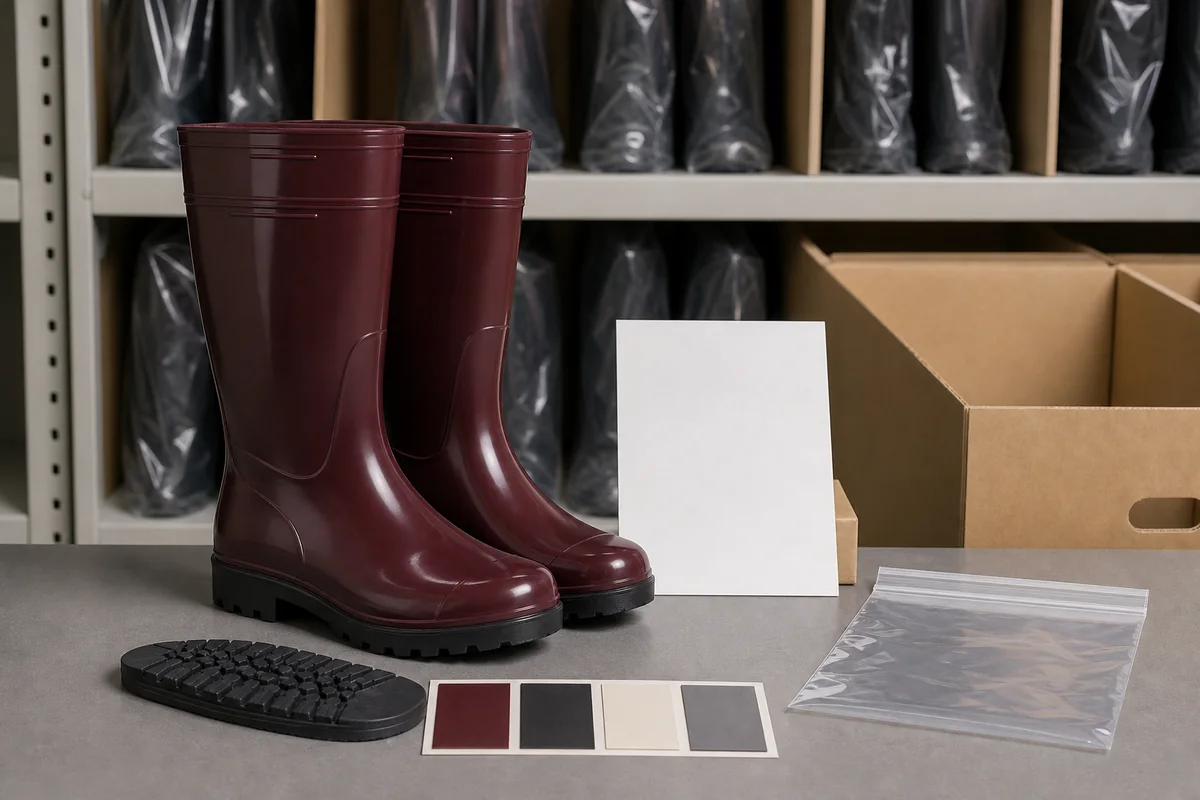
Unbranded rain-boot pair retained with blank measurement card, outsole chip, swatch and clear sample bag
A reproducible release links the approved pair to measurable geometry, color, component and packing references rather than memory.

Freeze the development input

Record wearer/use, reference, target construction, size system, range, quantities, colors, branding, packaging, destination and evidence needs. Mark open questions rather than letting assumptions become sample features.

Approve a measurable sample record

Link sample ID and revision to last/mold, dimensions, weight where useful, compound/component references, lining, outsole, artwork, color and observed fit. Store comments with the decision owner and date.

Review graded sizes and critical transitions

Confirm low, middle and high sizes or another justified set. Check geometry, entry, pair matching, shaft, outsole and branding as scale changes. A logo or tread that works in one size may fail in another.

Create in-process and final checkpoints

Define material/component verification, visual defects, dimensions, pair matching, functional checks, labels, pack ratio and carton marks. State sampling level or buyer protocol instead of relying on “strict QC.”

Can your team explain exactly what “same as approved sample” means?

We will convert the sample into a revision-controlled record that production, inspection and the buyer can use without guessing.

Decision 09 · Inventory economics

Plan Size Ratios, Cartons and Replenishment Before Bulk Production

Footwear inventory risk is often concentrated in sizes, not total pair count. A program can sell well overall while slow sizes occupy stock and popular sizes cause lost sales. Allocation must connect forecast, mold availability, pack method and destination.

Build size ratios from channel evidence

Use prior sales, wearer profiles, regional size data or a controlled launch assumption. Separate each market, gender/age group and style. Record the rationale so replenishment can update the ratio instead of repeating the first guess.

Separate production ratio from shipment ratio

Factory efficiency, minimum runs by size/color and destination allocations may conflict. Model production and carton plans separately, then reconcile totals. Avoid hiding unwanted sizes inside an apparently low program MOQ.

Design cartons for receiving and allocation

Choose solid-size, prepack ratio or another pack logic based on warehouse and retail operations. Mark size, color, style, quantity and destination clearly. Verify tall shafts, boxes and dividers do not create avoidable freight or deformation.

Preserve repeat-order identity

Link repeat orders to approved last/mold, compound/components, dimensions, color, artwork, labels and pack revision. Review substitutions and tooling maintenance before production so the reorder remains the same commercial product.

Is your total quantity correct while the size mix is financially wrong?

Share markets, quantities and expected channel. We will structure a size-ratio, carton and replenishment worksheet before stock is committed.

Decision 10 · Buyer FAQ

Rain Boots Manufacturer Questions for Bulk and OEM Programs

These answers define the decisions required for a useful discussion. MOQ, tooling, timing, available constructions and evidence are confirmed only after the exact style, quantity, size range, customization and destination are reviewed.

Should a bulk rain-boot program use PVC or rubber?

Choose after defining wearer, environment, temperature, flexibility, appearance, expected handling, outsole and evidence needs. PVC and rubber are different construction routes, not universal good-better labels.

Why is one approved sample size not enough for a rain-boot order?

One size cannot prove grading, entry, instep, calf clearance, shaft proportion, pair weight or outsole behavior across the full range. Buyers should define a graded-size review and tolerance record.

Can EverBen promise slip resistance or safety compliance for every boot?

No. Slip, toe protection, chemical resistance and other safety or performance claims must be tied to the exact style, construction, size scope, method and current supporting report requested for the destination.

What information is needed for a useful bulk rain-boot quotation?

Provide wearer and use, PVC or rubber route, reference style, size system and ratio, shaft and fit requirements, outsole, lining, colors, branding, packaging, quantity, destination, evidence needs and requested date.

Ready to replace a catalogue request with a quote-ready boot brief?

Send the project facts you know. We will identify the unanswered fit, tooling, evidence and allocation decisions before pricing.

Rain boots and mixed footwear pages use marketing@rainwear-manufacturers.com.
Your inquiry is sent by the website server, not by a local email program.
Call WhatsApp