
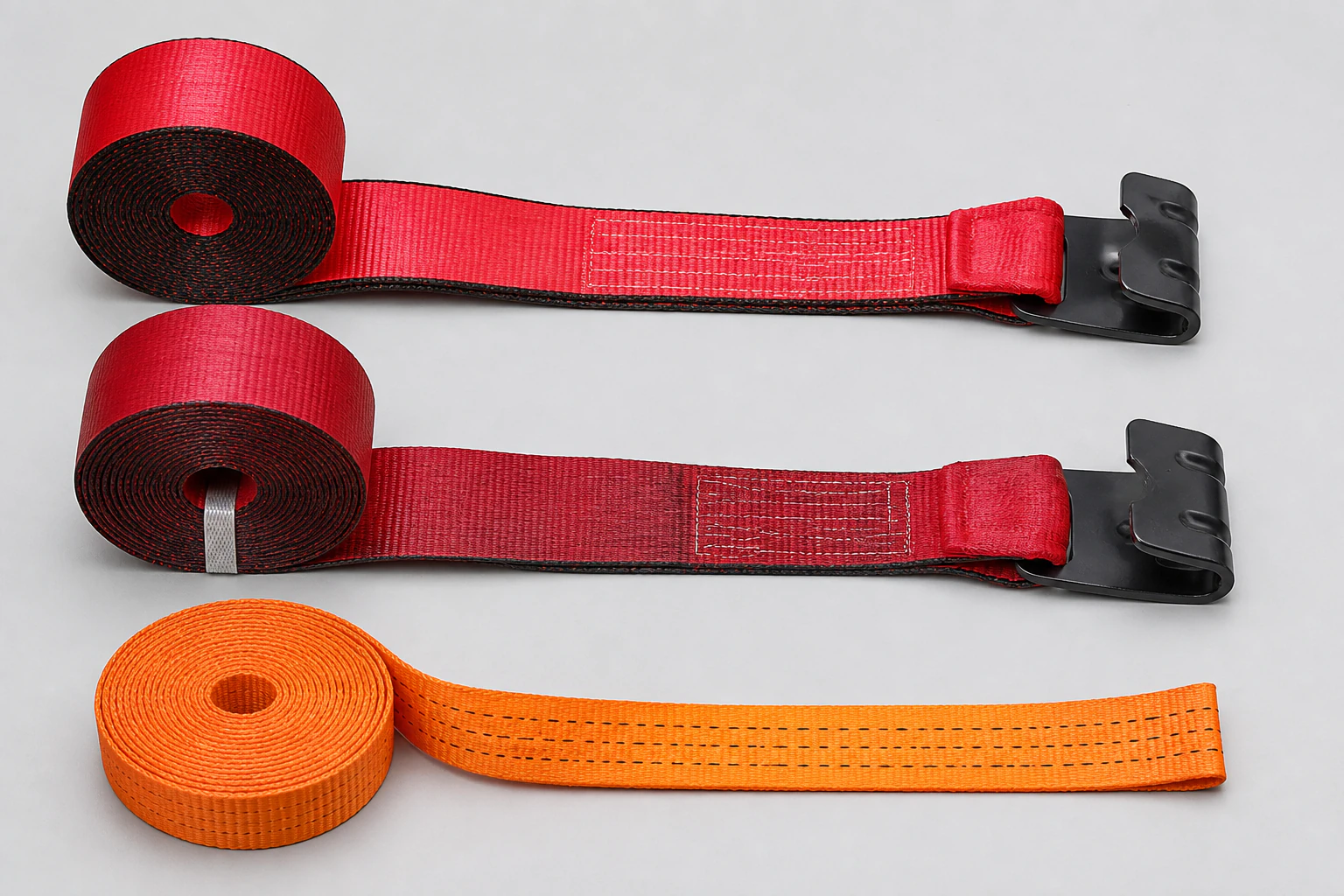
BUYING GUIDE / WIDTH, LENGTH AND FITTING SELECTION
How to Choose Truck Winch Strap Width, Length and End Fittings
Width, length and hardware cannot be chosen independently. A reliable buying decision works backward from the installed winch or track, vehicle anchor, cargo path, take-up allowance, free tail, fitting geometry and evidence required for the exact complete assembly.
This guide uses first-party supplier examples and regulatory context only to form questions. It does not transfer their dimensions, materials, ratings or warnings to an EverBen product and does not prescribe a vehicle securement plan.
01 / ROUTE FIRST
Measure the Vehicle and Cargo Route before Opening a Catalog
Selection begins with system geometry and decision ownership. A strap should not be stretched conceptually across an undefined winch, anchor and cargo path.
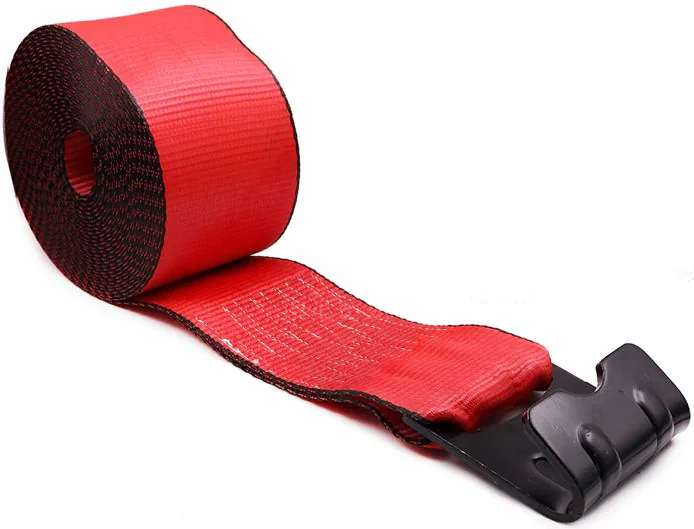
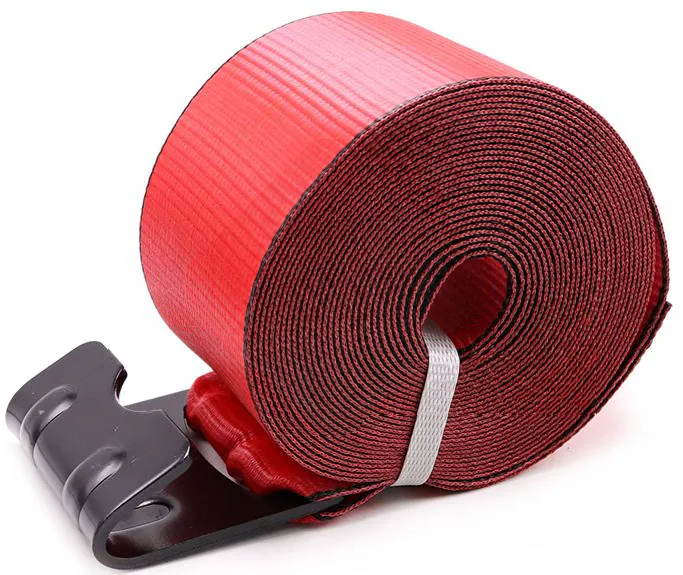
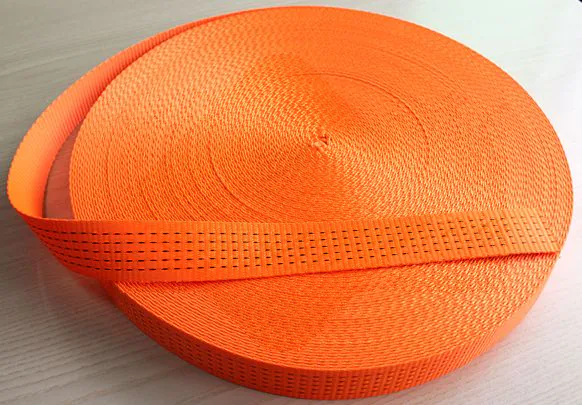
- 01Identify vehicle interfaces
- 02Map the cargo path
- 03Define selection variables
- 04Release the bounded option
01
Installed interface
Record winch make or controlled drawing, mandrel and feed window, side rail or stake pocket, or the actual logistic track and mounting context. Inspect condition and capture dimensions safely. Supplier examples only frame what to ask; they do not qualify another installation.
02
Cargo path
Draw the route over, through or around the cargo plus all edges, protectors and clearances. Include expected variation in cargo size and anchor position. The buyer remains responsible for restraint layout, tiedown count, anchor adequacy and field use.
03
Decision destination
State whether the selection supports an RFQ, sample, label, operating instruction or vehicle approval. Name the qualified reviewer. A sourcing guide can narrow options, but final suitability and legal decisions require the exact vehicle, cargo and evidence context.
02 / WIDTH
Resolve Width through Winch, Fitting, Cargo and Evidence Windows
A width is acceptable only when all connected interfaces close on the same construction and revision.
01
Feed window
Compare nominal width and actual thickness with winch slot, mandrel, guides and winding space. Observe feed, skew and edge contact on the proposed sample without active cargo. A dimension that enters the slot may still create poor winding or contact.
02
Fitting and sewing window
Verify the hardware webbing slot, fold stack, protective clip, stitch field and edge clearance. Define tolerances that production can inspect. Component catalogs and finished-assembly drawings should resolve to the same width and connection revision.
03
Cargo and claim window
Review bend and contact behavior for the buyer's path, then map any performance statement to the exact width option. Do not infer surface protection or strength from width alone. Each released variant requires identity and supported evidence.
03 / LENGTH
Separate Route Length, Take-Up, Tail and Packed Length
Length errors often come from measuring different objects under one label. Use explicit reference points and allowance rows.
- 01Measure base route
- 02Add approved take-up
- 03Check tail and buckle access
- 04Freeze inspection references
01
Base route
Measure between defined vehicle and cargo reference points along the intended strap path. Capture minimum and maximum cargo geometry. A straight-line distance is not sufficient when the route wraps corners, uses protectors or changes anchor position.
02
Take-up and adjustment
For winch straps, define required feed and winding allowance for the exact winch. For logistic straps, define fixed side, adjustment range and tail. Keep these buyer-approved interface requirements separate from nominal saleable length.
03
Inspection and pack
State how finished length is measured, the allowed tolerance and how folds or coils preserve identity. Packed dimensions support freight and handling but must not replace the usable measurement. Retain an approved reference or controlled drawing.
04 / FITTING FAMILY
Choose End Hardware from the Receiving Anchor Geometry
Flat hooks, wire hooks, chain anchors, loops and track fittings have different engagement and connection routes.
01
Flat and wire hooks
Compare plate or wire geometry, throat, lip or latch, clearance, finish and contact with the actual rail or anchor sample. Observe seating without load. Do not generalize one hook's evidence to another construction or anchor.
02
Chain, ring and loop
Define chain reach and connection, ring shape or sewn-loop dimensions plus their relation to the webbing fold and sewing. Inspect anchor contact and possible twist. The weakest supported assembly relationship controls released claims.
03
Track fittings
Resolve fitting family, latch or spring mechanism, track series, slot engagement, finish and webbing connection. Check both ends. The track mounting and vehicle structure remain separate system objects that a strap sample does not certify.
05 / OPTION MATRIX
Compare Options without Mixing Unrelated Evidence
One matrix should show which route, width, length, fitting and evidence row belongs to each proposed SKU.
- 01Name every SKU option
- 02Attach exact interfaces
- 03Map matched evidence
- 04Keep gaps visible
| Entity | Required attributes | Evidence value | Review state |
|---|---|---|---|
| Vehicle route | Winch or track, anchor, cargo path and owner | Defines the system boundary | Clear / open |
| Assembly option | Width, length, fitting, sewing and revision | Names the proposed SKU | Matched / unmatched |
| Interface sample | Winch, rail, anchor or track and condition | Supports fit observations | Applicable / contextual |
| Evidence | Object, method, result and destination | Bounds the released claim | Accepted / conditional |
| Continuity | Lot, source, change and retirement controls | Preserves the decision | Active / reapproval due |
01
Option identity
Assign a unique row to each width, length, webbing construction, fitting, tensioner and color combination. Link its drawing and sample. Avoid phrases such as equivalent hardware unless the equivalence method and approval are explicit.
02
Evidence mapping
Connect component and assembly records to the exact option, specimen, method, condition and result. Mark contextual documents as context. A first-party catalog example can illustrate a configuration but cannot qualify a new supplier's assembly.
03
Gap disposition
Record whether every interface and claim is accepted, conditional, open or rejected, with reviewer and date. Do not average gaps across options. Remove or limit published wording when the relationship cannot be established.
06 / SAMPLE REVIEW
Validate Fit and Handling on Controlled, Unloaded Interfaces
Sample work should answer selection questions safely and should not be confused with field securement or numeric qualification.
01
Winch fit observation
Use a controlled winch or mockup to observe feed, clearance, free-end finish, winding start and removal for the intended webbing. Record sample identity and deviations. Do not improvise leverage or active cargo loading during a sourcing inspection.
02
Anchor and fitting observation
Place the candidate fitting in the exact rail, stake pocket, anchor or track sample and observe seating, clearance, orientation and release feature. The buyer or qualified owner decides whether the interface is acceptable for service.
03
Retained reference
Keep the approved sample or controlled photographs, dimensions, drawing, BOM and review record. Identify any stock-sample differences. Production inspection and later reorders need a stable comparison object rather than memory or a supplier photograph.
07 / CLAIM AUDIT
Audit Ratings, Compatibility and Instructions as Separate Claims
A useful selection report states what evidence supports each phrase and which system decisions remain outside it.
- 01Write exact statement
- 02Resolve represented object
- 03Review method and destination
- 04Release or block wording
| Decision row | Required relationship | Gap indicator |
|---|---|---|
| Product identity | Claim resolves to SKU, BOM and revision | Generic or visually similar product |
| Method scope | Specimen and procedure match the conclusion | Different component, condition or edition |
| Assembly derivation | Component and connection basis is explicit | Unstated weakest-link assumption |
| Destination | Rule and responsible reviewer are named | Certificate treated as universal approval |
| Continuity | Batch, change and reorder controls preserve validity | Silent substitution remains possible |
Work backward from the proposed vehicle-route statement
Resolve the phrase to the winch or track, anchor, cargo path, width, length, end fitting, complete assembly revision and reviewer.
Keep unmatched interfaces visible
Supplier examples can guide questions, but they do not inherit a pass into another winch, track, anchor or market.
01
Rating statement
Map any numeric capacity, unit and condition to the exact complete assembly and method. Do not derive a rating from webbing or fitting values alone. Vehicle anchors, winch, track, mounting and tiedown plan remain additional system constraints.
02
Compatibility statement
Define which winch, track, rail or anchor the claim names and what observation or evidence establishes the relationship. A product can be dimensionally similar yet not qualified. Publish only the bounded compatibility decision.
03
Instruction statement
Identify the responsible author for feeding, tensioning, engagement, inspection and retirement language. First-party instructions can frame questions for their own products but should not be copied as universal practice. Version-control every released instruction.
08 / CONTINUITY
Preserve the Selected Route through Production and Reorders
Selection remains valid only while the represented interfaces, sources and documents remain controlled.
01
Receiving controls
Verify webbing construction and source, width, thickness, fittings, buckle, chain, thread, finish, label and packaging against approved revisions. Quarantine substitutions. A component that appears to fit still requires documented approval.
02
Production and release
Check free-end finish, folds, sewing, hardware orientation, dimensions, operation, labels, count and pack at defined stages. Preserve lot records and deviation decisions. Routine inspection maintains identity but does not replace claim-specific evidence.
03
Change triggers
Require review when winch, track, anchor, webbing, width, length, fitting, sewing, tensioner, finish, source, method, wording or destination changes. Retire superseded artwork and online claims before changed goods enter the program.
Limits of width, length and fitting research
Regulatory and supplier references help construct questions but do not qualify an EverBen assembly. A purchasing conclusion depends on records matched to the exact SKU, specimen, method, revision, destination and buyer-approved securement context.
Route-specific FAQ
Checks for complete-assembly evidence review
Should width be selected only by required strength?
No. Width must also match winch feed, fitting connection, fold and sewing, cargo contact, evidence and packaging. The buyer or qualified system owner controls the required restraint decision.
Where should winch strap length be measured?
Define reference points from the fitted end through the full webbing to the free feed end, then separately state usable route, take-up and tail allowances. Do not rely on an unlabeled catalog length.
Is a flat hook compatible with every side rail?
No. Plate, throat, lip, abrasion feature and rail or stake-pocket geometry should be matched through drawings and controlled samples. Similar appearance is not evidence of universal fit.
Can an E-track fitting be used in any slotted track?
No. Track family, construction, fitting revision, positive engagement, mounting and complete-system evidence matter. First-party warnings show why the actual track relationship must be preserved.
When does a selection require reapproval?
Reapprove after changes to winch, track, anchor, width, thickness, weave, length, fitting, sewing, tensioner, finish, method, claim wording or destination requirements.
Evidence decision
Build a selection record for one vehicle route
Provide the winch or track identity, route measurements, proposed width and length, end fitting and anchor samples, complete BOM, evidence wording, destination and reviewer. The result will retain open interfaces instead of forcing a catalog answer.