
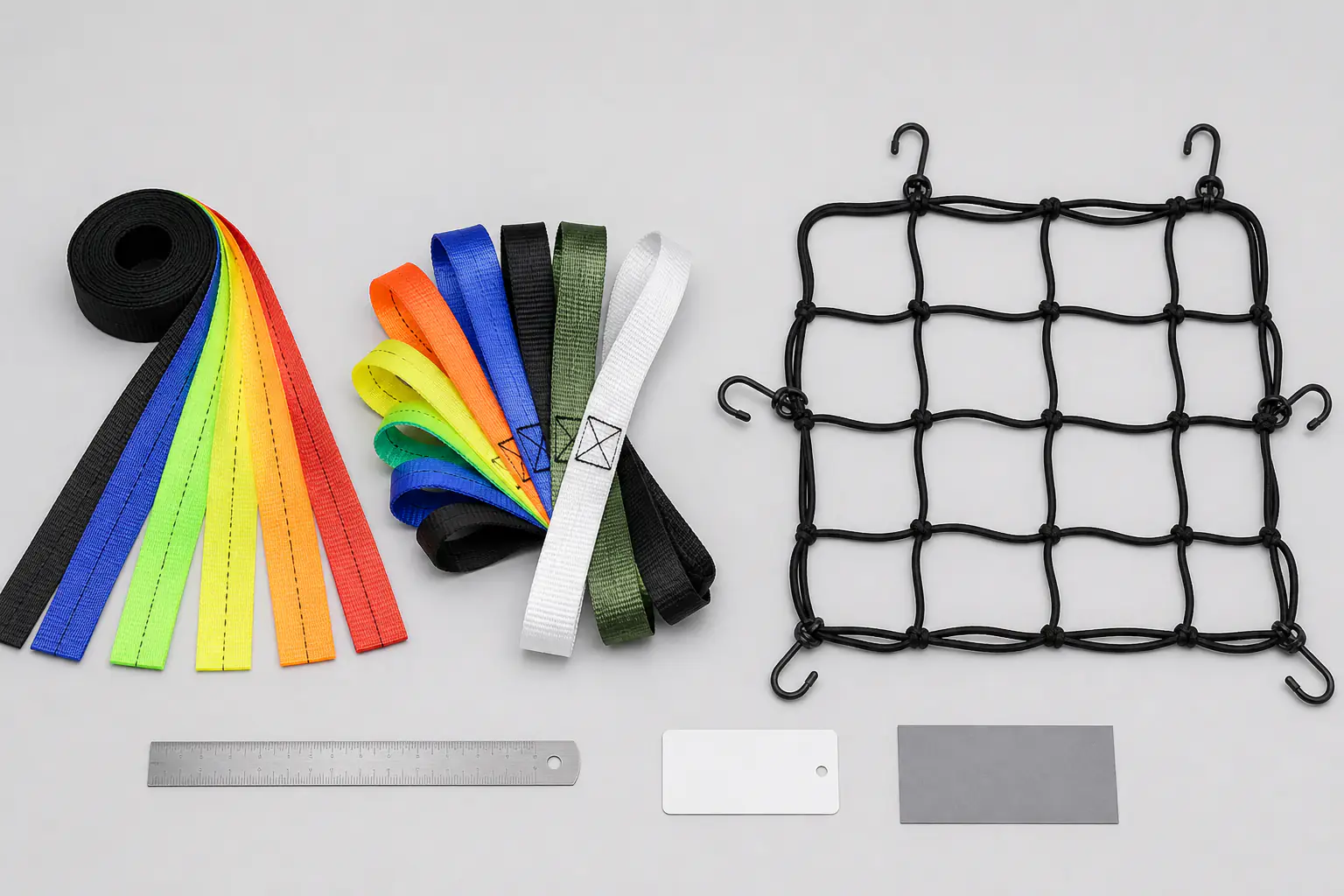
BUYING GUIDE / STRENGTH, ELONGATION AND DYE ACCEPTANCE
How to Evaluate Polyester Webbing Strength, Elongation and Dye Acceptance
Strength, elongation and dye acceptance are three different decisions. A useful buying guide defines the exact webbing construction, specimen, conditioning, test method, reference load or endpoint, color master, viewing condition, lot sampling and authorized reviewer before interpreting any result.
This guide uses WSTDA, FMCSA, ISO and AATCC sources to define question boundaries. It does not reproduce paid standards, invent pass thresholds, transfer supplier values to EverBen goods or treat a generated planning image as laboratory evidence.
01 / CLAIM OBJECT
Name the Exact Property, Object and Decision before Testing
A result has meaning only when everyone is discussing the same construction, specimen and released statement.
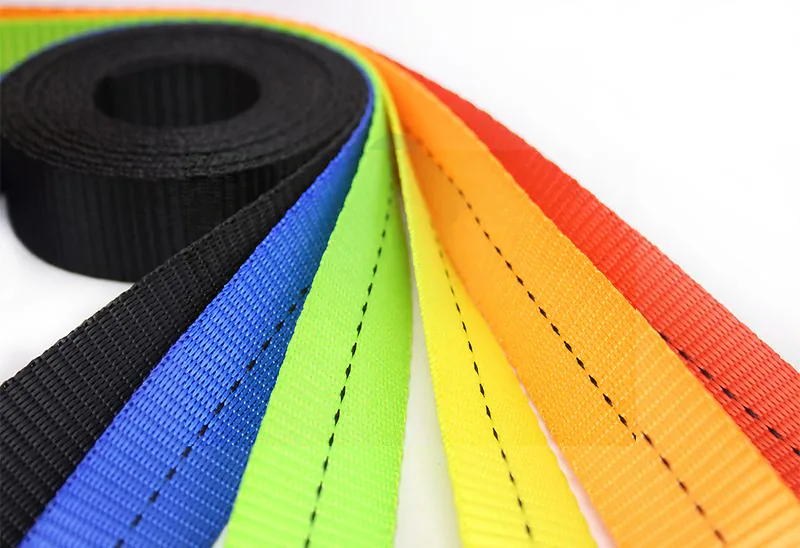
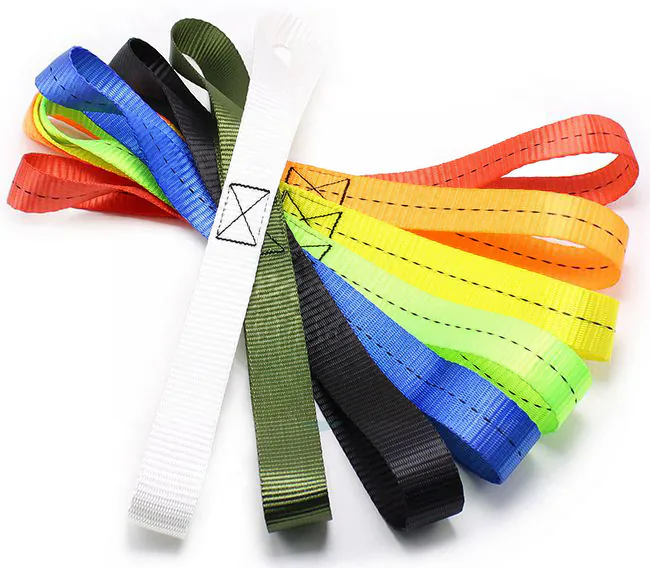
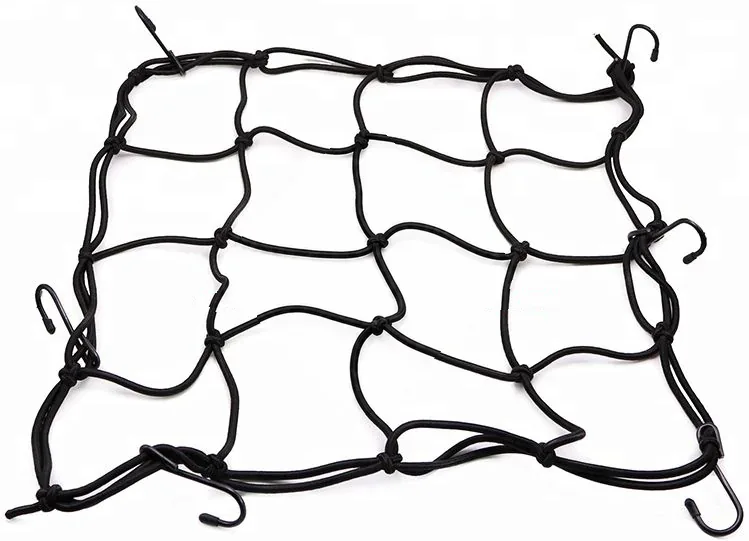
- 01Write the proposed claim
- 02Resolve the represented object
- 03Choose the matched method
- 04Name the acceptance owner
01
Strength object
State whether the question concerns a woven specimen strip, full-width webbing, sewn loop, finished tie-down or another assembly. Define maximum force, break or another endpoint and units. Do not call a webbing value a complete-system rating or working load limit without an accepted derivation and responsible reviewer.
02
Elongation object
Define whether elongation is read at a reference force, maximum force, break, after time under load or after release. Record gauge length, preload and calculation basis. Values from different endpoints cannot be compared just because they share a percentage unit.
03
Dye acceptance object
Separate visual shade match, instrument color difference and fastness to rubbing, light, weather, water or laundering. Name the master, material construction and lot. A single color approval should not be stretched into a claim covering every exposure or future source.
02 / IDENTITY AND CONDITIONING
Freeze Specimen Identity, Sampling and Conditioning
Comparable testing starts before the machine: source lot, direction, dimensions and atmosphere must be recorded.
01
Construction identity
Link every specimen to SKU, material source, yarn and weave revision, width, thickness or mass check, edge, finish, dye lot and production route. Photograph or retain the tested sample where required. Similar color and nominal width do not establish equivalence between constructions.
02
Sampling plan
Define number of lots, rolls, locations and specimens, distance from roll ends, direction and treatment of defects. State how destructive cuts affect delivered length. A convenient sample from one visible roll may support development but cannot represent a production lot unless the accepted plan says so.
03
Conditioning record
Name the required standard atmosphere or wet state, conditioning time, specimen preparation and transfer to test. ISO 13934-1 explicitly distinguishes specimens in equilibrium with the standard testing atmosphere and wet specimens. Record deviations because moisture and preparation can affect comparison.
03 / STRENGTH
Evaluate Maximum Force without Converting It into an Unrelated Rating
Strength review requires an agreed strip geometry, grips, rate, endpoint and rule for invalid specimens.
- 01Prepare matched specimens
- 02Verify grips and gauge length
- 03Record force endpoint and failure mode
- 04Release only the supported statement
01
Method setup
Select the buyer-approved method and edition for the represented webbing, then define specimen width, gauge length, grip faces, rate and preload if specified. ISO 13934-1 provides a strip-method framework for maximum force and elongation at maximum force in textile fabrics, but applicability must be reviewed for the exact webbing.
02
Failure observation
Record break location, slippage, grip damage, jaw breaks and any invalid-test rule before averaging. Preserve individual results and specimen identity. A high number from a damaged or slipping setup does not become stronger evidence merely because it supports the commercial target.
03
Assembly boundary
Keep webbing specimen results separate from sewing, buckles, hooks, net junctions and complete tie-down or loop behavior. WSTDA T-1 addresses synthetic web tie-down construction and capacity as a product system; FMCSA also treats securement devices within a broader cargo-securement system. Do not collapse those levels.
04 / ELONGATION
State Reference Force, Gauge Length, Time and Recovery
Elongation changes meaning with the point on the force-extension curve and the way the specimen is prepared.
- 01Define starting reference
- 02Apply the agreed force path
- 03Read the named endpoint
- 04Record unloading or recovery separately
01
Starting reference
Define gauge marks or machine separation, preload used to remove slack, specimen alignment and the moment the initial length is recorded. Keep the setup consistent across lots. A percentage without its starting reference and specimen condition cannot support a reliable purchasing comparison.
02
Endpoint and time
Specify elongation at reference force, maximum force, break or another accepted point, plus force rate, dwell and reading time where applicable. ISO 13934-1 names elongation at maximum force; other decisions may need a different method. Do not compare values from dissimilar endpoints.
03
Recovery and interpretation
If recovery matters, define unload route, wait time and residual extension calculation separately from loaded elongation. Record individual curves or observations as required. The buyer or qualified owner decides how material behavior affects the full assembly and cargo context; the supplier should not invent a universal service limit.
05 / SHADE ACCEPTANCE
Compare Production Color to a Controlled Master under Stated Conditions
Shade acceptance should preserve physical and digital evidence without allowing either to float between lighting and constructions.
| Entity | Required attributes | Evidence value | Review state |
|---|---|---|---|
| Construction | SKU, source, yarn, weave, width and dye lot | Defines the represented object | Clear / open |
| Strength specimen | Condition, dimensions, method, endpoint and failure mode | Supports only the named force claim | Matched / unmatched |
| Elongation specimen | Preload, reference length, force point, time and recovery | Supports only the named extension claim | Applicable / contextual |
| Color decision | Master, viewing, instrument, fastness and sampling | Bounds shade and exposure decisions | Accepted / conditional |
| Continuity | Lot, source, change, retest and retirement controls | Preserves the accepted relationship | Active / reapproval due |
01
Master hierarchy
Name the controlling physical master, lab dip, first production lot and backup digital values, with owner and expiry or replacement rule. The master should represent a comparable webbing construction because texture and gloss affect appearance. A screen image is communication support, not the production color standard.
02
Viewing and instrument
Define light source, booth condition, background, specimen layers, orientation and visual reviewer. If instrumental, define geometry, illuminant, observer, aperture, calibration, data format and calculation. ISO 10617 provides a standard format for communicating spectral and colorimetric data, not a universal tolerance.
03
Lot and roll disposition
Specify how many lots, rolls and positions are checked, how side-to-side or end-to-end variation is handled, and who can accept, rework or reject. Preserve sample, values and disposition. Do not average unacceptable roll variation into a passing lot without an explicit buyer rule.
06 / COLORFASTNESS
Treat Rubbing and Exposure Fastness as Separate Evidence
A shade match does not predict how color transfers or changes during rubbing, light, weather or care.
01
Dry and wet rubbing
AATCC TM8 and ISO 105-X12 address color transfer by rubbing and provide dry and wet routes. Select the buyer-required standard, specimen preparation, assessment scale and acceptance criterion. Record staining and color change only as the method directs; do not translate one route into every service condition.
02
Light and weather
If outdoor or illuminated service matters, define exposure method, cycle, specimen mounting, comparison and rating. ISO 105-B03 addresses outdoor weather exposure, while other methods cover different sources. A strong initial shade match is not evidence of light or weather durability.
03
Other exposures
Add water, laundering, perspiration, chemicals or storage transfer only when relevant to the product and destination, using agreed methods and criteria. Keep each exposure separate in the acceptance matrix. Passing one fastness property does not authorize claims about abrasion, strength, elongation or another untested condition.
07 / ACCEPTANCE MATRIX
Keep Individual Results, Lot Decisions and Evidence Gaps Visible
One matrix should show what was tested, how the data were interpreted and which claims remain open.
- 01Register each specimen
- 02Attach method and raw result
- 03Apply buyer decision rule
- 04Release or block exact wording
| Decision row | Required relationship | Gap indicator |
|---|---|---|
| Product identity | Claim resolves to SKU, BOM and revision | Generic or visually similar product |
| Method scope | Specimen and procedure match the conclusion | Different component, condition or edition |
| Assembly derivation | Component and connection basis is explicit | Unstated weakest-link assumption |
| Destination | Rule and responsible reviewer are named | Certificate treated as universal approval |
| Continuity | Batch, change and reorder controls preserve validity | Silent substitution remains possible |
Work backward from the proposed property statement
Resolve the phrase to the construction, specimen, conditioning, method, endpoint, result, acceptance rule, destination and reviewer.
Keep unlike endpoints visible
Supplier examples can guide questions, but maximum force, reference-force elongation, shade match and fastness cannot inherit one another's decisions.
01
Result register
Record specimen ID, lot and roll, construction revision, method edition, conditioning, equipment route, individual result, invalid-test note and retained sample location. Preserve raw records and any calculation. A summary certificate should not erase outliers, exclusions or the object actually tested.
02
Decision rule
Define minimum, maximum, range, average, individual-value, color-difference or grade rule before interpreting the lot. State rounding and retest policy. The guide intentionally publishes no default strength, elongation or color threshold because the buyer must match limits to the exact object, method and use.
03
Gap and claim disposition
Mark every proposed statement accepted, conditional, open or rejected with reviewer, date and destination. Separate material evidence from sewn or complete-assembly evidence. Remove or narrow website, label and quotation wording when the relationship remains unresolved rather than filling the gap with a supplier example.
08 / CONTINUITY
Preserve Evidence through Production Changes and Reorders
An accepted result remains relevant only while the represented construction, dye route and method relationship remain controlled.
01
Production linkage
Connect incoming yarn or webbing lots, dye lots, weaving and finishing records, roll IDs, inspection, test specimens and shipment cartons. Define mixed-lot rules. A reorder investigation needs to resolve the delivered roll or loop back to the accepted construction and evidence record.
02
Change triggers
Require review after source, polymer or recycled-content declaration, yarn, weave, edge, finish, dye recipe, color master, specimen preparation, method, equipment, sewing, hardware, packaging or claim changes. Comparable appearance does not cancel a controlled change.
03
Retest and retirement
Define which changes require document review, limited comparison or full retest, who decides and how superseded evidence and artwork are retired. Keep historical records available for traceability but prevent old values or color approvals from being presented as current production authorization.
Limits of strength, elongation and dye research
Association, regulatory and standards references help construct questions but do not qualify an EverBen webbing. A purchasing conclusion depends on records matched to the exact SKU, specimen, conditioning, method, endpoint, dye lot, acceptance rule, destination and buyer-approved wording.
Route-specific FAQ
Checks for complete-assembly evidence review
Is webbing breaking strength the same as a finished tie-down WLL?
No. A specimen maximum-force result, component break result, complete-assembly result and assigned working load limit are different objects and decisions. Keep their methods, units, safety basis and authorized wording separate.
Which elongation value should a buyer request?
First define the decision: elongation at a reference force, at maximum force, at break, after a dwell, or recovery after unloading. Then define preload, gauge length, rate, conditioning and calculation. Do not compare unlike endpoints.
Does an approved lab dip release production color?
Not by itself. The buyer should define whether the lab dip is a development reference, how production lots and rolls are sampled, the viewing or instrument method, tolerance, disposition and continuity records.
Is colorfastness the same as shade match?
No. Shade match compares color to an approved reference under defined conditions. Rubbing, light, weather, washing or water fastness evaluates change or transfer under specific exposures and needs separate methods and criteria.
When must evidence be reviewed again?
Review after changes to material source, yarn, weave, finish, dye recipe, specimen preparation, method edition, equipment route, sewing or assembly, claim wording, destination or acceptance rule.
Evidence decision
Build one evidence matrix for one webbing construction
Provide the SKU and revision, yarn and weave identity, specimen plan, conditioning, strength and elongation method, dye master, viewing and fastness requirements, lot sampling, destination and reviewer. Open method or acceptance fields will remain visible.