
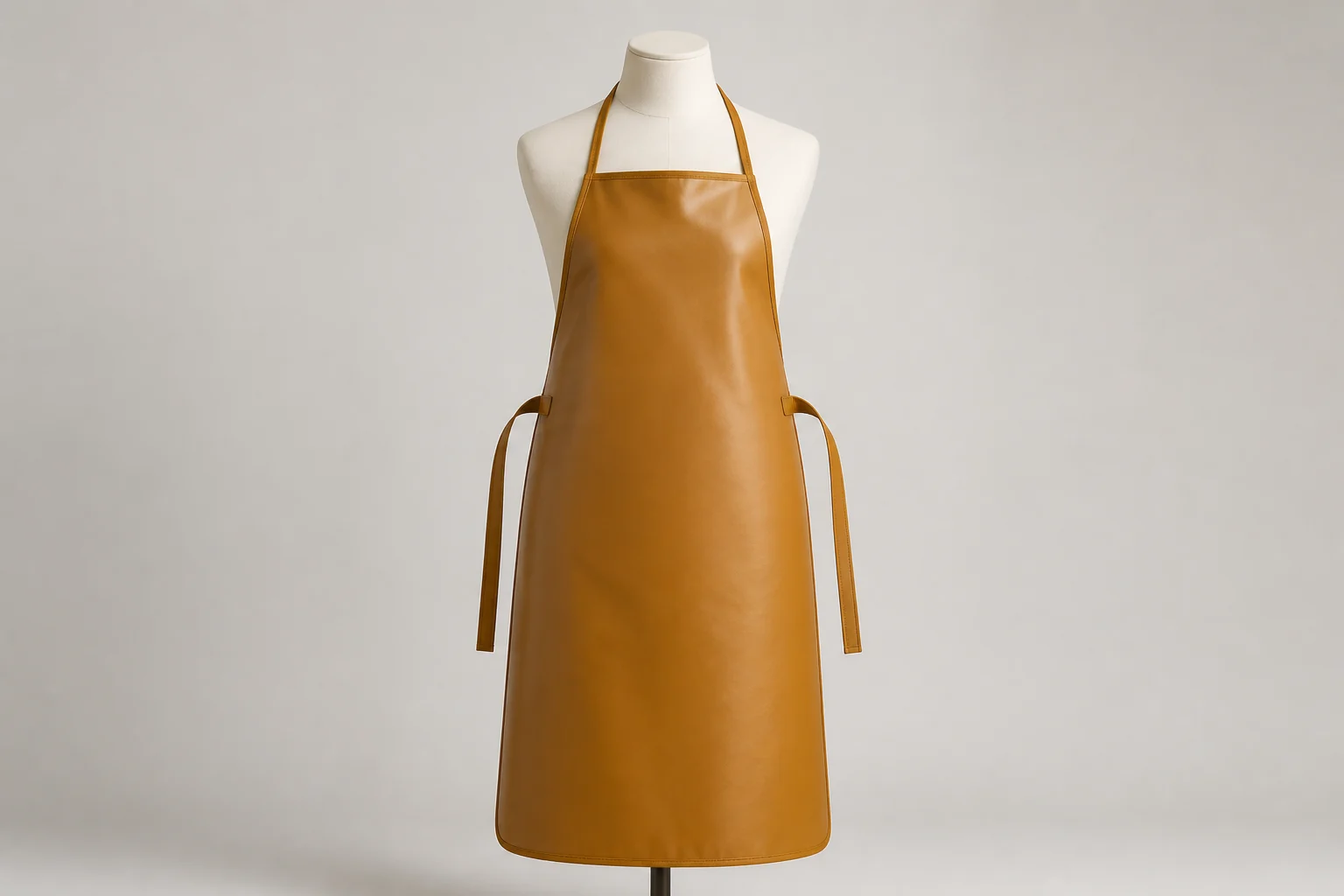
BUYING GUIDE · MATERIAL AND CARE COMPATIBILITY
How to Compare Waterproof Aprons, Work Capes and Cleaning-Media Compatibility
The useful buying question is not simply which apron is waterproof. It is whether one defined construction, worn in one defined way, fits the contact pattern and remains suitable after the buyer’s proposed care procedure.
This guide gives importers and program owners a repeatable route: map exposure, compare coverage, read evidence scope, test interfaces, challenge the cleaning model, sequence samples and normalize supplier responses. It does not certify a product or replace workplace hazard assessment.
01 · DEFINE THE EVENT
Map Exposure before Comparing Catalog Categories
A supplier cannot select responsibly from the word waterproof alone. Convert the job into observable media, direction, duration and movement inputs.
01
Name the medium
Record each liquid, mixture or residue by exact identity, concentration and temperature where relevant. Separate routine water contact from detergents, oils, dyes or other challenge media.
02
Describe the contact
Distinguish mist, splash, spray, run-off, immersion at an edge and repeated wet handling. Add direction, frequency and duration so required coverage can be mapped.
03
Capture the task cycle
Follow the wearer through setup, work, cleaning, removal and storage. Include bending, reaching, sitting and tool use because open zones change throughout the sequence.
02 · COMPARE FORMS
Judge Coverage by Complete Silhouette and Deliberate Openings
Product names are secondary to the actual zone map. Compare the whole article and every interface with the wearer’s posture and equipment.

01
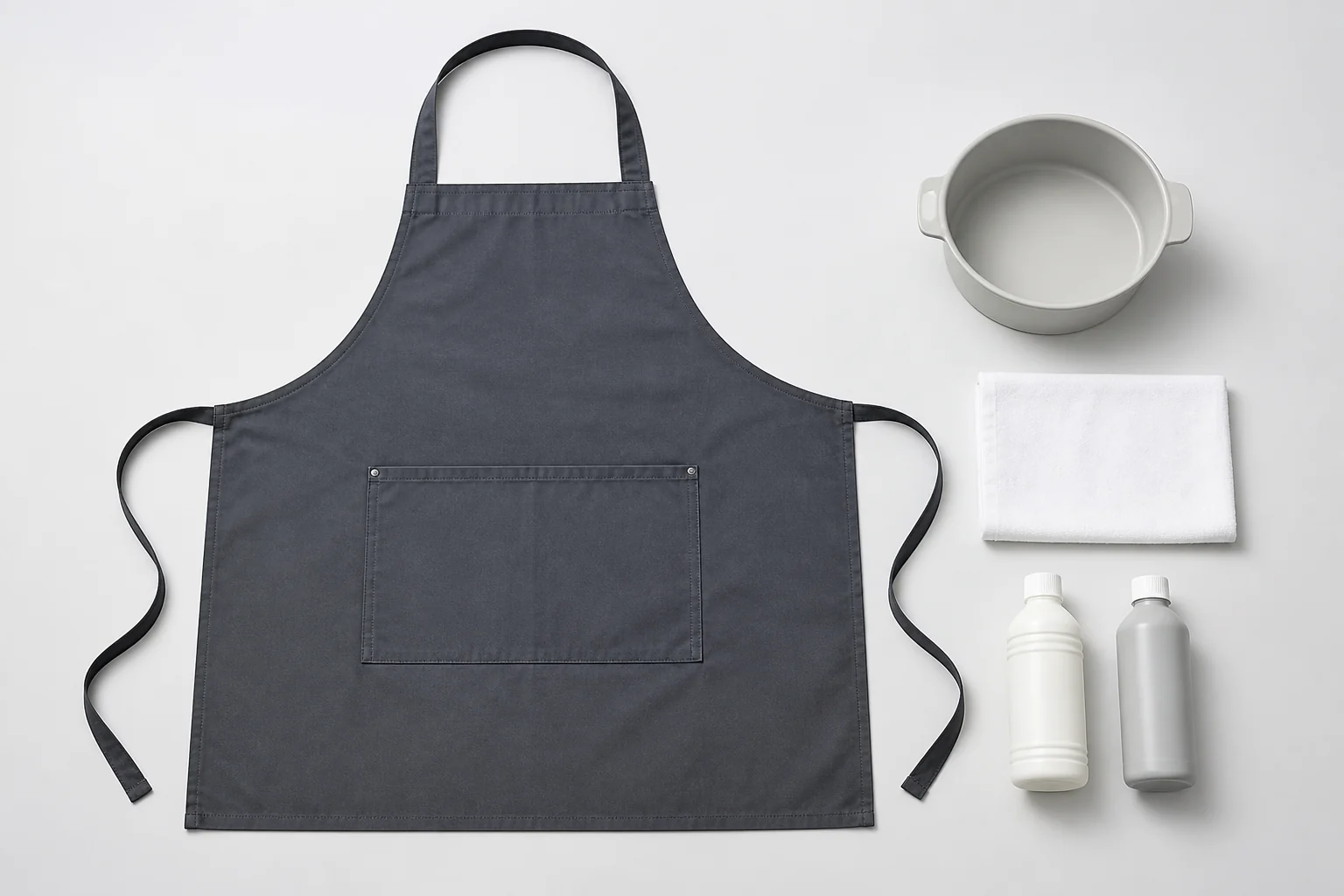
Bib apron route
Front coverage can suit directed splash while arms, sides and back remain open. Check bib width, lower length, neck load, waist control and hem movement on the intended wearer range.
02
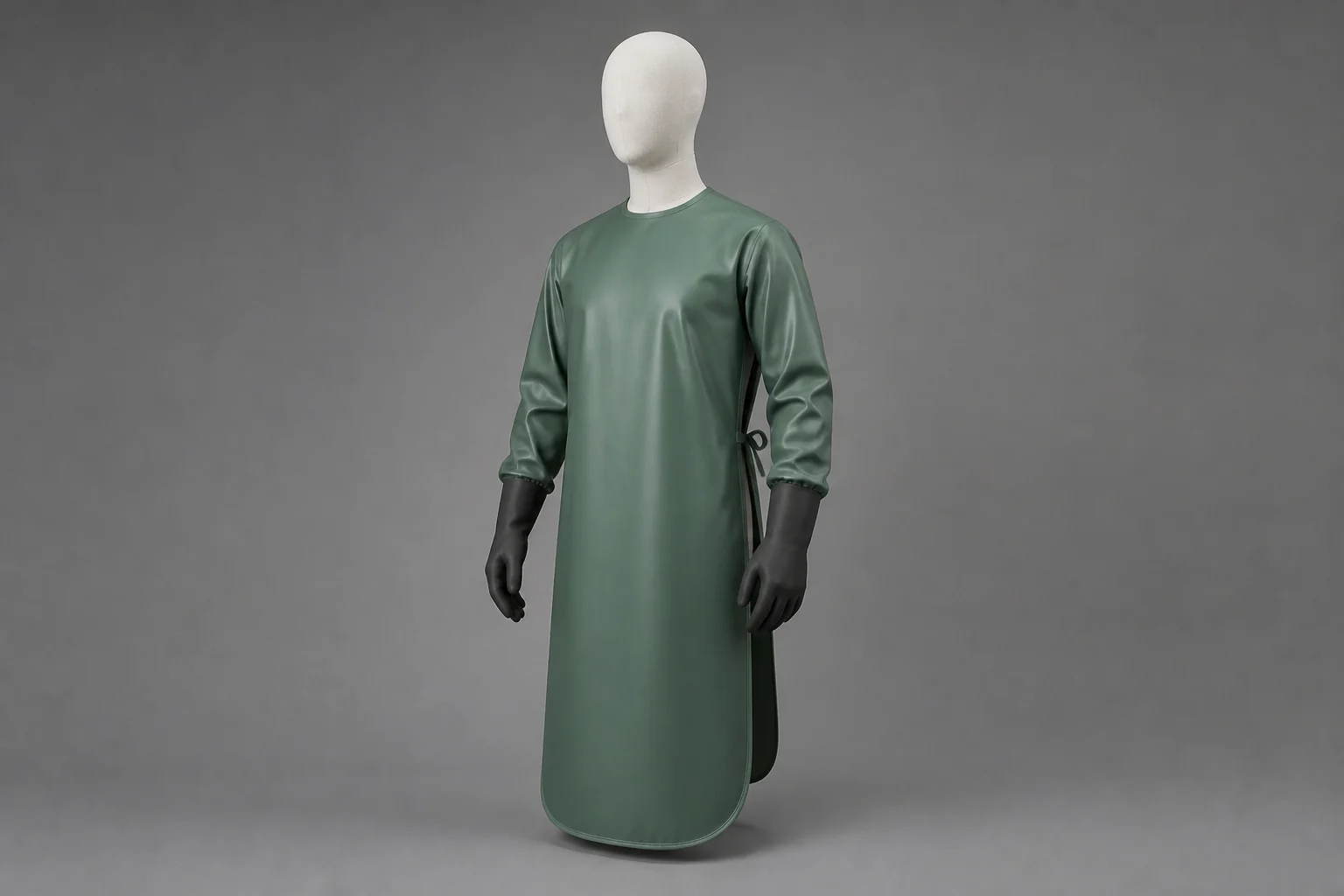
Sleeved smock route
Sleeves and shoulder panels add coverage but introduce cuff, rear or side opening and heat-management questions. Trial gloves and underlayers during the real reach sequence.
03
Work-cape route
A draped cape may suit grooming or service tasks where shoulder coverage and rapid removal matter. Inspect neck closure, hand access, front overlap and chair or equipment clearance.
03 · READ THE BUILD
Separate Material Description from Finished-Article Evidence
Film, coating and laminate terms describe routes, not universal outcomes. Read what was actually represented, conditioned and evaluated.
| Decision chain | What the buyer reads | Useful status | Why the distinction matters |
|---|---|---|---|
| Intended wording | Exact phrase, market and responsible owner | Proposed or withdrawn | The review starts from language that will actually appear. |
| Offered construction | Material code, pattern revision and join schedule | Identified or unresolved | A family name cannot identify the represented garment. |
| Test object | Roll good, coupon, join or completed article | Applicable or informative | Scope changes when components and interfaces are added. |
| Method record | Challenge, conditioning, procedure, outcome and date | Current, expired or missing | The result must be read under its stated conditions. |
| Destination decision | Requirement owner, gap action and approval note | Accepted or review required | The importer preserves accountability for the final claim. |
01
Layer identity
Ask for base textile, coating or film, exposed face, backing, color and supplier code. Retain a coded reference so later samples and bulk can be compared to the same construction.
02
Specimen scope
Determine whether a record covers raw film, coated fabric, a join coupon or the complete apron. Do not move a flat-material result automatically across seams, straps and closures.
03
Method and outcome
Read the challenge medium, concentration, temperature, conditioning, method, result and date. Classify the record as applicable, informative, expired, missing or requiring destination review.
04 · CARE COMPATIBILITY
Test the Proposed Cleaning Media on the Finished Construction
Reusable is a service model, not a material adjective. The complete care procedure must be stated and reviewed with the finished article.
01
Cleaning recipe
Record water temperature, cleaner or disinfectant, concentration, contact time, agitation, rinse and drying. A brand name without formulation or dilution is not a repeatable test condition.
02
Construction response
Inspect surface change, stiffness, tack, color transfer, edge condition, join integrity, straps and markings after the proposed cycle. Use pre-agreed observations and decision rules.
03
After-use decision
Define inspection, drying, storage and removal-from-service criteria. Keep cleaning personnel and wearers informed about damage or contamination that requires segregation.
05 · HUMAN INTERFACES
Trial Fit, Gloves, Tools and Removal as One Ensemble
An apron can fit while standing still and fail during reach, cuff overlap or removal. Test the complete sequence with representative users.
01
Wearer range
State reference body dimensions and garment measurements rather than relying only on one-size wording. Observe the smallest and largest intended wearer during the same motions.
02
Adjacent equipment
Include gloves, sleeves, boots, eye protection, respirators and tools required by the task. Check that edges remain overlapped and straps avoid interference or snagging.
03
Donning and removal
Document the fastening, adjustment and removal sequence, including where contaminated faces may move. Confirm that the buyer’s training and workstation layout support the chosen route.
06 · VERIFY IN STAGES
Give Every Sample Stage a Specific Decision
A loose swatch, a fit sample and a packed pre-production article answer different questions. Do not treat one approval as permission for all later stages.
01
Swatch and coupon
Use coded material to compare face, color, hand and declared build; use a constructed coupon to investigate a proposed join when appropriate. Keep limitations visible.
02
Complete sample
Review dimensions, coverage, closures, movement, artwork and care interactions on the finished article. Consolidate comments into one dated revision and photograph complete views.
03
Packed pre-production
Inspect the released article after its real fold, unit pack, label and carton route. Confirm counts, recovery from packing and destination allocation before bulk release.
07 · NORMALIZE RESPONSES
Compare Suppliers on the Same Construction and Evidence Scope
A low quote may reflect a different article, omitted evidence, reduced sample work or simpler packing. Normalize the offered object before ranking price.
| Review area | Common ambiguity to expose | Controlled comparison action |
|---|---|---|
| Garment form | Similar names hiding unlike zone coverage | Compare complete drawings and deliberate openings |
| Barrier route | Material families without supplier codes | Request declarations tied to coded physical samples |
| Supporting records | Results for a different object or condition | Classify relevance before using the evidence |
| Development work | Different sample stages inside the price | Align gates, revisions and approval owners |
| Supply terms | Testing, labels or packing omitted silently | Rebuild the total on an equivalent scope |
Begin the review with the phrase the market will see
Trace that wording to the offered build, the actual test object, the named procedure and the importer’s destination decision.
Label uncertainty instead of smoothing it away
Reference material can sharpen a question while the current apron remains unverified; record that difference in the evidence index.
01
Line-by-line response
Require required, offered, alternative or open status for material, pattern, joins, closures, artwork, evidence and pack. Ask for explanations beside every departure.
02
Commercial inclusions
Separate unit product cost from sampling, testing, tooling, labels, packing, inspection and destination split. Compare totals only after scope is visible.
03
Continuity controls
Ask how material, component, method and source changes are communicated. Reorders should return to the retained sample and released file, not merely reuse an old SKU name.
08 · PRESERVE THE WHY
Keep a Buyer Decision File for Bulk and Reorder Review
A useful file records not only what was accepted, but why it matched the task and where uncertainty remains.
01
Accepted object
Retain the current drawing, bill of materials, complete sample, coded swatch, closures, artwork and sealed pack reference under one revision.
02
Evidence boundary
Index applicable records and open gaps by intended wording, SKU, specimen and destination. Do not let informative third-party material become an unqualified product claim.
03
Change decisions
Record supplier departures, buyer approvals, inspection findings and reorder change notices. A visible decision trail makes later review faster and reduces accidental specification drift.
Evidence boundary for this page
This educational guide does not certify a product or supplier and does not replace the buyer’s workplace risk assessment. ISO and branded examples provide terminology and scope questions only; they do not establish an EverBen product result.
Buyer FAQ
Questions for material, care and supplier comparison
Is waterproof the same as chemical resistant?
No. Waterproof wording does not establish suitability for a named chemical, concentration, temperature or exposure pattern. Review method- and specimen-specific evidence for the exact construction.
Why test cleaning media on the full apron?
Cleaning can affect surfaces, joins, edges, straps, closures and markings differently. A raw-material statement does not describe the response of the completed article and its full care route.
Can ISO 13688 alone prove task-specific protection?
The ISO record states that its general requirements are intended for use with standards containing specific protective-performance requirements. It does not certify an EverBen SKU or select the buyer’s hazard standard.
What should a complete sample trial include?
Use representative wearers, real motions, adjacent PPE, tools, donning, removal and proposed cleaning. Record open zones and construction observations against a dated sample revision.
How do buyers prevent misleading quote comparisons?
Issue one brief and require each supplier to mark required, offered, alternative or open status. Normalize samples, evidence, artwork, packing and change control before comparing totals.
Who owns the final workplace suitability decision?
The buyer, employer and qualified safety professionals must assess the actual hazard, procedure, ensemble and destination requirements. A sourcing guide cannot replace that responsibility.
Controlled next step
Turn the Selection Method into a Supplier-Ready Review File
Prepare the exposure card, zone map, architecture comparison, cleaning recipe, ensemble-trial plan, evidence index, sample gates and normalized quotation sheet. Then send the unresolved fields for focused factory review.