IMPORTER DECISION GUIDE
Women's Fashion Hats Buying Guide
Investigate shape, shade and fit with complete product views and a documented approval path.
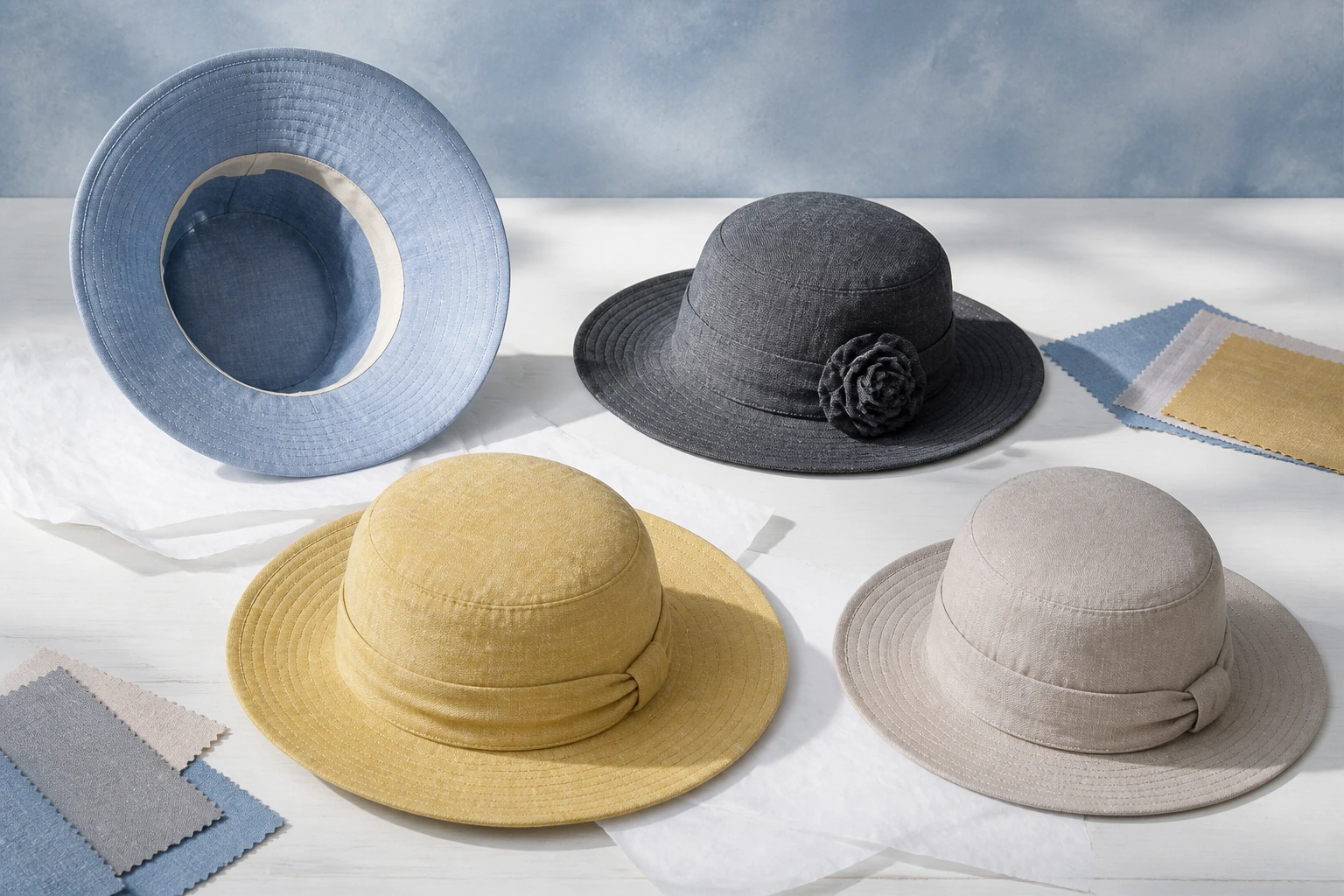
Fashion-hat field review 1
Fashion-hat field review: Secure the fashion-hat arrival condition
A seasonal style investigation preserves the untouched arrival shape before steam, blocking or hand adjustment changes it.
What belongs in the first unpacking record?
Complete arrival views, style and colourway identity, carton link and storage history.
Fashion-hat field review: Photograph unpacking before reshaping
Open the carton on camera and preserve the hat exactly as received. Before-and-after shaping images are useful only when the untouched arrival state is still available.
Fashion-hat field review: Assign style, colourway and carton identity
Attach the style number, colourway, size, carton and sample owner to every image set. Seasonal collections often contain similar silhouettes that cannot share one investigation record.
Fashion-hat field review: Note humidity, folding and storage history
Log transit time, storage orientation, humidity information and any folding instruction supplied. These conditions may explain temporary drape without proving a construction fault.
Fashion-hat field review 2
Fashion-hat field review: Map the intended silhouette in three views
Silhouette mapping translates the approved form into crown, brim and opening landmarks seen from three controlled directions.
How is fashion balance recorded without copying a brand?
Buyer-owned form, repeatable axes, complete profiles and an explicit inspiration boundary.
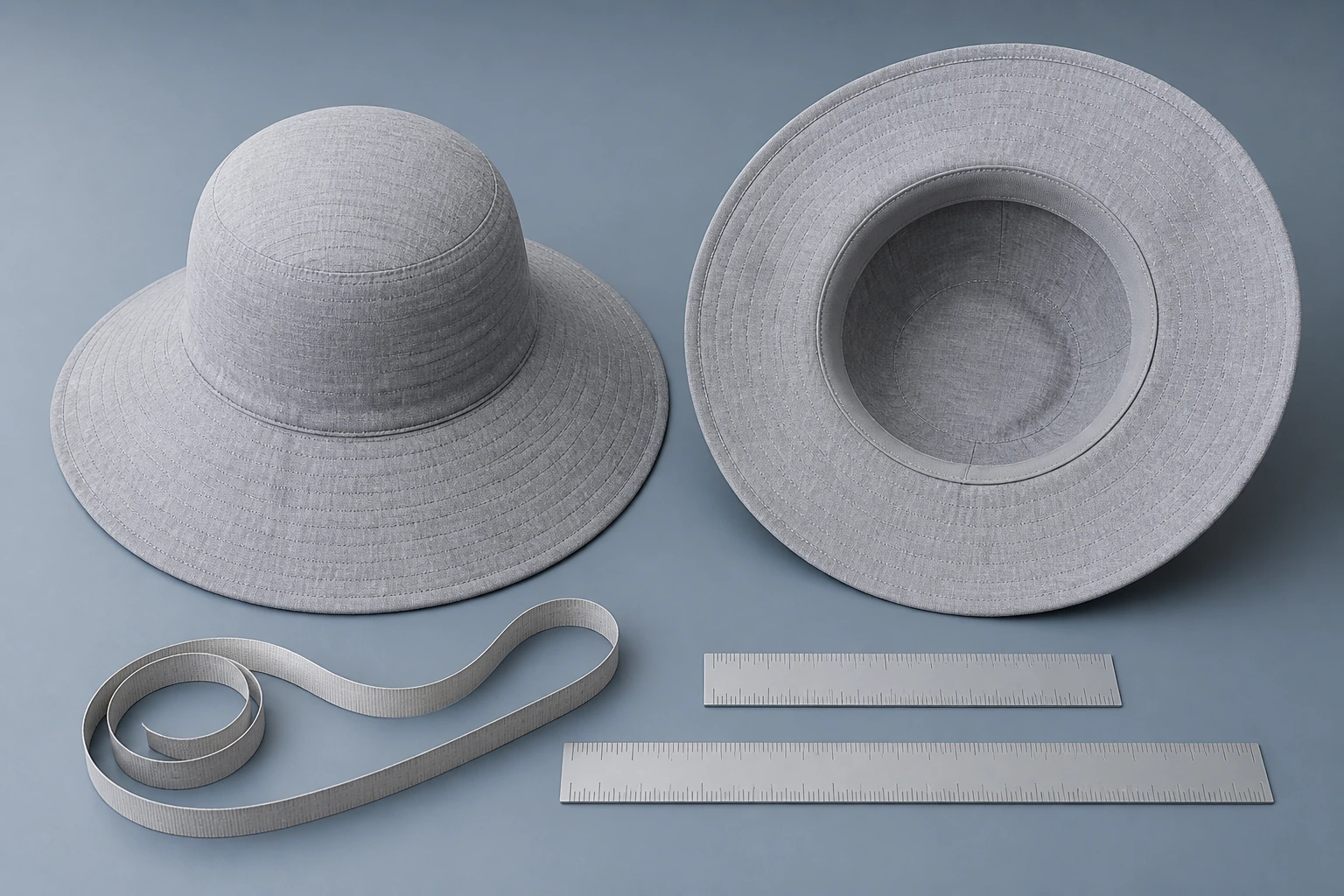
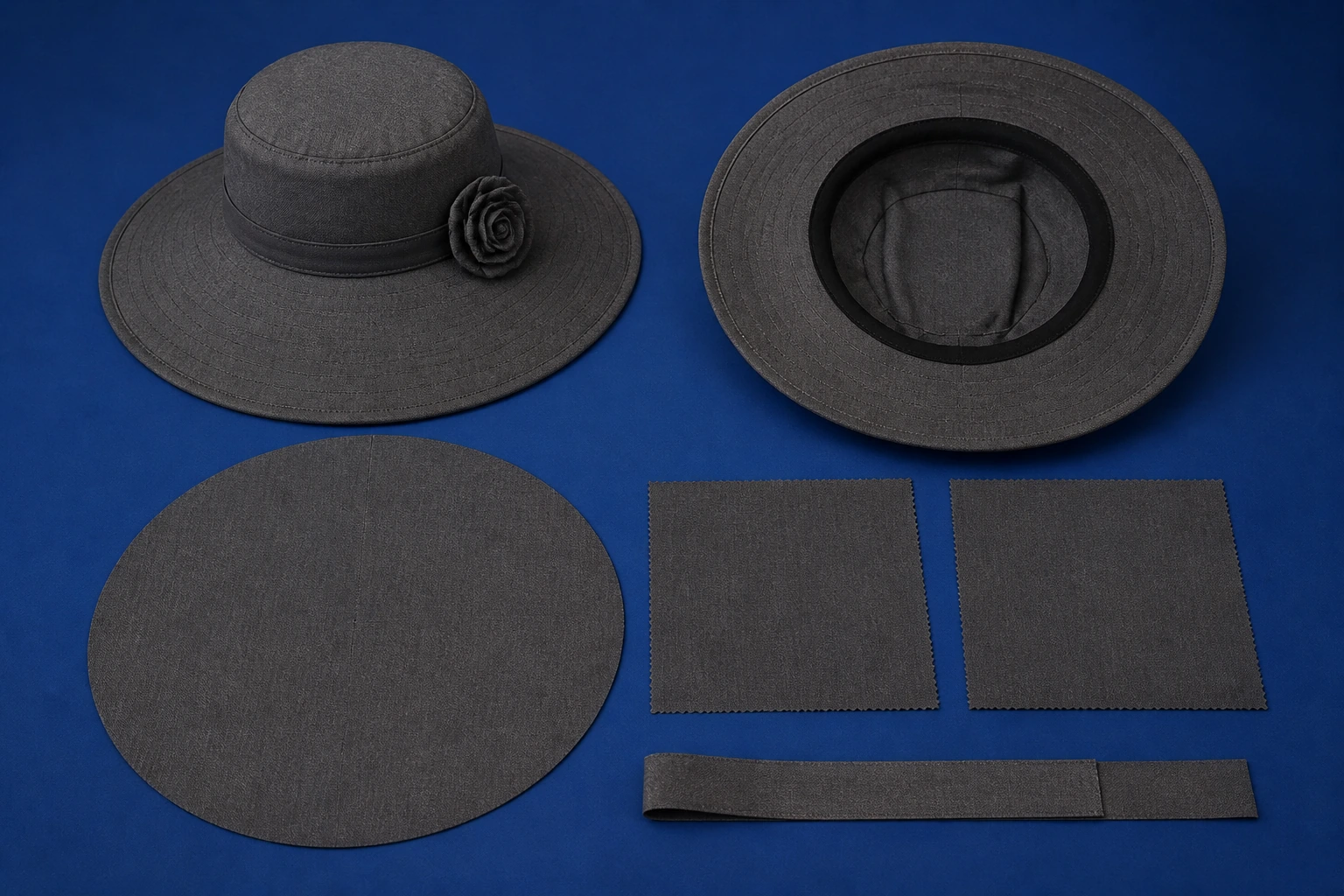
Fashion-hat field review: Establish crown height and brim-radius landmarks
Select stable points at crown apex, side wall, brim edge and internal opening. Record the landmark map so another reviewer can repeat the same silhouette measurements.
Fashion-hat field review: Record front, profile and overhead balance
Capture the hat on its neutral form from the front, both profiles and overhead. The sequence reveals asymmetry that a styled three-quarter photograph may conceal.
Fashion-hat field review: Compare with the controlled form, not a copied brand
Use the buyer-approved block or physical reference as the comparison object. A competitor photograph may communicate direction, but its proprietary details are not a production specification.
Fashion-hat field review 3
Fashion-hat field review: Distinguish brim wave from crown drape
Brim rhythm and crown drape are observed without flattening the hat, then revisited after gentle timed recovery.
Which observations distinguish design from deformation?
Level-surface contact, circumference pattern, untouched high points and recovery sequence.
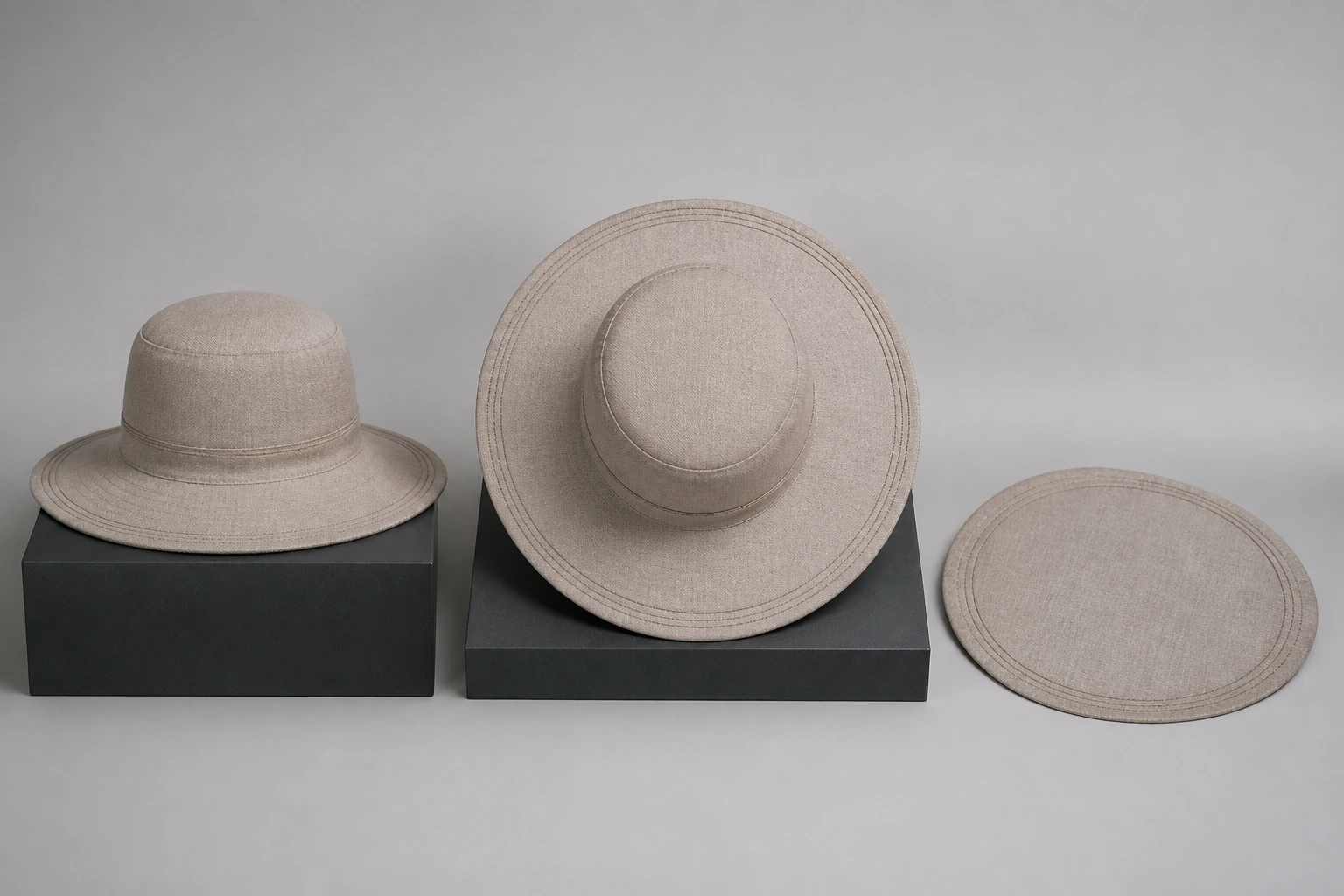
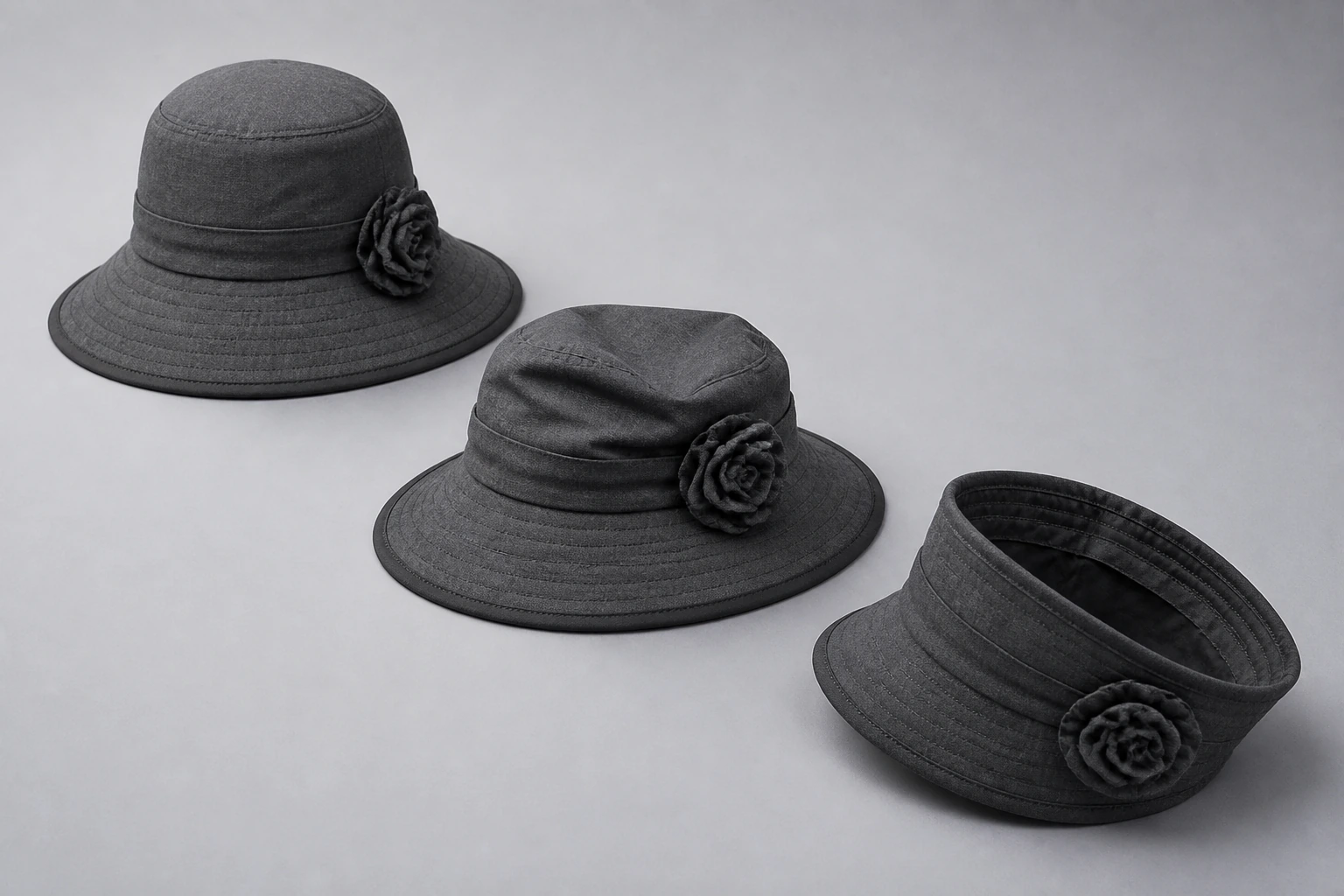
Fashion-hat field review: Place the brim on a level surface without flattening
Set the unforced brim on a flat, clean surface and photograph contact around the edge. Do not press high points down merely to obtain a symmetrical picture.
Fashion-hat field review: Observe edge rhythm around the circumference
Trace the complete brim circumference and describe where the wave begins, peaks and returns. A regular designed rhythm differs from a single collapsed sector.
Fashion-hat field review: Time shape recovery after gentle handling
Apply only the agreed gentle handling, then photograph at fixed intervals. Recovery rate helps separate packing memory from persistent material or sewing behaviour.
Fashion-hat field review 4
Fashion-hat field review: Verify substrate hand and seasonal shade
Surface hand and seasonal colour are checked component by component before the assembled style hides their differences.
What evidence supports a substrate finding?
Retained swatch, raking-light view, crown/brim comparison and process-change question.
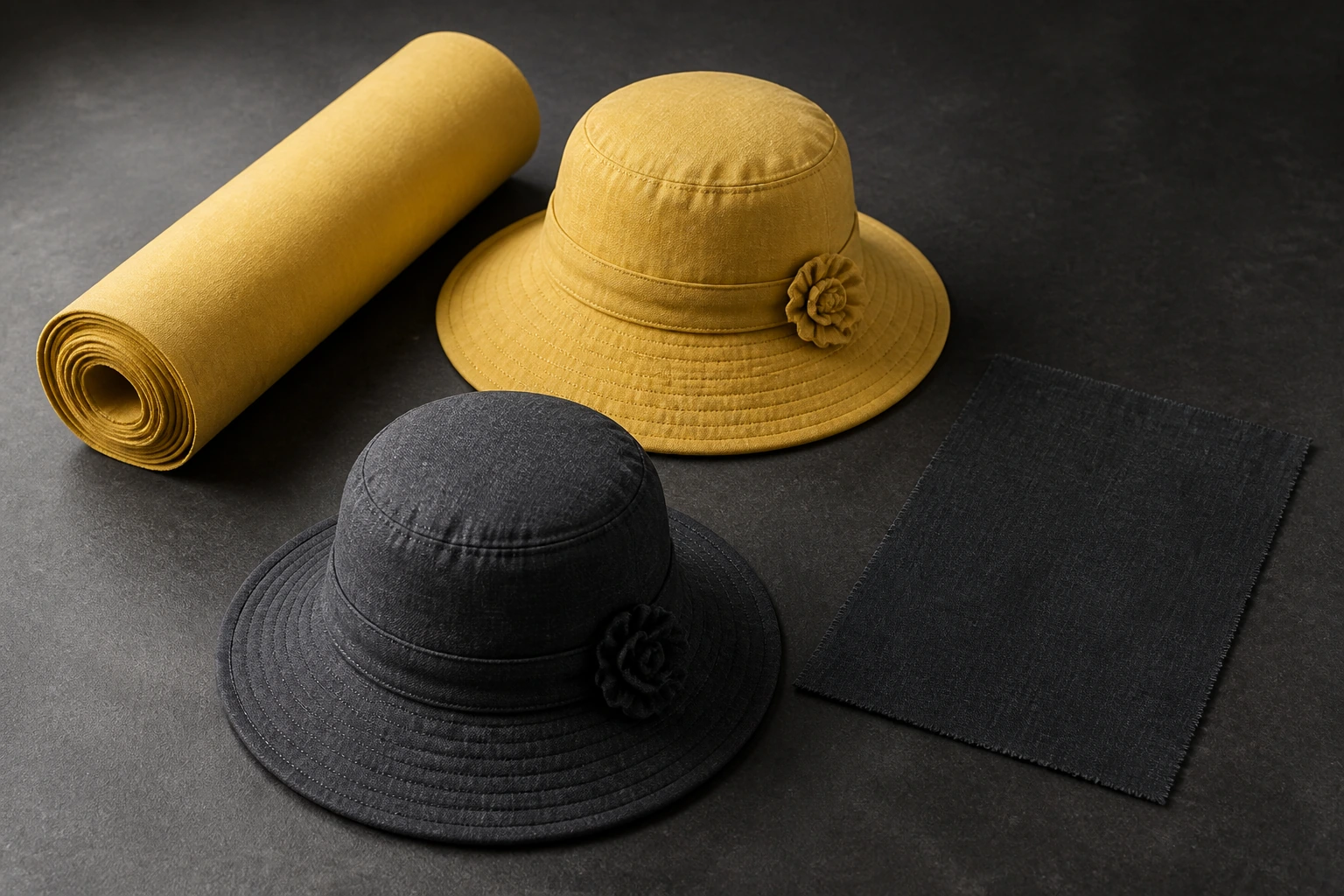
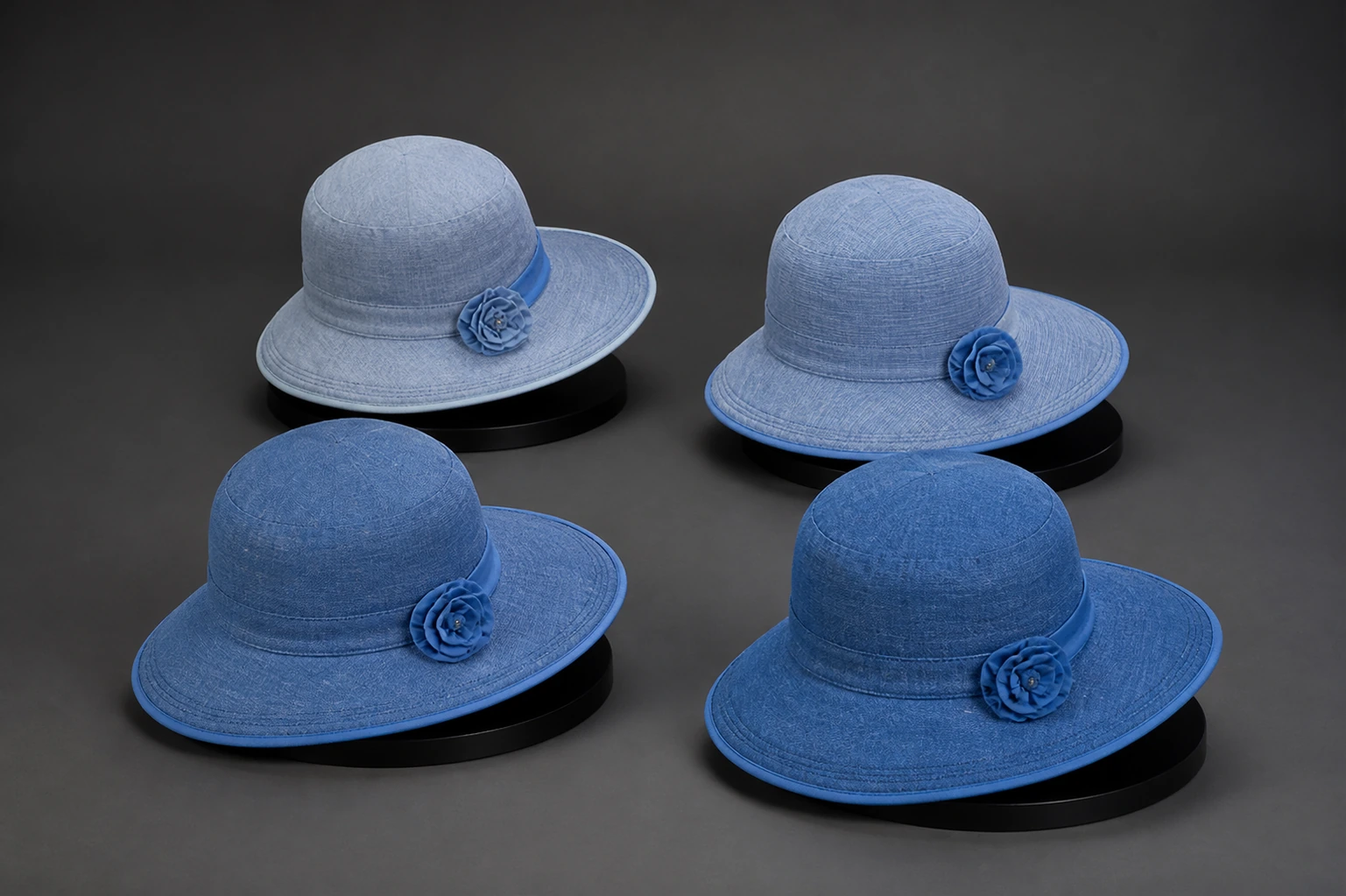
Fashion-hat field review: Match the surface to the retained swatch
Feel and view the questioned substrate beside the retained swatch under raking light. Record nap direction, stiffness and surface reflection without guessing fibre content.
Fashion-hat field review: Compare component shade before trim attachment
Compare crown, brim, band, bow and thread before approving the assembled colourway. Adjacent components can look acceptable alone yet clash on the finished style.
Fashion-hat field review: Separate material change from finishing variation
Ask whether the base material, finish process or conditioning changed, and retain samples from both routes. Visual variation does not identify which input caused it.
Fashion-hat field review 5
Fashion-hat field review: Audit trim scale and attachment
Trim review treats band, bow or flower as a three-dimensional load with measured placement and visible attachment.
When does decorative balance need correction?
Finished-form dimensions, reverse finish, handling result and whole-hat alignment.
Fashion-hat field review: Measure band width and join position
Measure band width, overlap, join location and distance from the brim seam on the finished form. Trim dimensions belong to the three-dimensional hat, not only the flat artwork.
Fashion-hat field review: Inspect bow or flower anchoring from both sides
Inspect attachment points from outside and inside after light handling. The finding should identify looseness, visible stitches or backing marks without prescribing an untested repair.
Fashion-hat field review: Check that trim weight does not pull the silhouette
View the hat at eye level and overhead to see whether trim weight twists the crown or lifts the brim. Approve the decorated silhouette as a complete object.
Fashion-hat field review 6
Fashion-hat field review: Check opening shape and sweatband behaviour
Opening and sweatband evidence is collected on two axes while the external fashion form remains unforced.
How is wearer feedback connected to construction?
Head context, oval dimensions, band easing, join position and selected size route.
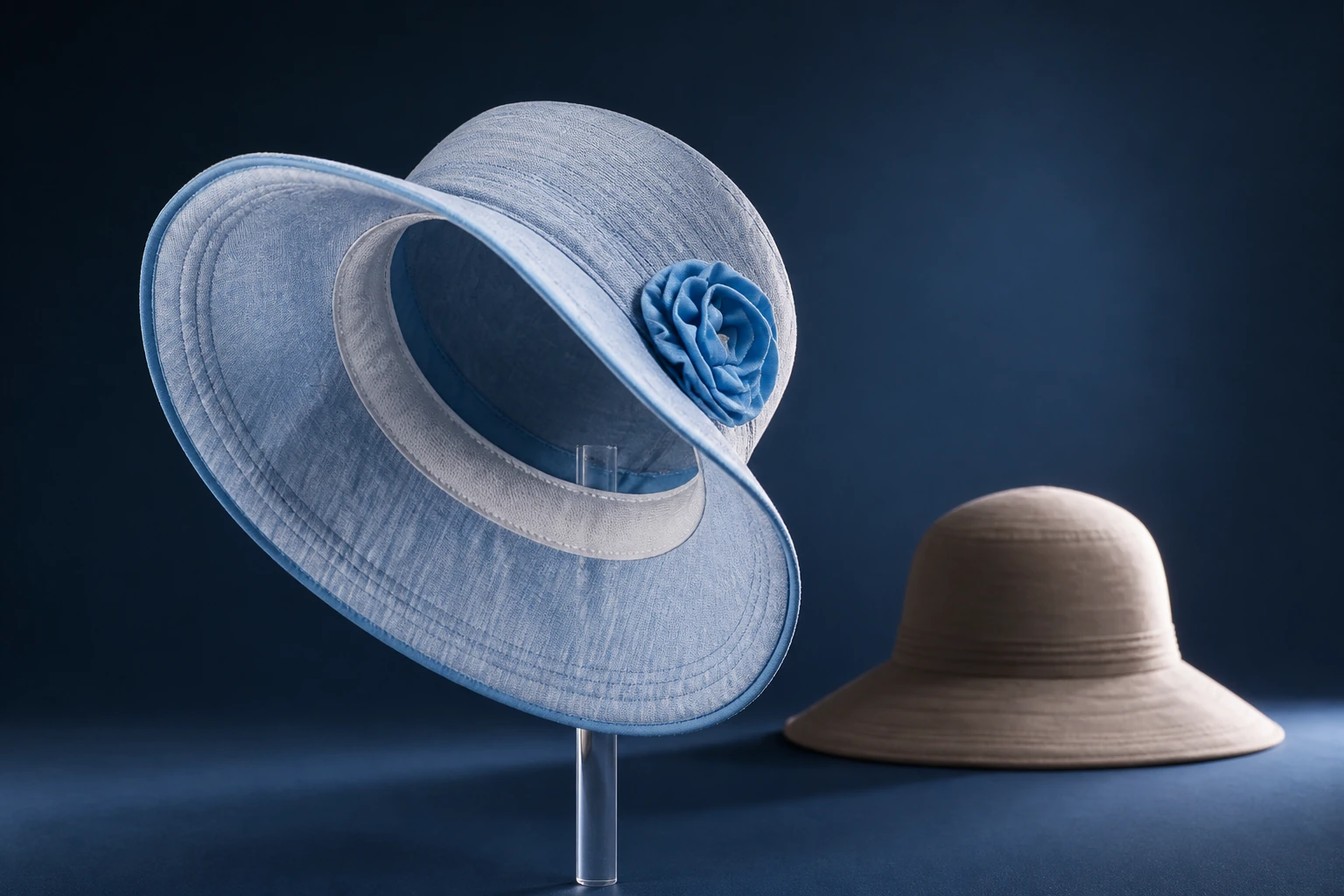
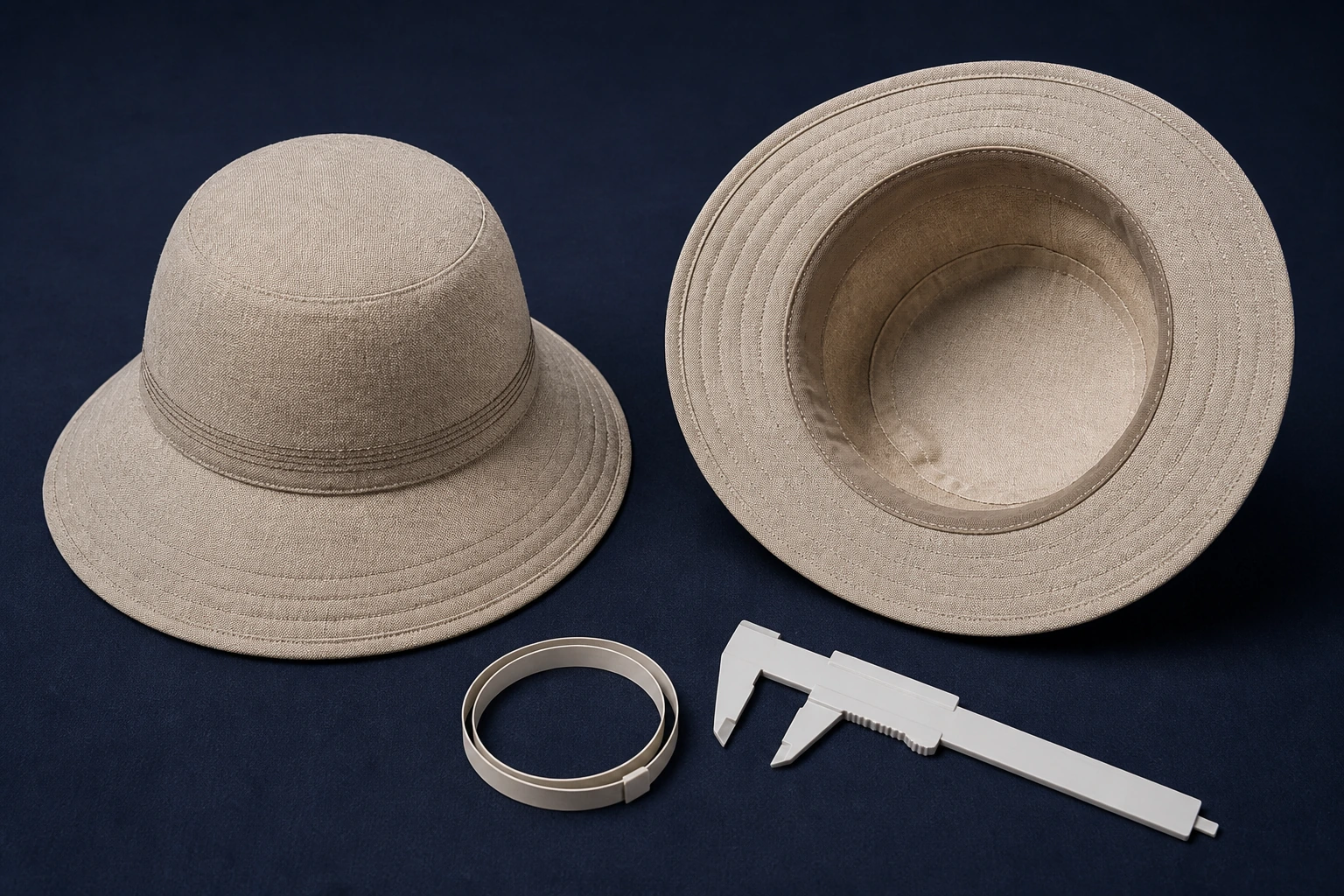
Fashion-hat field review: Measure the oval on two declared axes
Measure the internal oval at the declared front-to-back and side-to-side axes while the hat rests on its approved form. Avoid stretching a flexible opening to reach a nominal number.
Fashion-hat field review: Review sweatband joins and easing
Trace the sweatband join, easing and attachment around the full opening. Local gathers may change comfort even when the overall circumference appears correct.
Fashion-hat field review: Relate wearer feedback to the selected size route
Connect wearer comments to head measurement, hairstyle allowance, sample condition and chosen size route. Do not alter the external crown until the internal fit evidence is understood.
Fashion-hat field review 7
Fashion-hat field review: Choose the style sample that governs production
The governing sample reconciles form, substrate, colour and trim decisions on one identified seasonal object.
What turns an attractive sample into a release reference?
Separate comment lanes, measurable closures, buyer custody and a unique dated identity.
Fashion-hat field review: Keep form, colour and trim comments distinct
Review form, substrate, colour and trim in separate comment lanes, then reconcile them on the complete assembled sample. This prevents a colour approval from silently releasing unresolved shape work.
Fashion-hat field review: Resolve every note on the assembled hat
Close each note with a visible result, dimension or retained comparison. A beautiful styling image is not a substitute for a controlled production reference.
Fashion-hat field review: Name one seasonal release reference
Give the accepted hat a unique seasonal identity and named custodian. Suppliers should receive the same physical reference and dated decision record used by the buyer.
Fashion-hat field review 8
Fashion-hat field review: Recreate folding, nesting and rebound
Fold and nesting analysis captures the hat immediately after opening and again after a declared rebound interval.
Which pack facts explain a changed silhouette?
Support allocation, fold direction, carton orientation, initial creases and timed complete views.
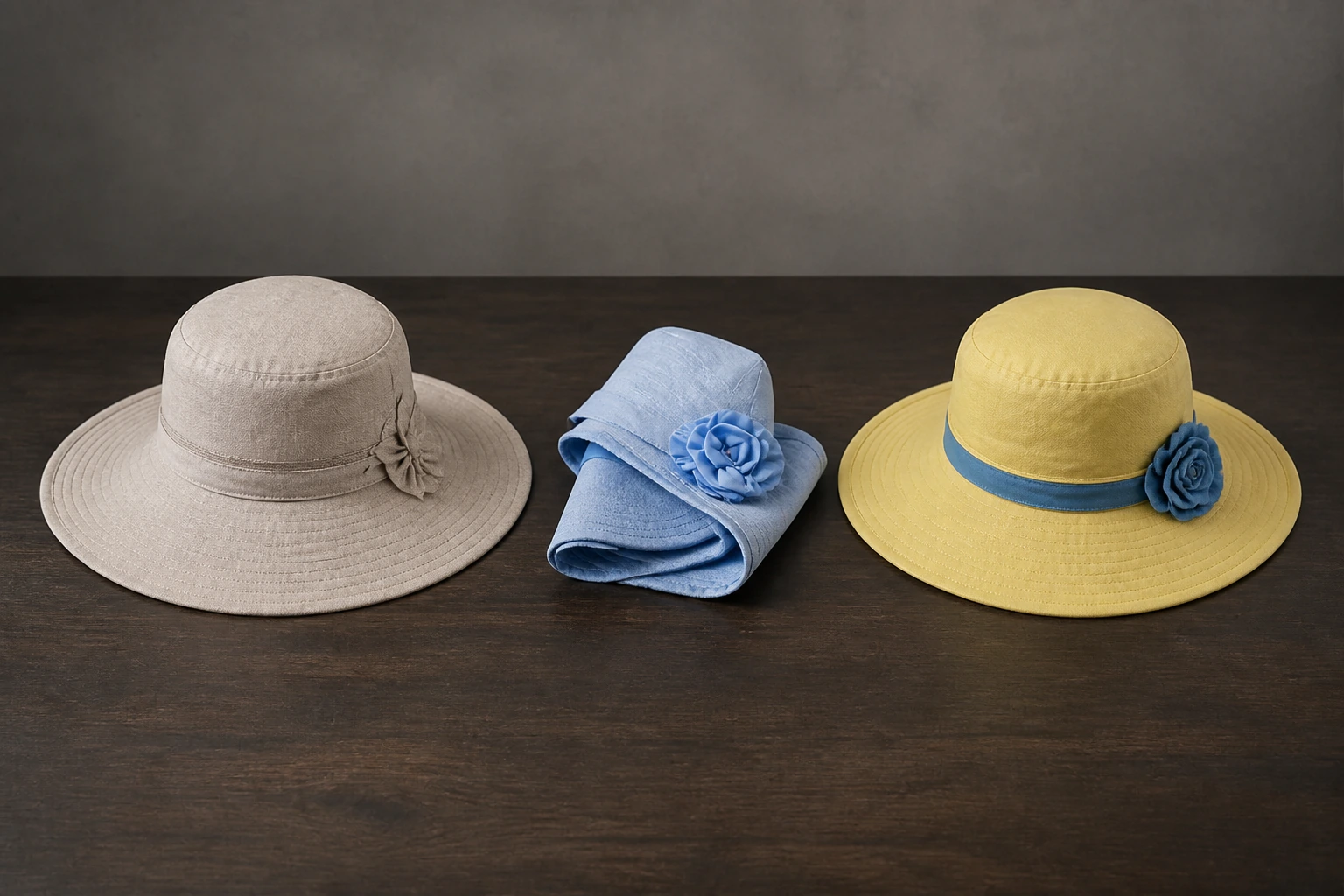
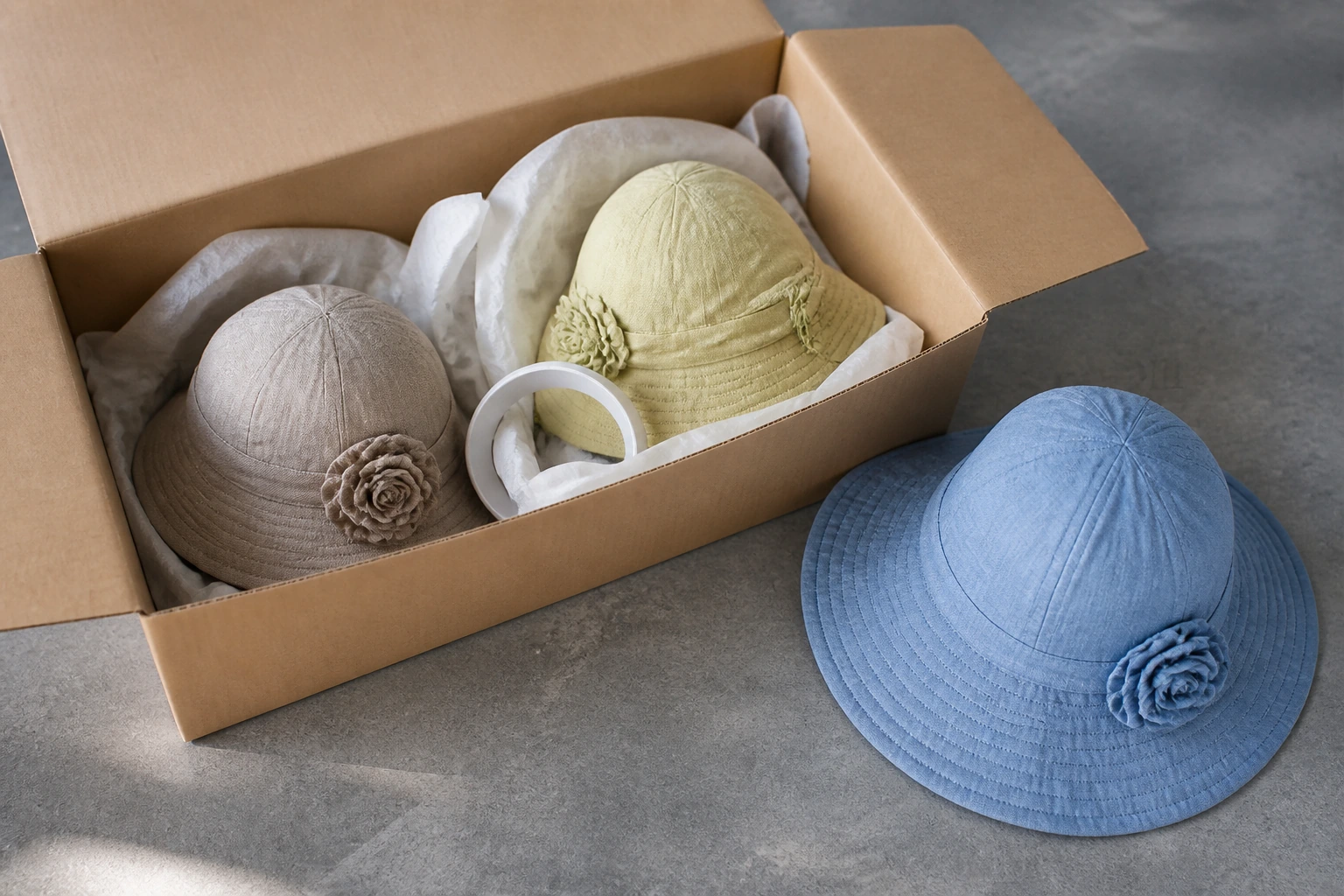
Fashion-hat field review: Record the exact fold or nest allocation
Document tissue, crown support, fold direction, nesting count and carton orientation for the trial. A different pack allocation creates a different recovery question.
Fashion-hat field review: Observe the hat immediately after unpacking
Photograph the complete hat as soon as it is removed, without steaming or hand shaping. Record creases, brim displacement and trim pressure in their original locations.
Fashion-hat field review: Judge rebound after a stated rest interval
Repeat the same complete views after the declared rest interval and compare them with the released form. The buyer can then decide whether packing, blocking or material control must change.
Fashion-hat field review 9
Fashion-hat field review: Carry the finding into the seasonal reorder
Seasonal continuity depends on archived form history and component-specific triggers rather than a broad style name.
How should the next sourcing review reopen?
Retained colourway objects, vulnerable-input list, prior resolution and newly open decisions.
Fashion-hat field review: Archive the colourway and form history
Archive the accepted form images, physical swatch, trim sample and packed-hat result under the exact colourway. Seasonal names alone are too broad for repeat-order control.
Fashion-hat field review: Write a change trigger for vulnerable components
List changes to substrate, stiffening, block, sweatband, trim, shade standard or packaging that reopen review. Each trigger should point to the evidence lane it affects.
Fashion-hat field review: Brief the next supplier review from retained evidence
Begin the next supplier meeting with retained objects and the prior resolution, not with memory. The reorder brief should show what stayed stable and which seasonal decisions are newly open.
Style decision map
Seasonal form investigation sequence
Move from untouched arrival evidence to one reconciled seasonal reference; do not reshape the item before the first record.
| Stage | Evidence retained | Boundary at this stage | Exit condition |
|---|---|---|---|
| Arrival | Photograph the untouched hat | Keep all form lanes open | Arrival state archived |
| Isolation | Compare brim, crown, substrate and trim separately | Name only the affected lane | Comparison object retained |
| Reconciliation | Review all accepted lanes on one assembled hat | Check interaction and whole-form balance | Governing sample identified |
| Continuity | List material, block, trim and pack changes | Reopen only when a named trigger occurs | Seasonal record carried forward |
FAQ
fashion hat investigation questions
Where should fashion-hat sample measurement begin?
Condition the style, place it on a level surface, capture complete front and side profiles, then measure crown, brim and internal opening from declared landmarks.
How can a buyer investigate brim waviness?
Compare symmetry, edge finish, substrate direction and recovery after unpacking. Keep the suspected packing memory separate from permanent construction imbalance.
Can online swatches approve a fashion-hat shade?
Digital swatches guide discussion only. Judge the physical substrate beside the nominated standard using recorded lighting and sample identity.
Which events trigger a new style review?
Open reapproval when form, substrate, stiffening, sweatband, trim, color standard, size route, packing method or destination-market requirement changes.
Fashion style handoff
Apply this fashion hat guide to an active file
Send the fashion-hat identity, complete-view observations, conditioning method, shade or shape concern, current style record and decision deadline. No local form submission is performed.