IMPORTER DECISION GUIDE
Baseball Cap Buying Guide for Importers
Turn sample observations into controlled supplier questions, approval evidence and repeatable release criteria.
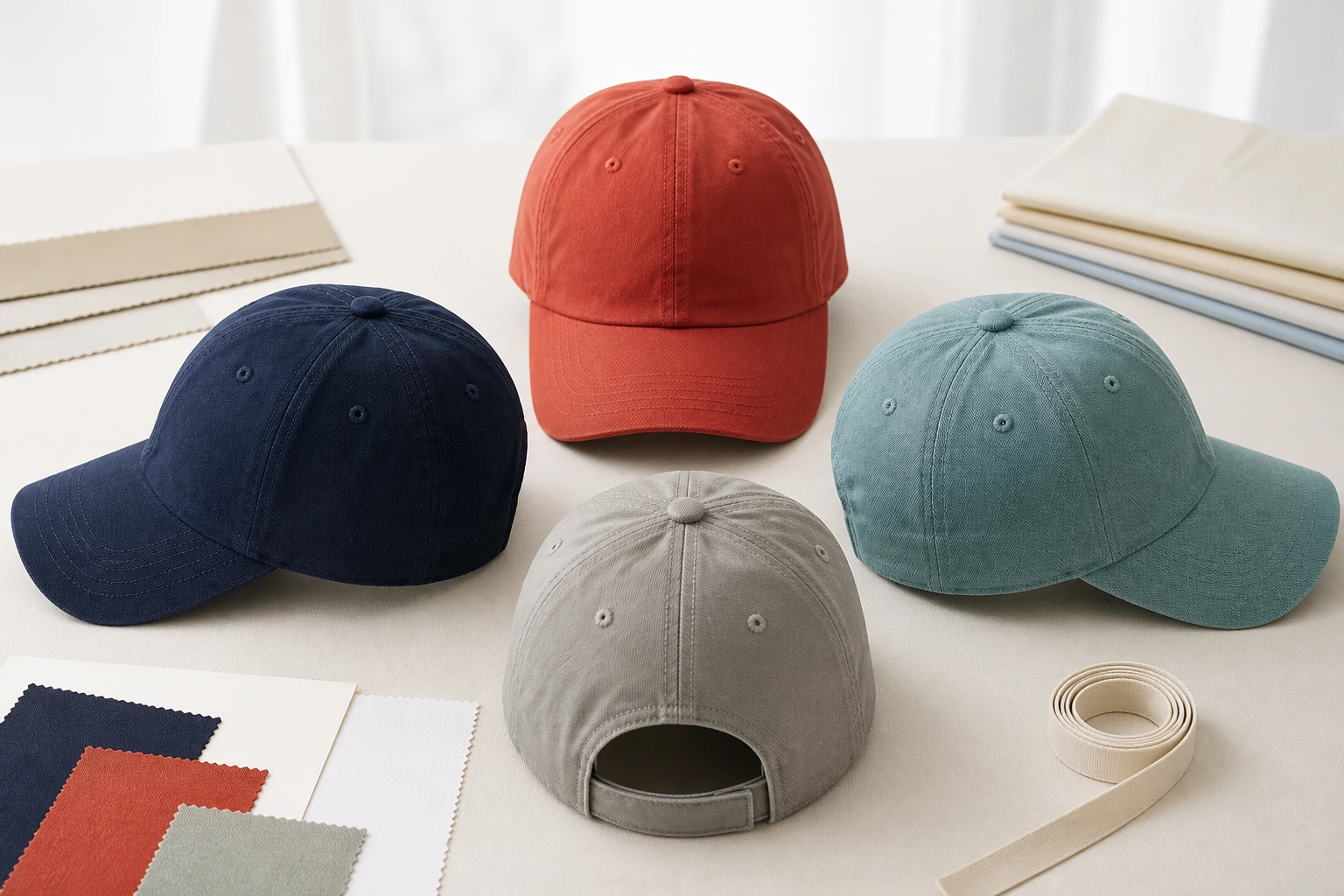
Cap sample inquiry 1
Cap sample inquiry: Open a cap discrepancy file
A cap discrepancy begins as an indexed order event, not a loose collection of photographs and supplier opinions.
Which identifiers make the investigation traceable?
Purchase order, style revision, colour, size route, lot and the decision deadline.
Cap sample inquiry: Identify purchase order, style and lot
Start with the purchase order, cap style, colour, size route and production lot. A photograph without those identifiers cannot show whether the buyer is examining the released construction.
Cap sample inquiry: Record the buyer decision now at risk
Name the decision that cannot proceed: sample approval, shipment release, complaint settlement or reorder. That deadline determines which evidence must be collected first and which questions can wait.
Cap sample inquiry: Separate observed facts from supplier theories
Write the visible symptom in neutral language before reading the supplier reply. Keep proposed causes in a separate field until measurements and complete views support or reject them.
Cap sample inquiry 2
Cap sample inquiry: Reproduce the cap measurement record
The original measurement can be reproduced only when the cap state, landmarks and camera sequence are declared.
What makes two cap measurements comparable?
Conditioning note, fixed construction points, recorded dimensions and matching views.
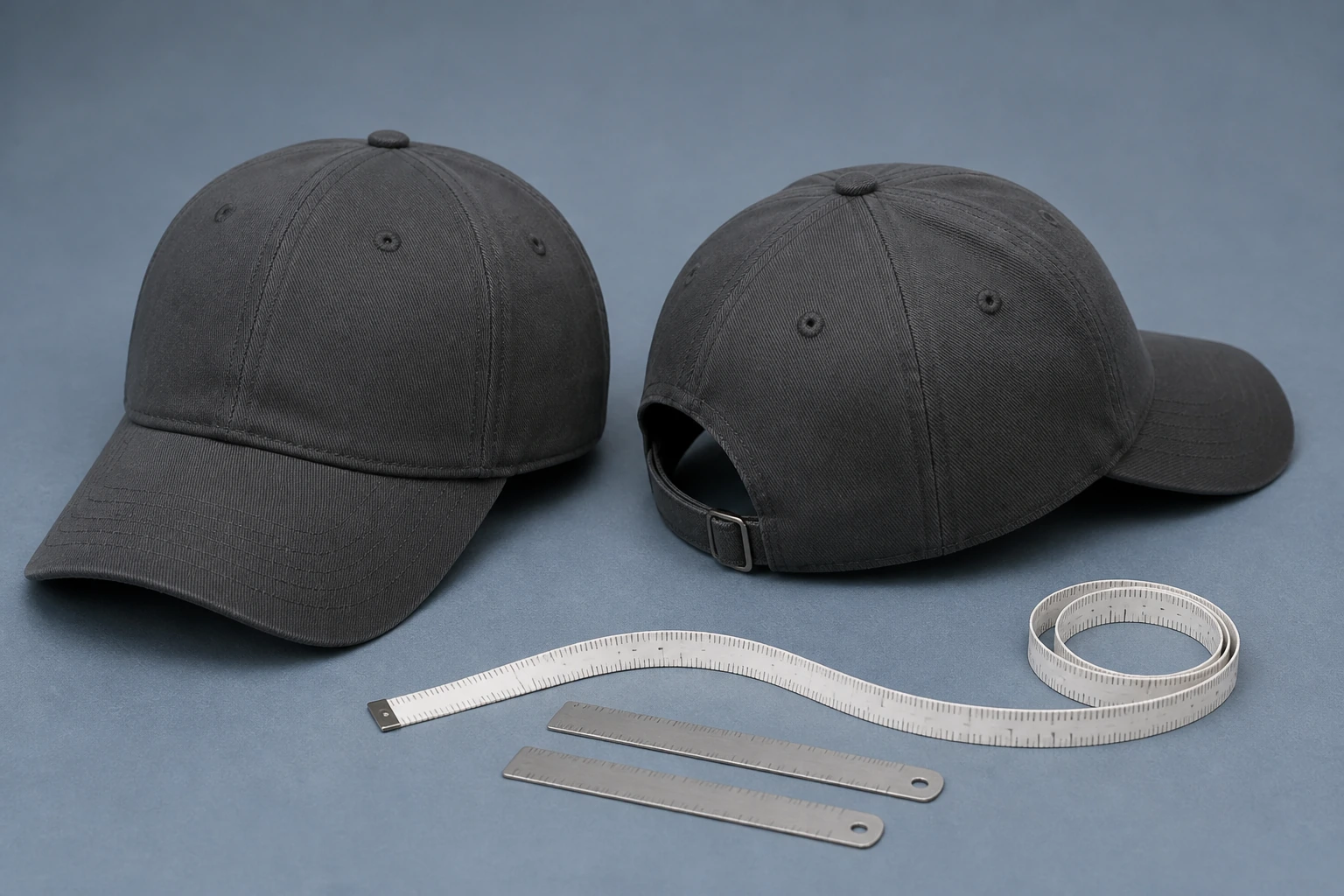
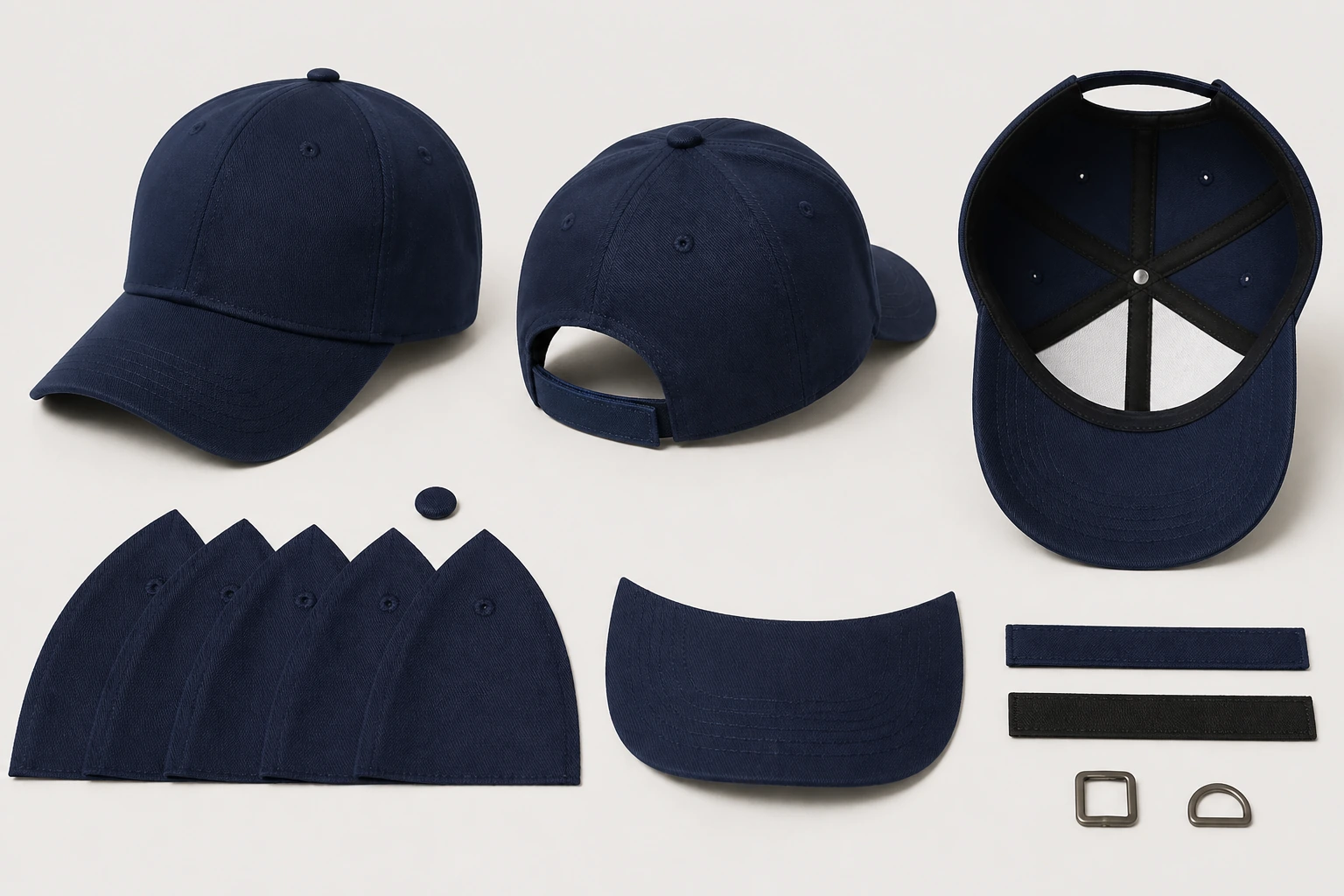
Cap sample inquiry: Condition the cap before measuring
Allow the cap to rest in the agreed room condition and record how it arrived. Measuring a freshly compressed crown against a conditioned reference creates a false pattern difference.
Cap sample inquiry: Fix crown, visor and opening landmarks
Mark the top button, front seam, visor centreline, rear opening and sweatband edge as landmarks. Use the same points on the questioned cap and the approved reference.
Cap sample inquiry: Pair each dimension with a repeatable photograph
Place the ruler or tape in the frame and capture front, profile, rear and interior views. Record the dimension beside the matching image rather than in an untraceable spreadsheet cell.
Cap sample inquiry 3
Cap sample inquiry: Diagnose crown balance and visor set
Panel tension and visor set are read together while the cap remains in the state first observed by the buyer.
Where should a shape diagnosis begin?
Top-button seam paths, front height, side fall, visor centreline and edge level.
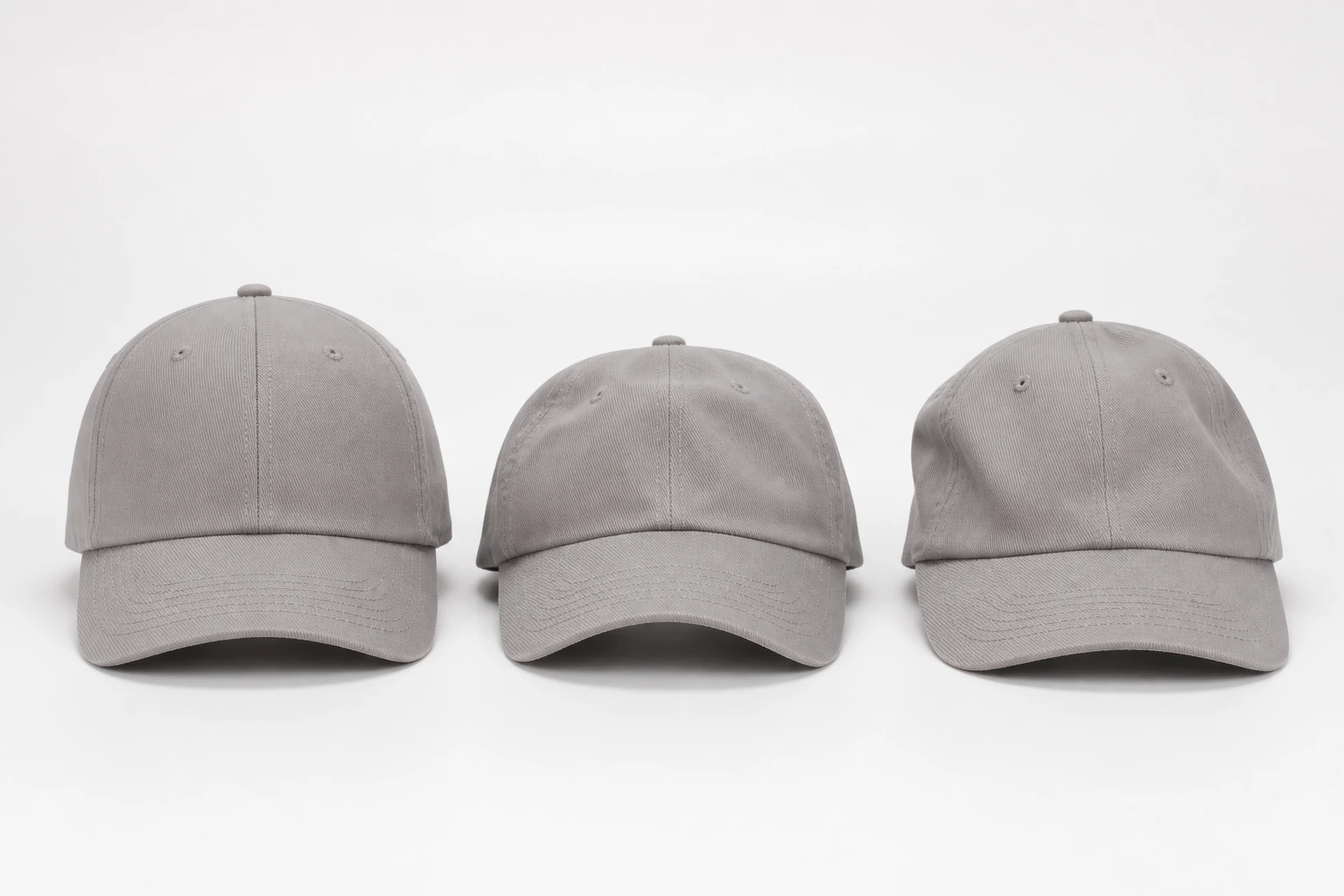
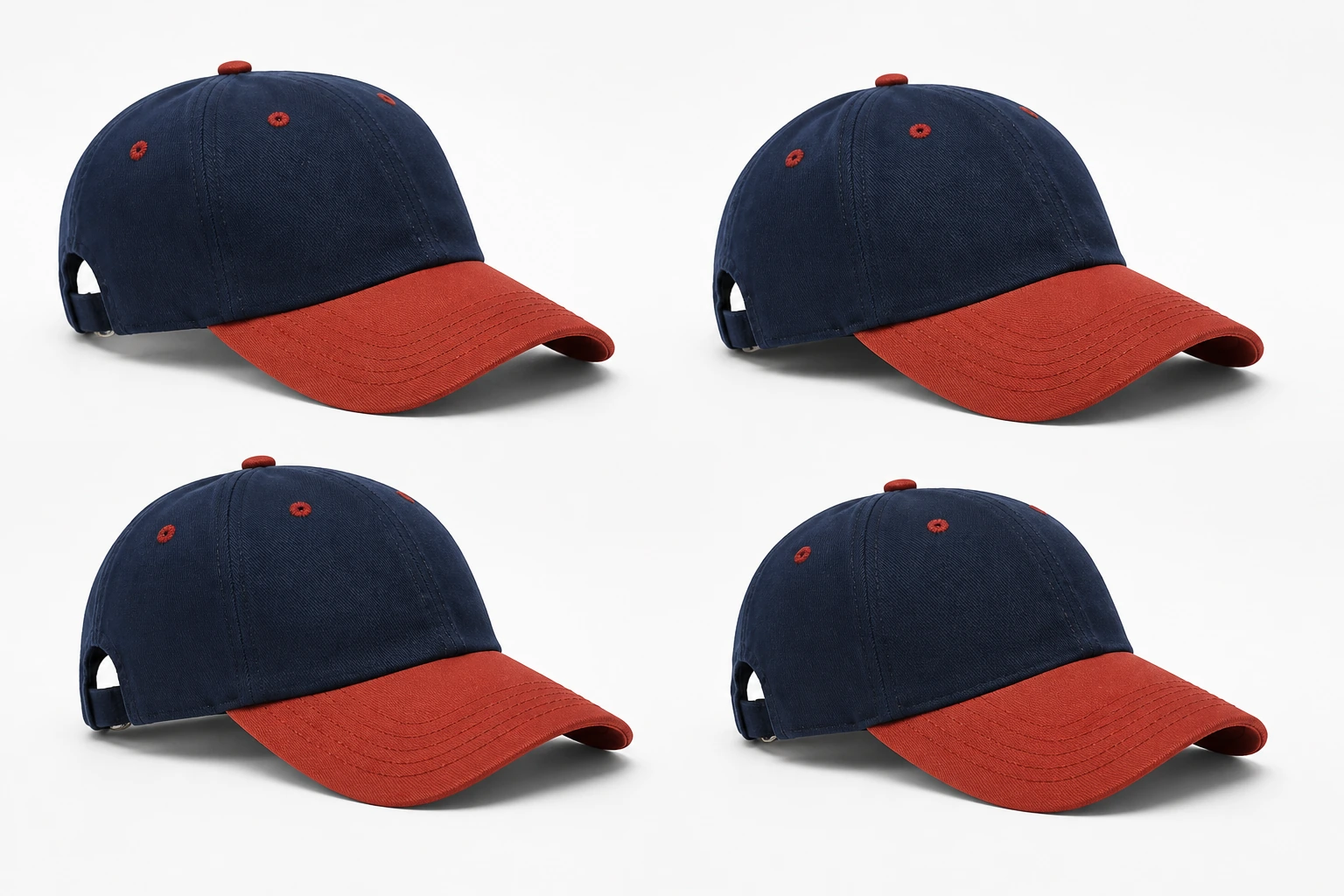
Cap sample inquiry: Read panel tension around the top button
Follow each panel seam from the top button toward the sweatband and note where tension changes. Local puckering and whole-crown lean point to different manufacturing questions.
Cap sample inquiry: Compare front height with side collapse
Set the cap on a neutral support and compare front height, side wall and rear fall. Do not push the crown into the expected shape before the observation is recorded.
Cap sample inquiry: Check visor curve without forcing the insert
View the visor from above and at eye level, then compare centreline, edge height and stitch rows. Bending the insert by hand destroys the evidence needed to discuss its original set.
Cap sample inquiry 4
Cap sample inquiry: Trace decoration-induced distortion
Decoration is investigated as a possible source of crown change by comparing the blank and finished constructions.
How can artwork effects be isolated?
Matched views, reverse-side backing evidence, thread pull and finished-cap landmarks.
Cap sample inquiry: Compare the blank panel with the decorated cap
Photograph an undecorated cap beside the decorated sample using the same angle. A change that appears only after decoration should be investigated at the panel, backing and hooping stages.
Cap sample inquiry: Inspect backing density and thread pull
Turn the cap inside out and inspect backing footprint, stitch density and thread pull around panel seams. Record distortion without assuming that more backing or fewer stitches is the answer.
Cap sample inquiry: Relate artwork landmarks to the finished crown
Measure artwork from fixed seam and visor landmarks on the finished crown. Supplier artwork coordinates are useful only when they reproduce the approved placement on the actual cap shape.
Cap sample inquiry 5
Cap sample inquiry: Investigate closure travel and head opening
Fit review links closure setting, rear alignment and sweatband path to the approved head-size route.
Which objects explain an opening complaint?
Named closure positions, internal dimensions, rear-seam alignment and wearer context.
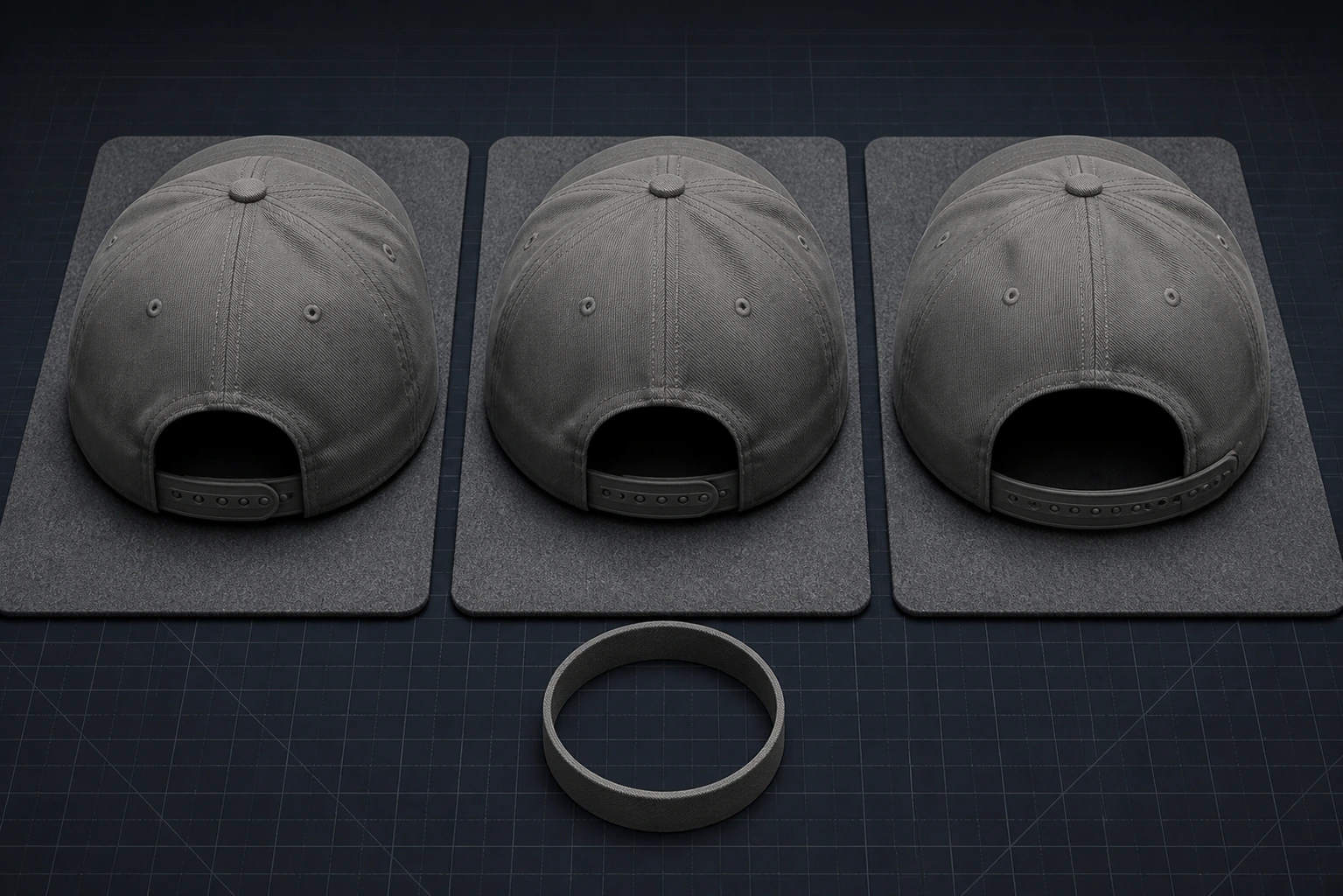
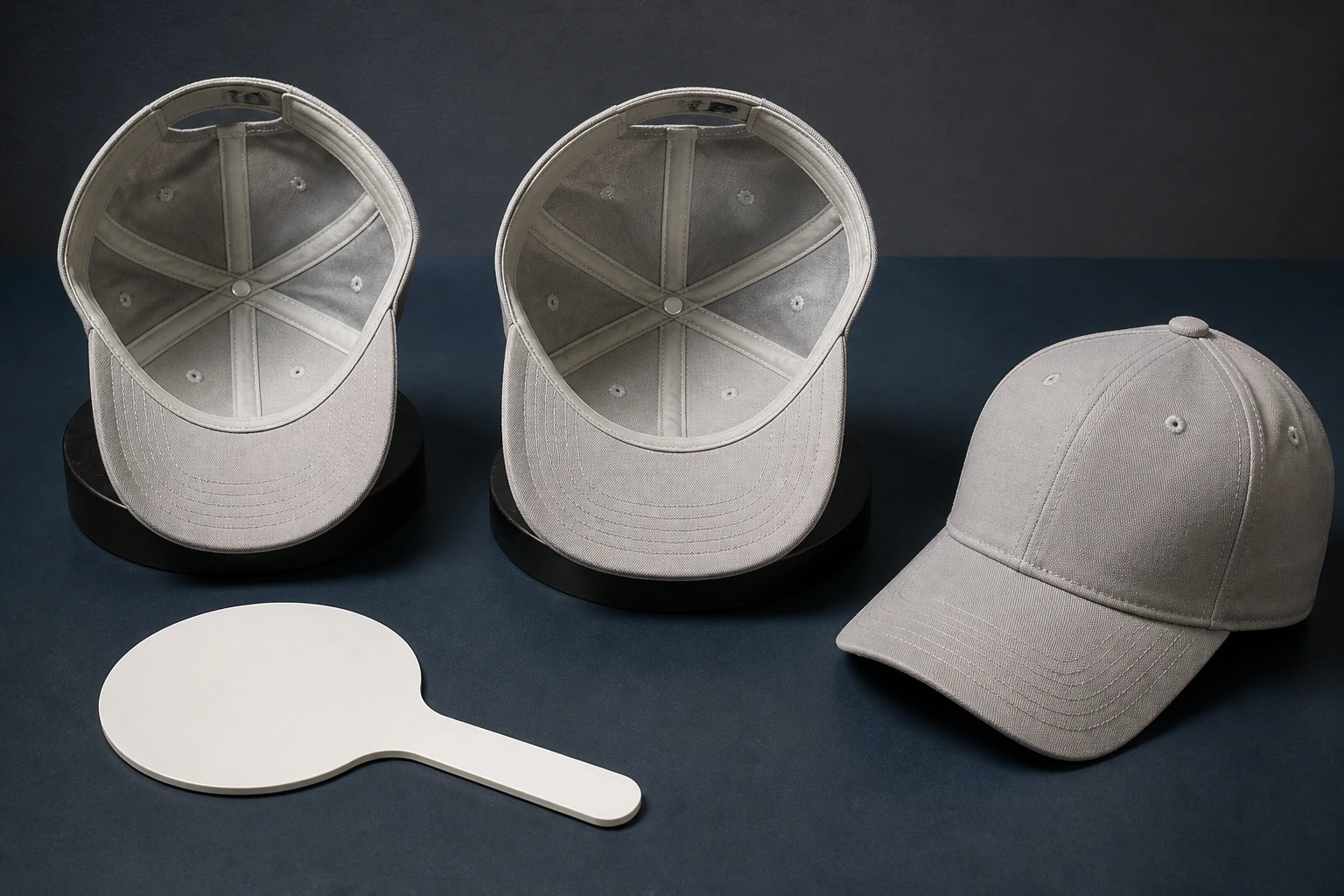
Cap sample inquiry: Measure the internal band at named closure positions
Set the closure at named positions and measure the internal sweatband path without stretching it. Link every opening dimension to the exact strap, buckle or tab setting shown.
Cap sample inquiry: Examine the rear opening for skew
Centre the rear seam and inspect whether the opening, closure and sweatband remain aligned. Skew may originate in panel assembly even when closure components themselves are correct.
Cap sample inquiry: Compare fit comments with the approved size route
Compare wearer comments with the approved head-size route, closure position and intended wearing allowance. Avoid changing the crown block to solve a complaint caused by the wrong adjustment setting.
Cap sample inquiry 6
Cap sample inquiry: Verify cap material identity and shade
Cap material and shade conclusions remain attached to physical swatches, identified components and viewing conditions.
What prevents a colour discussion from losing context?
Retained construction, lamp record, component lots and the questioned finished cap.
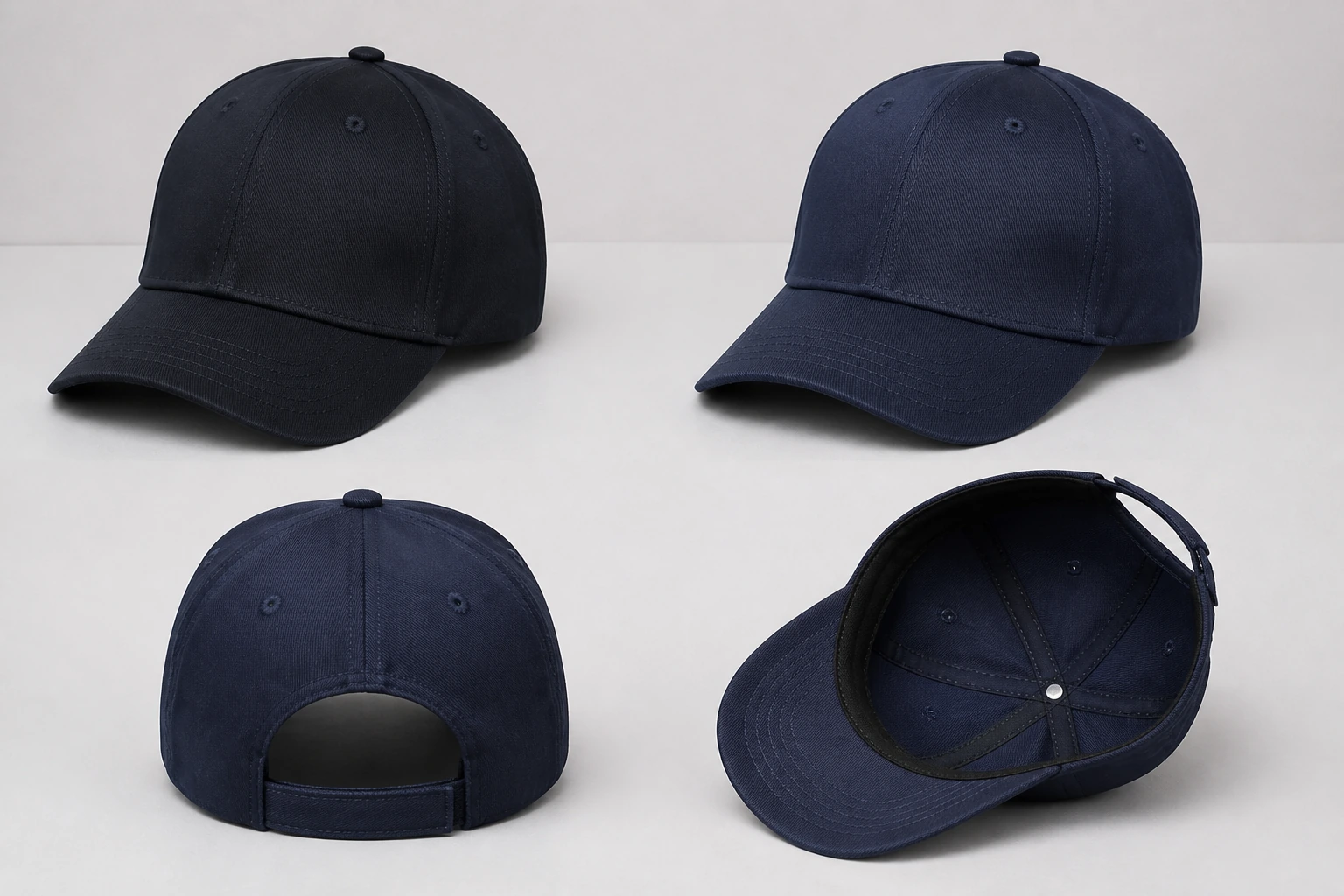
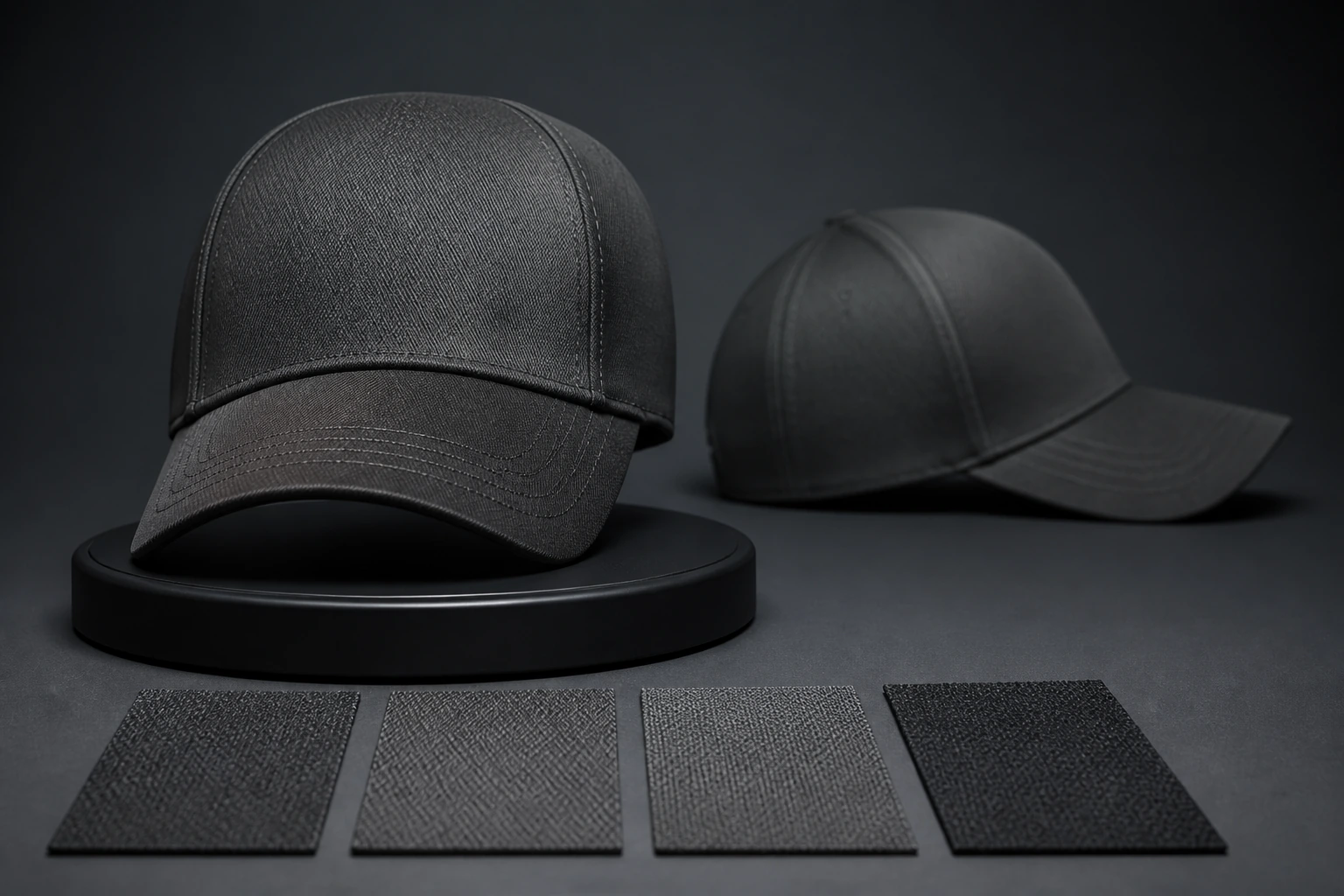
Cap sample inquiry: Match shell construction to the retained swatch
Compare the shell and visor against retained physical swatches, including weave direction and surface finish. A colour match alone does not establish that the selected construction was used.
Cap sample inquiry: Judge shade under one controlled light
Place approved and questioned caps under the documented lamp, background and viewing distance. Screen images can locate a concern but cannot serve as the final shade standard.
Cap sample inquiry: Keep visor, closure and thread lots visible
Keep shell, visor, sweatband, closure and sewing thread identified by lot. Component substitutions often create a mixed appearance that is lost when only the finished cap code is recorded.
Cap sample inquiry 7
Cap sample inquiry: Release one controlled correction sample
A correction sample is useful only after one buyer custodian converts comments into observable release conditions.
What authorizes the revised cap?
Consolidated instructions, declared changed inputs, closed points and unique sample identity.
Cap sample inquiry: Consolidate comments under one custodian
Route all comments through one named buyer custodian and retire contradictory mark-ups. The correction sample must answer a single consolidated instruction set.
Cap sample inquiry: Define the supplier action in measurable terms
Describe the requested action through a dimension, visible construction state or approved reference. Phrases such as improve shape or make it stronger do not define a release condition.
Cap sample inquiry: Authorize a single revised cap for comparison
Assign a new sample identity and list every changed input before review. The revised cap becomes a comparison object only after each open point is closed by the authorized buyer.
Cap sample inquiry 8
Cap sample inquiry: Recreate nesting pressure and crown recovery
Packing analysis reconstructs support, nesting, dwell and recovery without reshaping the cap before evidence is captured.
How is carton pressure separated from sewing?
Pack allocation, timed complete views, rest interval and comparison with the sealed reference.
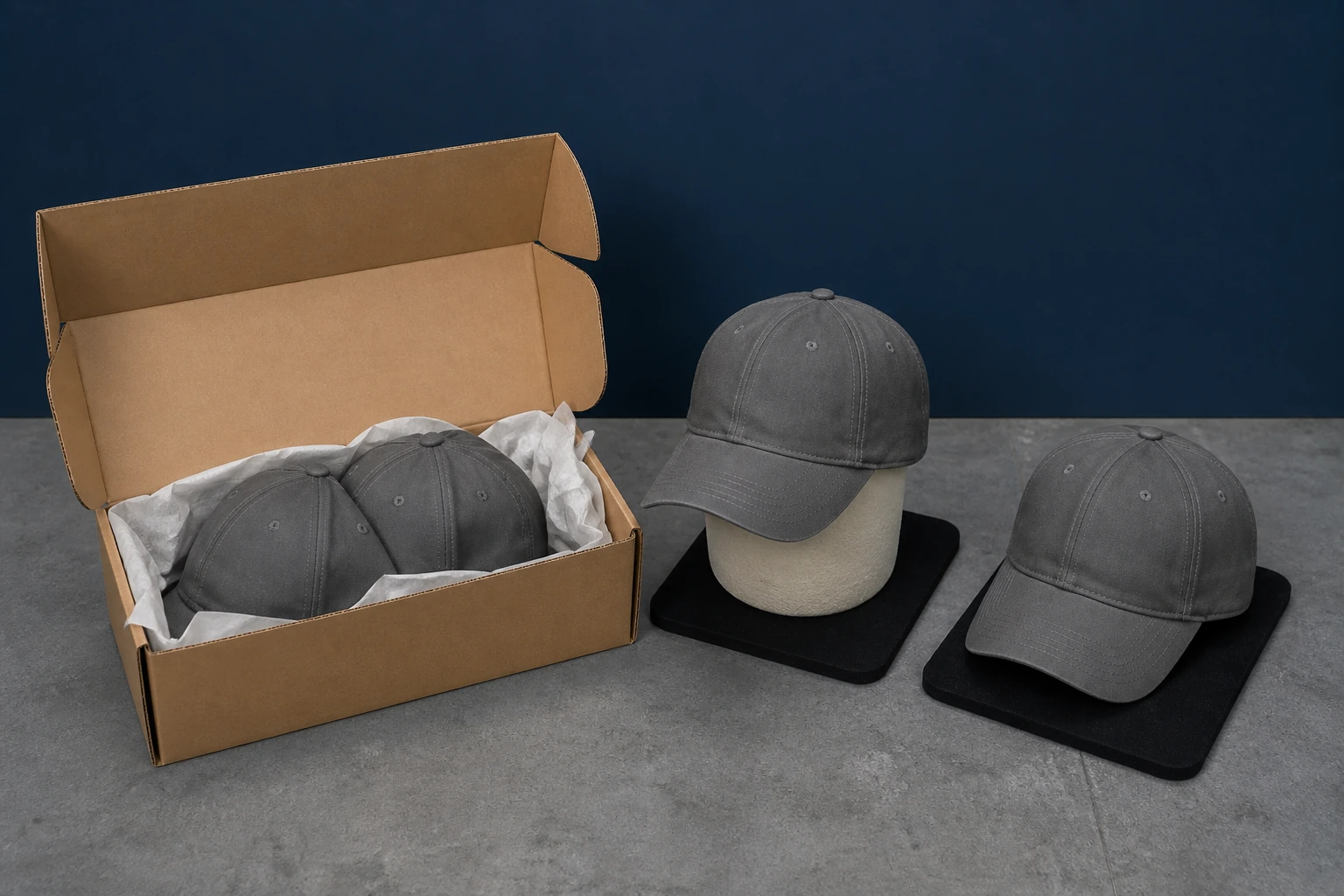
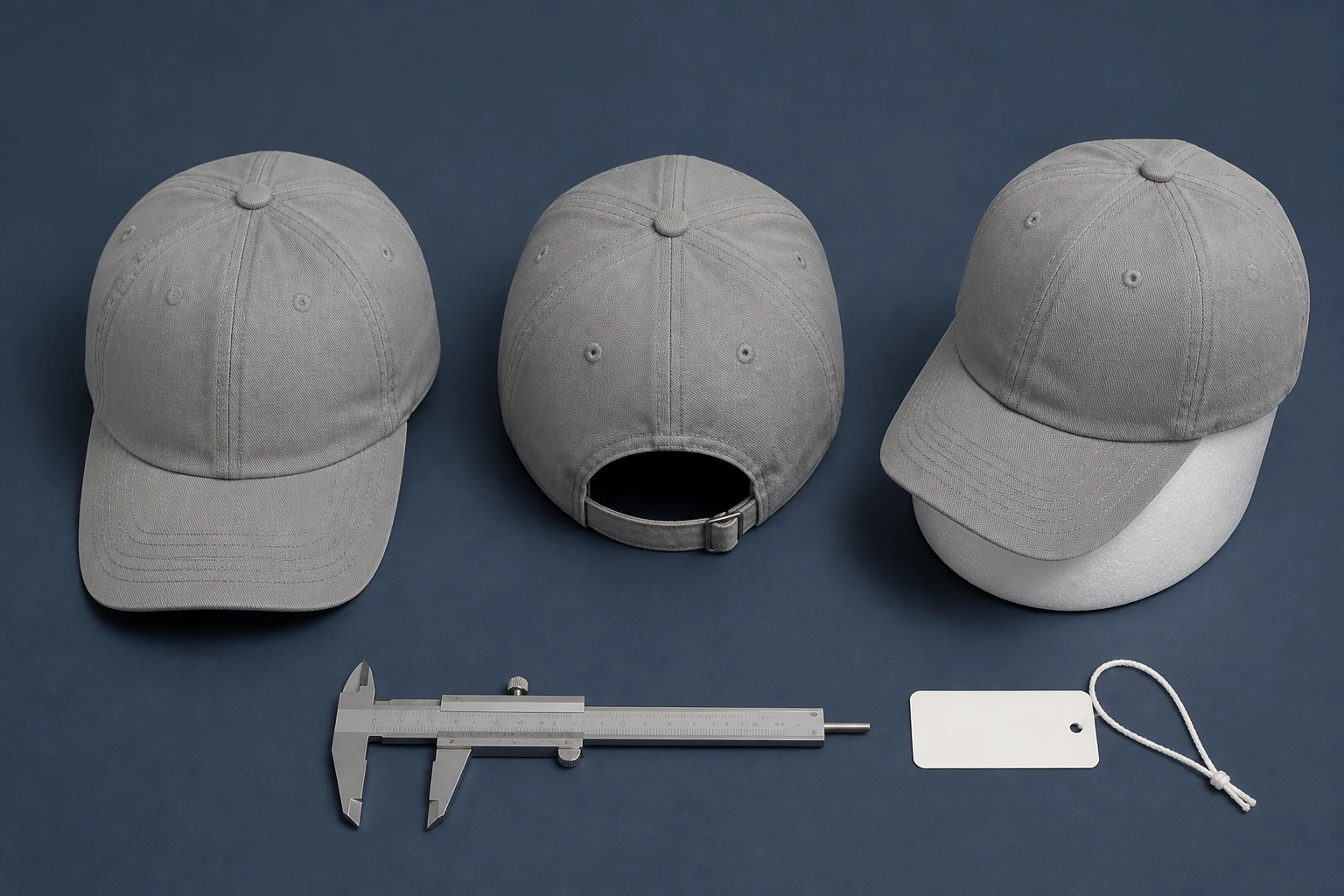
Cap sample inquiry: Document support before the carton is closed
Photograph crown supports, nesting direction and caps per stack before sealing the carton. Preserve the packing allocation for the exact sample used in the recovery check.
Cap sample inquiry: Repeat the shipment dwell condition
Hold the carton for the declared duration and orientation, then open it without reshaping the caps. Record the time between unpacking and each recovery photograph.
Cap sample inquiry: Compare recovered form with the sealed cap
Compare front, side and visor profiles with the sealed release cap after the stated rest period. Packing memory and sewing imbalance require different corrective actions.
Cap sample inquiry 9
Cap sample inquiry: Close corrective action into the next order
The investigation closes by placing its cause, correction and recurrence check inside the next controlled order record.
What keeps the resolution alive on reorder?
Lot-linked finding, focused incoming check and causal change triggers.
Cap sample inquiry: Attach the finding to its lot and revision
Link the final cause and accepted correction to the affected style revision and production lot. Do not leave the conclusion only in email or an unindexed photo folder.
Cap sample inquiry: Write a focused incoming-inspection checkpoint
Convert the resolved symptom into one incoming check with a clear sample size, view or measurement. The checkpoint should catch recurrence without reopening unrelated cap decisions.
Cap sample inquiry: Reopen approval when the causal input changes
List the material, pattern, visor, closure, decoration and packing inputs that trigger reapproval. A reorder can stay on the existing route only while those causal controls remain unchanged.
Buyer decision table
Cap symptom-to-checkpoint matrix
Preserve the observed state first, narrow the cause boundary second, and reopen only the affected approval lane.
| Observed symptom | Preserve first | Cause boundary | Decision checkpoint |
|---|---|---|---|
| Crown leans or twists | Untouched top, front and side views | Separate panel tension from carton recovery | Reopen construction approval |
| Visor edge sits unevenly | Centreline and both edge heights | Compare insert set with sewing alignment | Hold visor release |
| Opening feels inconsistent | Closure position and internal dimensions | Check size route before changing pattern | Reopen fit approval |
| Shade differs by component | Physical standard, lot IDs and lamp record | Do not infer shade from screen images | Hold colourway release |
FAQ
baseball cap investigation questions
Which cap measurements start an importer investigation?
Log crown height and circumference, visor width and length, internal opening, closure travel and the exact landmarks used after consistent sample conditioning.
Is a distorted cap necessarily sewn incorrectly?
Not always. Compare the cap before and after a defined recovery period, examine crown support and carton pressure, and preserve images tied to that sample code.
May a monitor image release cap color?
Use the screen only to communicate direction. A cap shade decision needs a physical standard, the selected fabric and controlled viewing conditions.
What change reopens cap approval?
Reapprove after changes to pattern, crown support, visor insert, textile, closure, size grade, artwork program, production route, labeling or protective packing.
Cap file handoff
Apply this baseball cap guide to an active file
Provide the cap sample code, measured symptoms, conditioning history, suspected process, supplier answer and next purchasing decision. Local testing leaves the inquiry unsubmitted.